Del Casher, the man who helped give birth to the wah pedal, has died aged 88.
Casher passed away on October 1 after a battle with cancer. Aside from the staggering legacy of the wah, the guitarist and engineer was also a film and TV star. He starred alongside Elvis Presley in the 1964 film, Roustabout; was the Music Director for the children’s television show, The New Zoo Revue, in the 1970s; and later scored the slasher film, Terror Night, in 1987.
The wah pedal, though, was always his biggest gift to guitarists. One of the world’s most iconic guitar pedals, it has been stomped on by everyone from Jimi Hendrix and Kirk Hammett to Eric Clapton, David Gilmour, and Jerry Cantrell. Casher’s invention left a huge mark on the world of music.
Latest Videos FromGuitar World
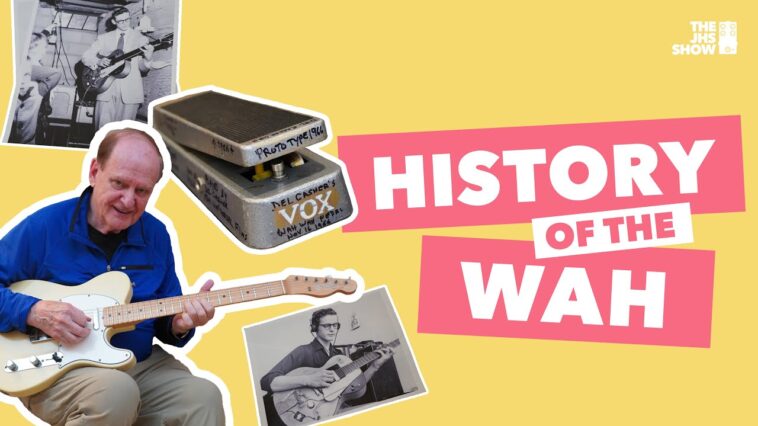
Casher worked for Vox in the late 1960s, and essentially prized the wahs uncanny vocal-like effect from a Vox Super Beatle amp. As per JHS Pedals History of The Wah Pedal, Casher heard fellow engineer Brad Plunkett rolling the Control knob of the Super Beatle back and forth. It was a sound he was already chasing; this is how he found it.
So, he and Plunkett took a Vox Continental Organ volume control and married it with the amps control circuit for an expressive, foot-controlled effect. This was in 1967, and a year later, Vox had launched the first-ever wah pedal.
Vox originally leveraged the pedal towards the orchestra market, thinking it would make more money out of saxophone and trumpet players than guitarists.
By the time Clapton put it through its paces on Tales of Brave Ulysses, and Hendrix made magic with the pedal on Voodoo Child (Slight Return), the effect’s fate was sealed. Today, the effect is deeply embedded within electric guitar folklore.
Jim Dunlop’s Cry Baby Wah may have gone on to become the gold-standard of the effect – just look at the list of players who have signature models – but Casher laid down the groundwork.
In fact, as JHS Pedals founder Josh Scott, who did an in-depth video on the history of the wah pedal in 2021, says: “James Brown told him it was pointless and it wouldn’t be cool. That’s ironic.”
In the end, Casher stood his ground, knowing the pedal would lift off in the hands of the guitar players.
Speaking to the New York Times in 2011, he said that “nobody saw any future for the guitar being used with this device.” How wrong they were.
“I feel gratified that I was there at the beginning,” Casher added. “I would just like guitar players to think of me once in a while. The only thing I ask is: remember me.”
A GoFundMe has been set up to help support Casher’s wife, Eiko, who is facing severe financial distress following the loss of Del.