
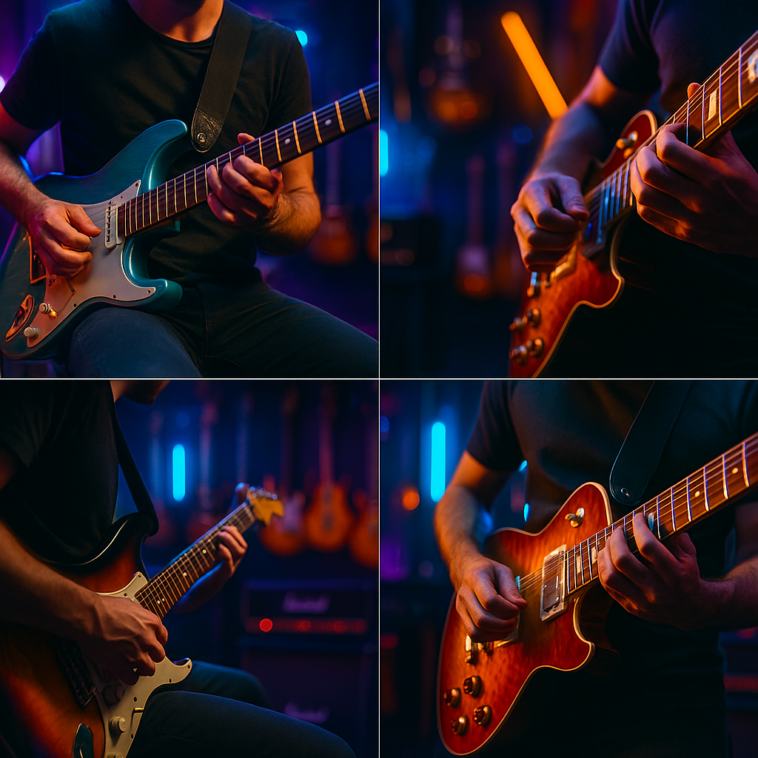
Mastering Guitar Improvisation: Essential Techniques for Emotional Solos
As guitarists, we often find ourselves craving something deeper—a chance to let our musical souls shine through improvisation. Whether you’re jamming with friends, playing solos in a band setting, or recording your own materials, the ability to creatively express oneself on the guitar is a true gift. In this article, I’ll share with you some essential techniques and ideas to enhance your improvisation skills, drawing from modern fusion and progressive guitar concepts along the way.
The Heart of Improvisation
Improvisation is not just about playing the right notes; it’s about conveying emotions and stories. Imagine the feeling of freedom as you express your innermost thoughts through your guitar. When I think of improvisation, I remember the exhilarating moments on stage when I let go of all preconceptions and simply played what felt right. It’s in these moments we find what truly resonates with us as musicians.
Embracing the Basics: Scales and Modes
Before we dive deep into advanced techniques, it’s essential to have a solid grasp of the basics. Familiarize yourself with common scales like the major, minor, and pentatonic—these are the building blocks for your improvisational toolbox.
But don’t stop there! Modes are your secret weapon in the realm of fusion and progressive guitar. Each mode brings its flavor, effectively changing the emotional context of your solos. For instance, the Dorian mode can lend a jazzy, sophisticated essence, while the Mixolydian mode feels more bluesy and rock-oriented.
Practical Exercise:
- Explore Modes: Take a backing track based on a major or minor chord progression. Practice playing a scale in different modes over this same progression. Listen to how the mood shifts with each mode.
Emotional Phrasing: More Than Just Notes
Now that we have some foundational scales under our fingers, let’s talk about phrasing. This is where your guitar playing transforms into true musical storytelling. Think about the phrasing strategies that vocalists use—such as breath and timing. The way they pause, emphasize certain notes, or add vibrato creates emotion.
Incorporate these techniques into your improvisation. Rather than racing through scales, allow space for silence and let notes linger. Sometimes, a well-placed bend or a slight delay in your notes can convey more than a flurry of notes ever could.
Techniques to Experiment With:
-
Bending Notes: Experiment with bending the third or the fifth of a scale to create tension. Release it to resolve that tension and evoke an emotional response.
-
Legato vs. Staccato: Mixing smooth legato phrases with short, quick staccato lines can create dynamic contrasting sections in your solos.
Fusion Techniques: Blurring Genres
Fusion guitar is a beautiful blend of styles—jazz, rock, blues, and even world music. Exploring these various influences will expand your improvisational horizons. For example, consider experimenting with chord substitutions and altered scales.
Chord Substitutions:
Rather than sticking to the standard chords of a progression, try substituting them with jazzier alternatives. A dominant 7th chord can be transformed into a b9 or #9 chord to create tension and drama.
Example:
In a simple C major progression (C-F-G), try substituting the G with a G7#9. It gives your solo a new flavor, presenting more notes to play with.
Altered Scales:
When you’re faced with a dominant chord, try using the altered scale. It consists of the tones that result from altering the fifth and ninth degrees, providing you with bold, jazz-infused sounds.
Expanding Your Tonal Palette
Tone in Improvisation
The sound you produce can significantly impact how your improvisation is perceived. Experiment with your tone settings—consider how different pickups, effects, and amp settings can completely change a note’s emotional weight.
Tips for Crafting a Unique Tone:
- Experiment with Overdrive: A touch of overdrive can add warmth and sustain, perfect for emotional solos.
- Delay and Reverb: These effects can create a sense of space. Longer delays can add texture to your phrases.
- Dynamic Control: Use your picking dynamics to infuse more life into your solos. Softer touch can create intimacy, while a harder attack can express urgency.
Music Theory: Understand the ‘Why’
While the ‘feel’ of your playing is crucial, understanding music theory is equally important. It serves as a foundational language through which you can translate your creative ideas onto the fretboard. Familiarize yourself with the circle of fifths, chord progressions, and modal theory.
Chord Progression Insight:
Certain progressions evoke specific emotions. A I-IV-V (C-F-G) feels uplifting, while a ii-V-I (Dm-G-C) brings a more resolved and satisfying feeling. Use these insights when improvising to enhance the emotional experience of your solos.
Practice Ideas to Unlock Creativity
Staying inspired in practice can be challenging. Here are some practical exercises to keep your improvisational skills sharp:
1. Call and Response:
Play a short phrase and answer it with another. This mimics conversational playing and encourages emotional maneuvering within the solo.
2. Looping Chord Progressions:
Record a loop of a chord progression and set a timer for five minutes. During this time, focus on improvising as freely as possible. This removes any self-imposed limitations, allowing you to explore different ideas.
3. Transcribe Solos:
Pick a solo that inspires you and spend time learning it. Not only will this aid in understanding phrasing and technique, but it will also offer insight into the construction of compelling solos.
Finding Your Musical Voice
As you explore improvisation, remember that finding your unique voice takes time. Don’t shy away from experimentation. Try different techniques, soundscapes, and moods. It’s this journey of self-discovery that makes your playing truly compelling.
Connect Your Emotion: When improvising, don’t merely go through the motions. Tap into your emotional state and allow it to guide your performance. Whether you’re feeling ecstatic or melancholic, let those feelings shape your musical narrative.
Recording Your Progress
Don’t underestimate the value of recording your improvisations. This practice can be a game-changer. Listening back to your recordings gives you a fresh perspective, allowing you to identify the moments that resonate with you and those that need refinement.
Consider These Recording Tips:
-
Capture Different Takes: Experiment with various tones and approaches across multiple takes. It’ll provide a broader range of choices when you review your work.
-
Listen Critically: After recording, listen with a discerning ear. What worked? What felt forced? This kind of analysis can steer your practice in the right direction.
-
Share Your Work: Don’t hesitate to share your recordings with friends or online communities. Getting feedback can yield new insights and inspiration.
Conclusion: Your Journey Awaits
Mastering guitar improvisation doesn’t happen overnight. It requires dedication, exploration, and a willingness to fail. Be patient with yourself, and embrace your unique musical journey. As you immerse yourself in these emotional, expressive techniques, you’ll gradually build the confidence needed to create soulful solos.
For those eager to take their skills to the next level, consider exploring premium backing tracks tailored for guitar players. These tracks can provide endless opportunities for practice and creativity in your improvisational endeavors. Dive into a world where your guitar becomes an extension of your emotions.
Discover premium guitar backing tracks at music.backingtracksfullcollection.com/guitar-players and unlock new dimensions in your improvisational journey.
Happy playing, and may your solos resonate with heart and authenticity!
![The Story Behind Rory Gallagher’s Purchase of His 1963 Gretsch Corvette for $150]](https://backingtracksfullcollection.com/wp-content/uploads/2026/05/The-Story-Behind-Rory-Gallaghers-Purchase-of-His-1963-Gretsch-150x150.jpg "The Story Behind Rory Gallagher’s Purchase of His 1963 Gretsch Corvette for $150] 25")
![Joe Pernice is Taking Another Swing at It]](https://backingtracksfullcollection.com/wp-content/uploads/2026/05/Joe-Pernice-is-Taking-Another-Swing-at-It-150x150.jpg "Joe Pernice is Taking Another Swing at It] 26")