
![Array]](https://backingtracksfullcollection.com/wp-content/uploads/2026/05/1779832562_Array-758x426.jpg "Array] 18")
The deadline has passed for affected firms to respond to Fender’s cease-and-desist letters over the production of S-style guitars – and the rebuttal reveals telling information on how Fender could be beaten.
After scoring a default ruling in the Regional Court of Dusseldorf earlier this year, Fender began issuing cease-and-desist letters via Bird & Bird attorneys to firms that it claimed were infringing on its apparent ‘copyright’ for the Stratocaster body shape.
LsL Instruments were one of a number of US small builders to allegedly have been sent a cease and desist, with the letters demanding them to halt production, recall product, and destroy their inventory.

Those letters contained a 25 May deadline for the companies to issue a response. Guitar World has seen a redacted copy of a response letter, sent by the Tone Nerds YouTube channel, which highlights potential holes in Fender’s legal strategy.
Crucially, the response letter has been sent by Fox Rothschild, and signed by Ronald Bienstock – the same attorney who was behind the class action that famously defended Suhr and other builders, and defeated Fender’s previous attempt to trademark the Stratocaster back in the late 2000s.
Bienstock is uniquely positioned to defend this case, and his involvement is significant. It is not yet clear which firms Bienstock is representing in this response, and it has also yet to be clarified whether he is defending multiple firms that have been hit by cease-and-desist letters.
Regardless, the response letter highlights the ways Bienstock could beat Fender again. Below, we’ve broken down the six main points of argument against Fender’s cease and desists.
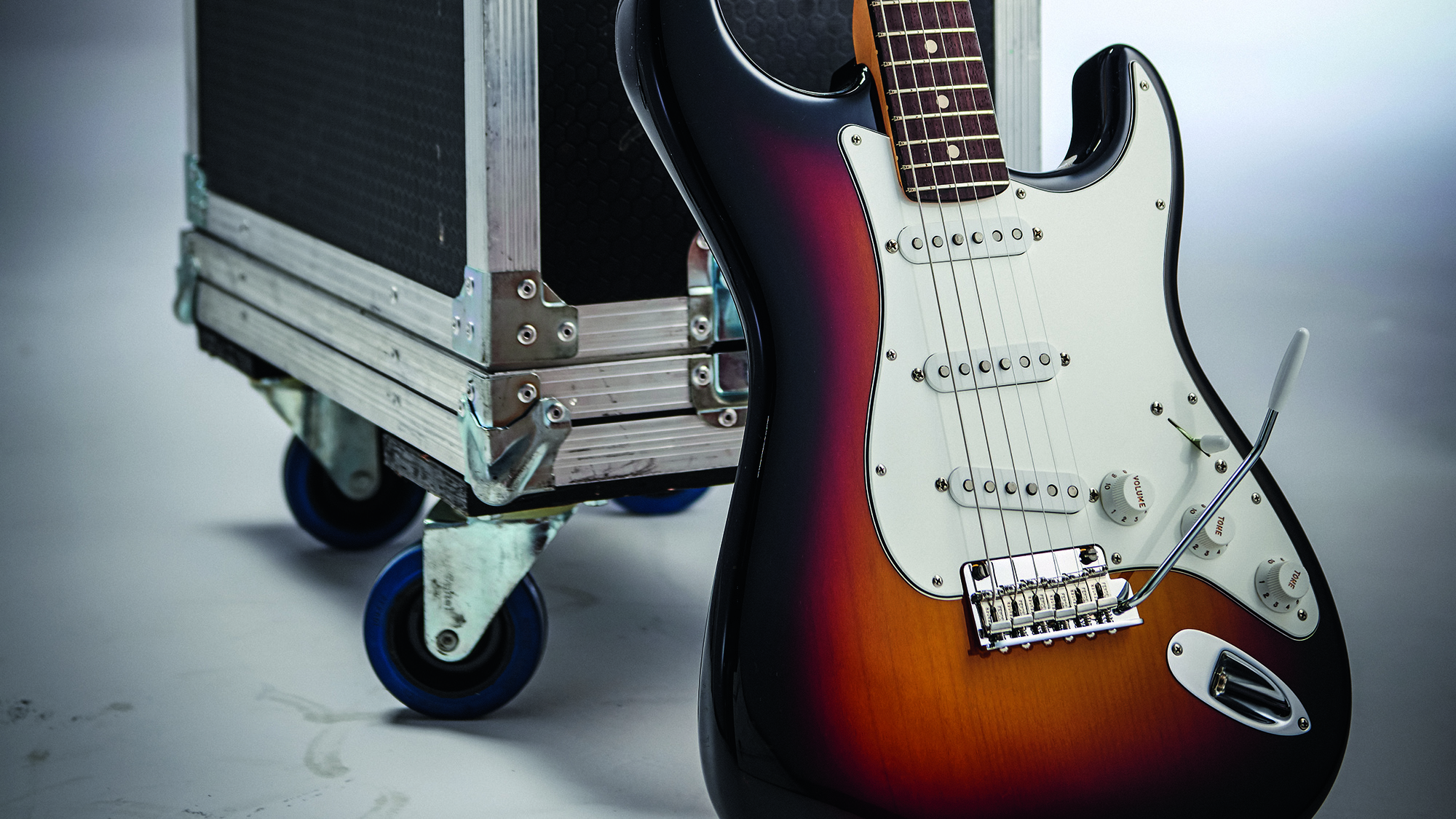
1. The Default Ruling has No Precedent
First, Bienstock discredits the default ruling from the Regional Court of Dusseldorf, claiming Fender is falsely misrepresenting it as a binding legal precedent when in reality it holds no weight outside the court, especially in the US.
Moreover, Bienstock notes Fender was only awarded the default ruling because the defendant, a Chinese musical instrument company, failed to turn up at court. Had Fender come up against greater opposition, Bienstock asserts the outcome would be different. It will not stand up to legal scrutiny if tested.
“We are concerned that Your Client [Fender] appears to have widely held out to the public, as well as to Our Client, that this ‘judgment’ is binding precedent upon any party other than the single absent defendant in that case, as we are unaware of any jurisdiction that would enforce any rights purportedly ‘confirmed’ by an undefended case,” Bienstock warns.
2. Fender’s Facts Aren’t Straight
Bienstock says the Dusseldorf ruling was predicated on the basis of gross misrepresentation from Fender, whose evidence in the case was “a fictitious rendering of the history of the Fender brand and the Stratocaster guitar”.
Fender’s history, Bienstock notes, had been “altered, bent, and made to fit a particular narrative” in order to achieve the desired ruling. Perhaps the biggest factual inaccuracy concerns the origin of the Stratocaster, which Fender told the German court had been designed exclusively by Leo Fender.
In reality, more people were involved in its creation. Fender’s own website acknowledges Rex Gallion and Freddy Tavares were both key in its development. Bill Carson, George Fullerton and Jimmy Bryant also had an influence.
Fender’s decision to leave out these names, Bienstock says, was deliberate in order to portray Leo Fender as the sole author of a creative work and meet the criteria for EU copyright standards.
Bienstock argues this factual misrepresentation renders Fender’s case in the Dusseldorf court, and by extension the questionable legal precedent it established, entirely baseless and without merit.

3. Not All Strats Are the Same
The Dusseldorf ruling established the Stratocaster not as a trademark but as a copyrighted work of art – which comes with its own criteria – but the defense points out that not all Stratocasters abide by the same manufacturing methods.
As such, Bienstock says there is difficulty in comprehending how specific shapes and contours can be of artistic value when there is so much inconsistency. The failure to maintain exact curves and contours of the first Strats sold in 1954 means Fender cannot police a single “Stratocaster body shape” simply because such a thing doesn’t exist.
Pair that with the subtle differences of third party S-style guitars, and the Stratocaster simply cannot be protected by copyright – especially one propped by a questionable default ruling – says Bienstock.
Your Client cannot enforce a copyright in the Strat body shape when the dimensions and contours of the Strat body shape have been inconsistent over time
Ron Bienstock, Fox Rothschild
“Your Client cannot enforce a copyright in the Strat body shape when the dimensions and contours of the Strat body shape have been inconsistent over time. No one in the worldwide music instrument (“MI”) industry can rely on a moving target as a benchmark,” the letter states.
To demonstrate his point, Bienstock also draws attention to a glaring error present in the Bird & Bird cease-and-desist, which wrongly identifies the Dusseldorf defendant’s counterfeit Stratocaster as a genuine Fender Strat, using the wrong image to argue its point.
“What is clear to the reader of Your Letter is that counsel itself cannot tell the difference between the ‘Chinese copy’ guitar from the regional court case and Your Client’s guitars,” Bienstock says “The photos provided for reference in Your Letter as the “Fender ‘Stratocaster’ body” are actually the defendant’s guitar from the regional court case.”

4. Past Legal Failures
The defense also draws attention to Fender’s previous failures in obtaining intellectual property rights for the Stratocaster body shape – something that Fender allegedly failed to disclose to the German court, which in turn may have influenced the outcome.
Tellingly, that previous ruling in the US declared the Stratocaster body shape “generic in the largest guitar market in the world”. In other words, Fender has tried – and failed – to establish a legal protection for the Strat under the United States Patent and Trademark Office, Trademark Trials and Appeals Board (TTAB).
As Bienstock puts it, the Dusseldorf ruling does not hold weight to overturn this, and any appropriate court would agree with the outcome of that case.
“The fact remains that Fender has attempted to claim exclusive rights to the Strat body shape and failed in one, arguably more appropriate, forum, and made no representation to the court of the adverse TTAB decision,” he notes.
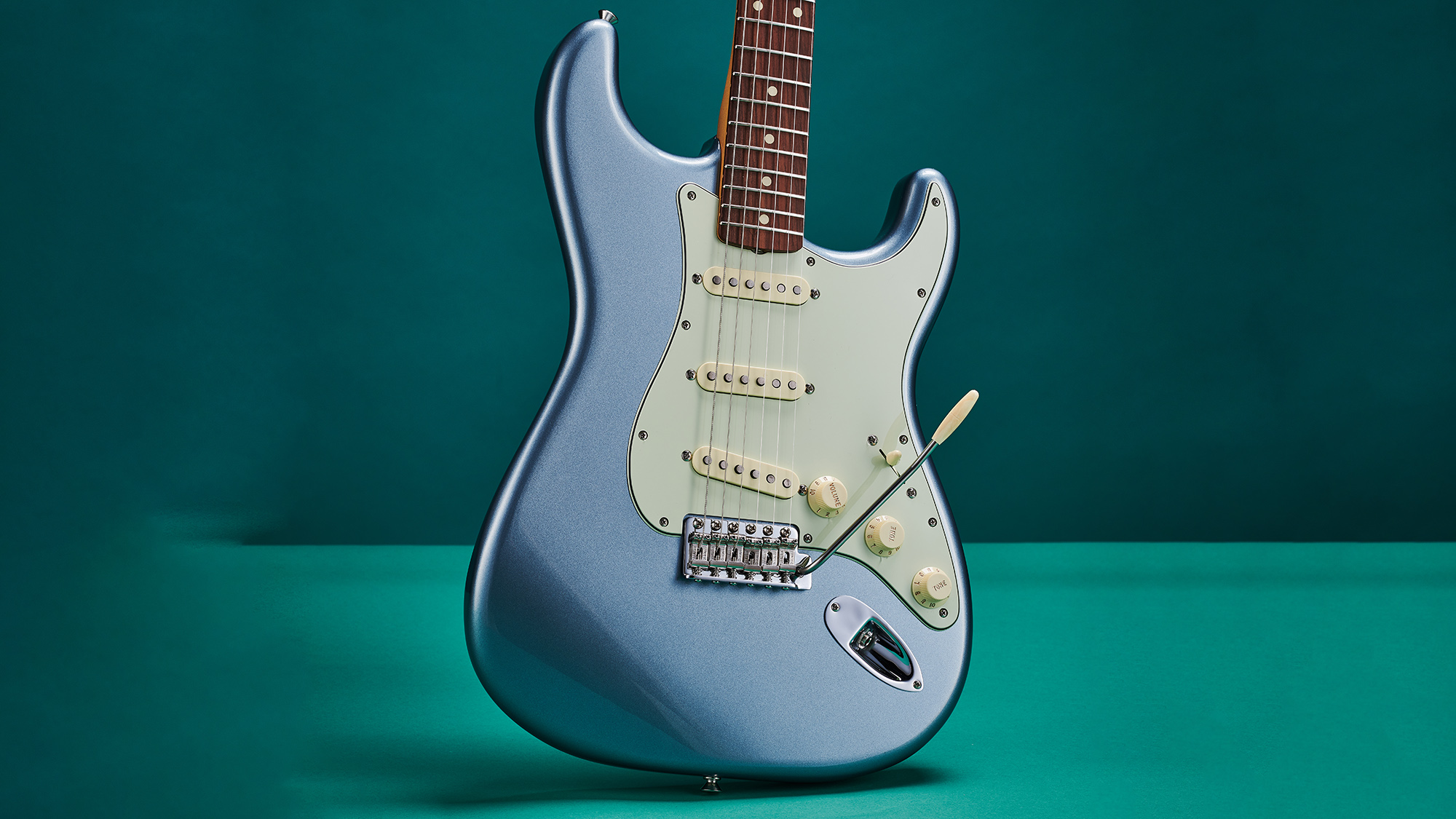
5. Fender’s Ownership of Copies
Fender also has a long history of taking ownership and willingness to acknowledge the proliferation of Stratocaster copies over the years, especially in its marketing campaigns, which Bienstock says negates its ability to enforce legal protection of the body shape after all these years.
In exhibits cited in the letter, Fender ads carry slogans such as, “Why Buy A Copy When You Can Afford The Original?” and “The Most Imitated Guitar in the World.” Fender has also advised players to buy “copies” and then “buy the real thing”.
According to Bienstock, “These are not merely admissions; these ads show that Your Client [Fender] knew of the third-party manufacturers and thoroughly waived all their rights as to any claims against them for such ‘copies.’”
In other words, decades of embracing copies as a ploy to market its own guitars cannot be undone by Fender, not least off the back of a questionable ruling that doesn’t hold up to a superior US ruling from 2009.
6. Too little, too late
The core of the argument echoes arguments made in that 2009 lawsuit: that Fender has gone too long without policing its IP rights, rendering the Stratocaster body shape unprotectable. Unimpeded third-party production of S-style guitars has been happening for 70 years. It is too late for Fender to overturn this.
“Third parties have built business upon them, employed thousands of people to make them, spent millions of dollars to advertise and sell them,” says Bienstock.
Enforcing copyright protection for the Strat body shape by reliance of default is a vaporous measure
Ron Bienstock, Fox Rothschild
“As a simple matter of equity and public policy, FMIC, more than seventy years ex post facto of the introduction of the Strat shape cannot be given the authority to monopolize the Strat shape to the exclusion of these many manufacturers and distributors… by a claim of a default.”
“Enforcing copyright protection for the Strat body shape by reliance of default is a vaporous measure,” Bienstock condemns.
”Granting copyright protection retroactively to a mass-produced generic guitar body shape after 71 years would render superfluous the trademark law that states that such guitar bodies must act as a source indicator for the manufacturer.”
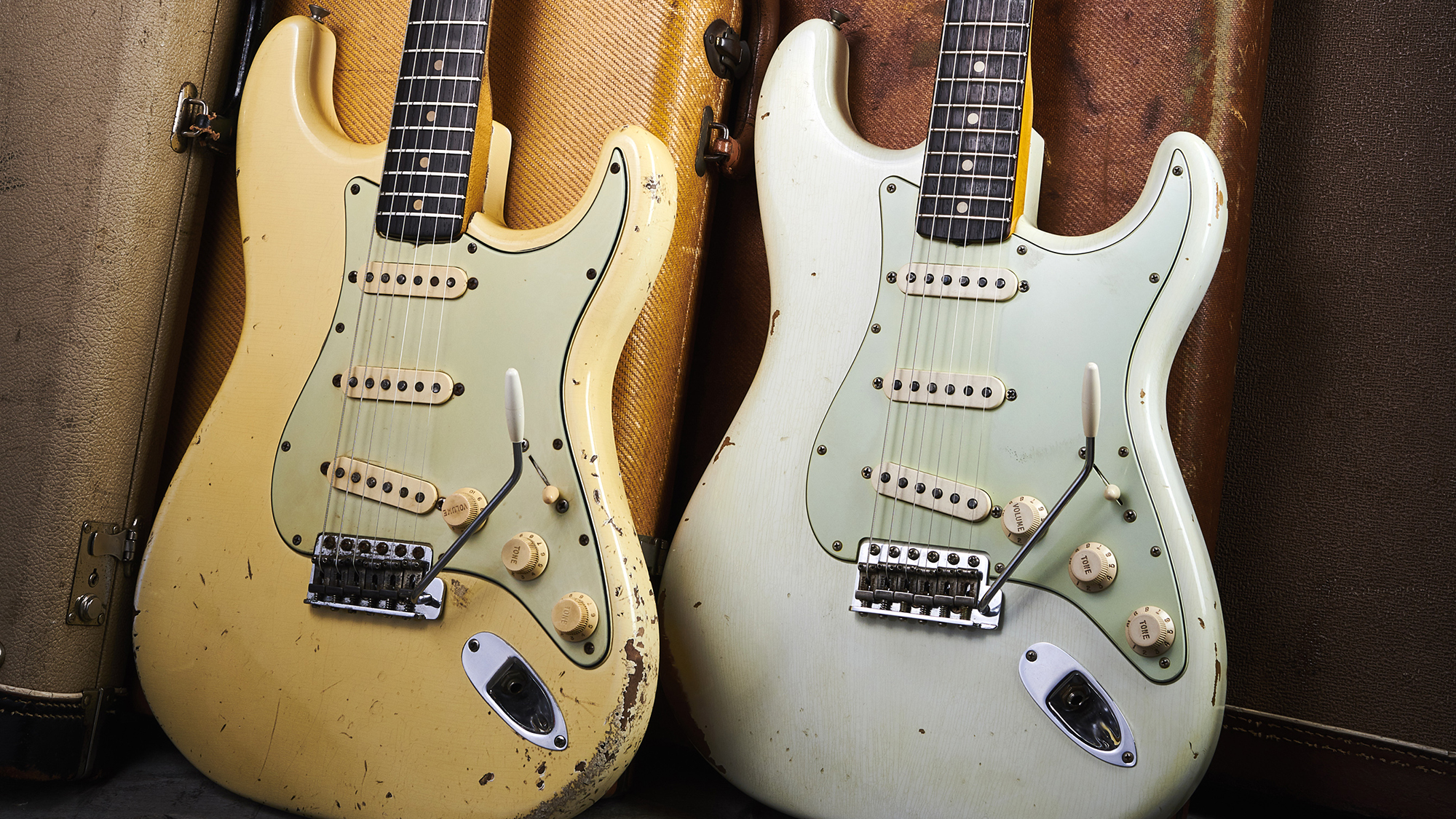
Over Before It Begins?
Bienstock closes his response demanding a complete retraction of Fender’s cease and desist claims, asserting its unnamed client retains full right to continue selling S-style guitars.
Whether the response will deter Fender remains to be seen, but if Fender does not back down, Bienstock has clearly laid out the firm’s intentions to fully defend this right.
“Efforts by Your Client to bully competitors based on misrepresentations and overstatements are anti-competitive. If Your Client continues to pursue these matters, Our Client will, of course, seek all available remedies, including all attorneys’ fees and costs,” he concludes.
The ball is back in Fender’s court, and the guitar world now waits to see what its next move will be – and if it plans to follow through and take its rivals to court. We’ll bring you the latest updates as the story develops.
![Array]](https://backingtracksfullcollection.com/wp-content/uploads/2026/05/1779828903_Array-150x150.jpg "Array] 31")
![Array]](https://backingtracksfullcollection.com/wp-content/uploads/2026/05/1779836214_Array-150x150.jpg "Array] 32")