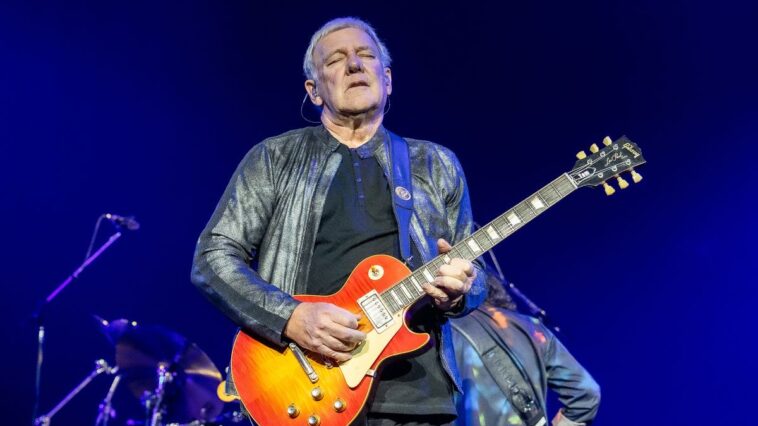
During the 11 years Rush spent on hiatus, Alex Lifeson kept busy. He released two albums with his band Envy of None, appeared on records by artists across the musical spectrum and developed a peculiar habit: disappointing the musicians who hired him.
It sounds like the last thing a guitarist of Lifeson’s stature would want to do. After all, artists don’t call Alex Lifeson because they’re looking for an anonymous session player. They call him because they want the guitarist behind Rush’s most iconic textures, unusual chord voicings and endlessly inventive approach to the instrument.
But that was exactly the expectation he wanted to escape.
Not that Lifeson was ever a stranger to guest appearances. Before Rush stepped away from the stage — seemingly for good — in 2015, he had already lent his talents to outside projects, from a soaring guitar solo on Porcupine Tree’s epic “Anesthetize” to helping fellow Canadians Platinum Blonde with some lead work in 1986.
Still, his approach changed after Rush’s final tour cycle ended. In the years that followed, Lifeson wasn’t interested in simply reminding people why they loved Rush. He wanted to find out what else he could do.
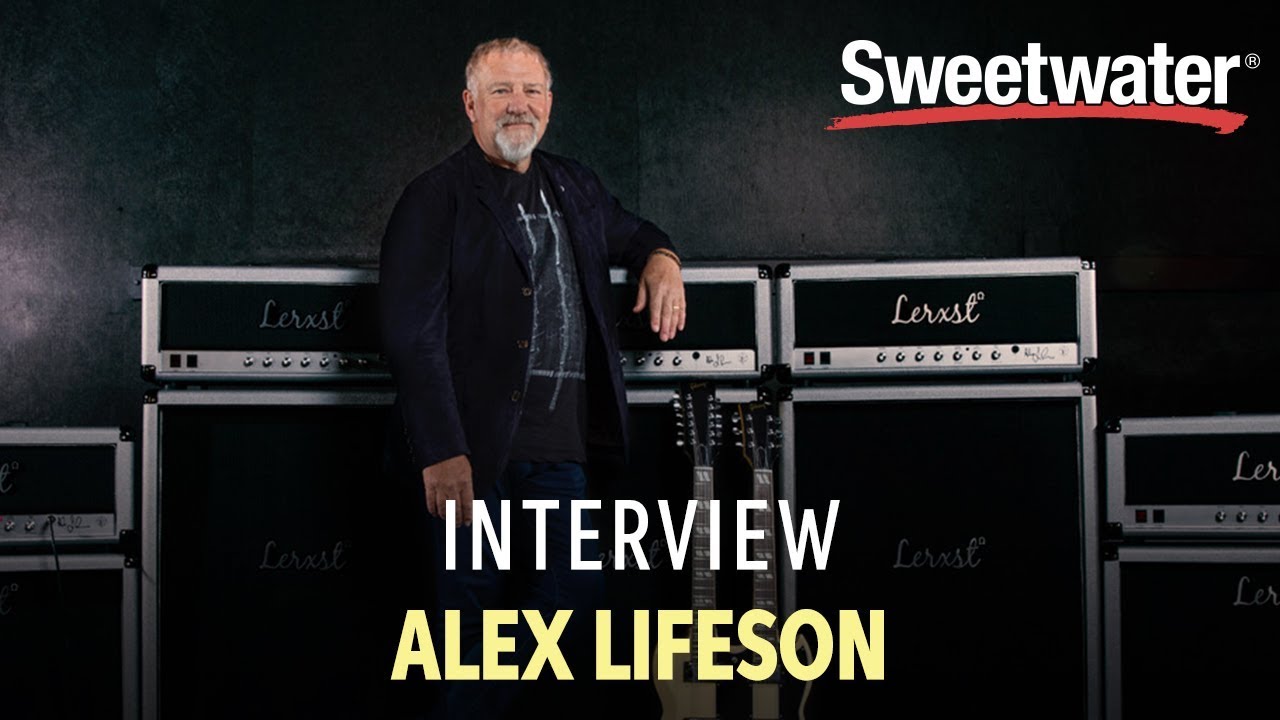
“In the last four years, I’ve been doing these other projects,” he told Sweetwater in 2020, midway through his post-Rush run of collaborations. “What’s challenging and what’s so attractive to me about those projects is, when someone asks me to play on their record, I think they think that they’re going to get Alex Lifeson.”
But as anyone who has followed Rush’s constantly evolving sound knows, Lifeson has never been interested in standing still.
“What I like to do is to completely disappoint them and do something that they would never expect,” he said with a smile. “I like to come out of left field, and that’s really a lot of fun for me.”
One of his first major post-Rush collaborations came on Triumph guitarist Rik Emmett’s solo album RES9. There, Lifeson delivered a pair of more traditional blues-rock solos, showing that he could still step into a familiar language when he wanted to.
After that, however, things became much stranger.
While working with Steven Wilson collaborator Marco Minnemann on Borrego, Lifeson leaned heavily into unusual effects, reversed guitar parts, and experimental textures.
Then came an unexpected collaboration with Orange County stoner-rock veterans Fu Manchu, where he approached the guitar less as a lead instrument and more as a source of atmosphere, rhythm, and noise.
“The track was already quite dense with a riffy guitar presence, and it forced me to think in terms of rhythm, ambiance and edge,” he told Guitar World in 2018.
According to Fu Manchu guitarist Scott Hill, the band ended up with exactly the kind of contribution Lifeson was chasing: “awesome riffs, sci-fi effects, and pick slides.” Across the song’s sprawling 18-minute runtime, Lifeson had room to explore every corner of the sonic landscape.
Elsewhere, in 2019, he appeared alongside Slash, Joe Satriani, and Mick Fleetwood on Don Felder’s American Rock ’N’ Roll. That same year, he contributed mandolin and ambient guitar textures to The Mute Gods’ Atheists and Believers.
His most unconventional guest appearance may have come on Tom Morello’s solo track “I Have Seen the Way,” where he shared guitar duties with Metallica’s Kirk Hammett. The song is filled with electronic glitches, heavily processed tones, and jagged, wah-soaked electric guitar sounds — a long way from the image of the classic prog-rock virtuoso many fans still carried in their heads.
That was the entire point.
Lifeson wasn’t searching for projects that allowed him to recreate the past. He wanted opportunities that pushed him outside his comfort zone, where he could experiment without becoming a caricature of himself.
“A lot of stuff now that I’m doing, I’m manipulating guitar sounds so it doesn’t sound like a guitar,” he explained. “Sometimes it sounds like a brass instrument. Sometimes it sounds like a stringed violin, or sometimes it’s just a rhythmic noise. There are so many ways you can process [the job].”
After a career spent being recognized as Alex Lifeson, the guitarist spent the years after Rush exploring what it meant to surprise people who thought they already knew what he sounded like.
Now, with Rush once again part of the conversation and the possibility of new music not entirely dismissed, those years of experimentation may prove valuable. The past decade-plus didn’t just give Lifeson new collaborators — it gave him new tools, new instincts, and perhaps new ways to turn progressive rock back up to 11.