

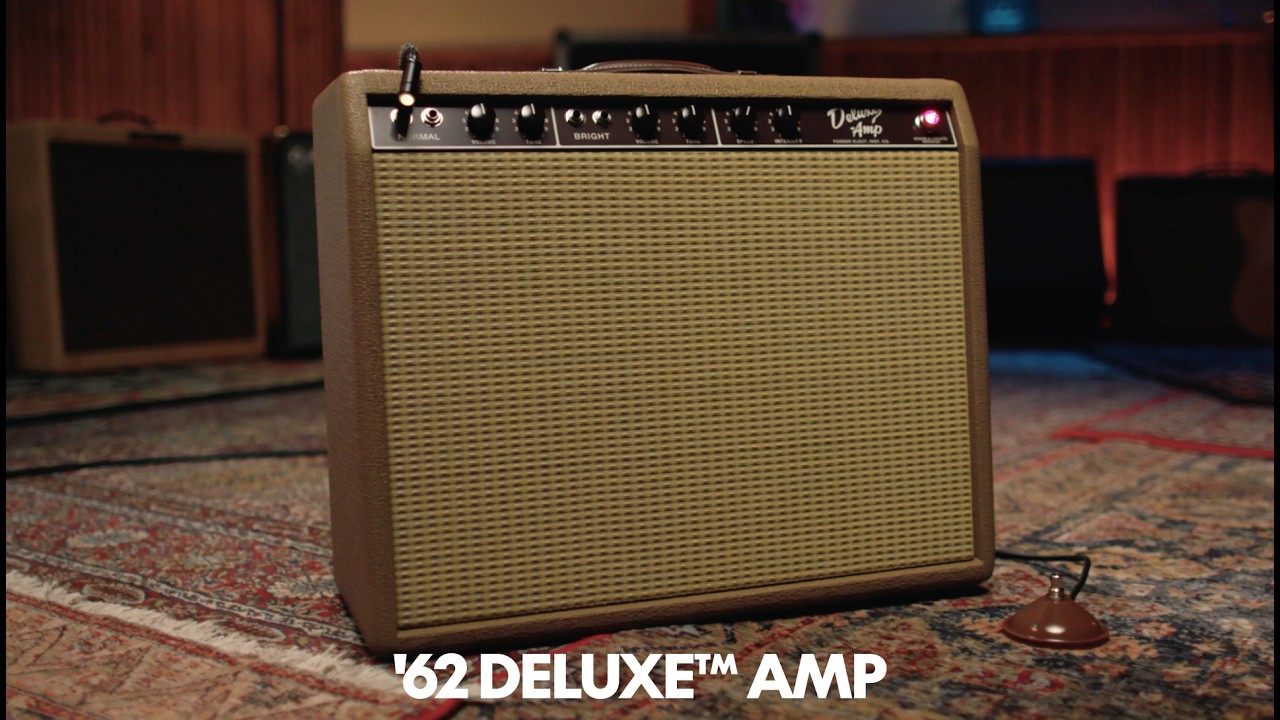
Fender’s brown-panel amps have always occupied a fascinating place in the company’s history. Sitting between the raw grit of tweed and the familiar sparkle of black-panel designs, they offer a warmer, more mid-forward voice that really comes alive when pushed into break-up.
For players who already know the appeal of these amps, the new ’62 Deluxe Amp is a chance to revisit a distinctive and often underrated tone. For everyone else, it’s an invitation into a part of Fender’s catalogue that’s often overlooked.
We sit down with Fender product manager, Rick Heins, to discuss the ’62 Deluxe Amp, how it came together and what makes it special.
Latest Videos FromGuitar World
After the success of the ’62 Super Amp reissue, what made the Deluxe the next logical brown-panel amp to resurrect?
Once we decided to do the ’62 Super Amp [released last year], it felt right to round out that part of the line with a Deluxe, too. There’s something really cool about bringing attention to an amp that people have heard about but few have actually played.
Brown-panel amps have a very loyal following, but they’re still a little under the radar compared with some of Fender’s better-known classics. This amp gave us a chance to show people another side of Fender that has always been there, even if it hasn’t always been front and centre.
What was Fender trying to capture by returning to this design?
We wanted to honour Fender’s history but also introduce something that has a new flavour to it. There are players out there who already know how great these amps can be, but there are plenty of people who haven’t really heard what a brown-panel Deluxe can do.
This amp gives them that chance. It wasn’t just about copying an old circuit because it looked nice on paper. It was about making sure the character of the amp came through in a way that felt relevant to players now.
What’s the first impression you wanted this amp to make?
If someone plugs into this amp and gets that immediate reaction… that sense that the amp is doing something a little different, then we’ve done our job. We wanted it to feel like a discovery, not just a reissue. The big appeal is that it gives you a lot of Fender tone in a very usable package.
It has warm cleans, great tremolo, and beautiful break-up when you push it. It’s also lightweight and grab-and-go, so it’s the kind of amp that works well in a band, in a studio or at home if you want an amp that feels alive.
I think the first thing people notice is that it doesn’t behave quite like the more familiar Fender amps they may already know. There’s a different kind of warmth, and the way it moves from clean to drive feels really musical. It’s responsive but not in a fussy way. It gives you enough under the fingers that you feel connected to it, which is something we wanted to preserve.

How does this amp distinguish itself from Fender’s other recent reissues?
The main thing is that this amp really has its own voice. It’s not just a smaller version of something else that we’ve done, and it doesn’t sound like the black-panel amps or the tweeds.
Brown-panel Fenders sit in a really nice middle ground; they’ve got warmth, midrange and they have a really musical overdriven sound when you turn them up. That middle ground is what makes it so interesting. It can be clean and elegant, but it can also get into this really rich, chewy overdrive.
How faithfully does the Deluxe follow the original circuit?
We tried to keep the circuit very faithful to the original, but we did make some refinements that improved usability. The tremolo, for instance, was extremely fast on the original Deluxe, so we slowed it down to give it a much better range and make it more playable.
That sort of decision is always about asking what a player needs from the amp now, not just what the original happened to do. So the process is really about refinement, rather than reinvention.

Were there any areas where modern components forced you to engineer around unavailable vintage parts?
Most of the parts in this amp are still things you can get, so we weren’t fighting against a lot of obsolete components. The bigger challenge was making sure the circuit did what it was supposed to do and getting the speaker and tremolo right.
Personally, I’ve never had a problem with PCB sounding great. If the circuit is right and the components are right, the amp is going to do what it needs to do
The original Deluxe allows both channels to be used together. Was preserving that part of the design important?
Yes. Both channels have tremolo and they’re in phase, just as they were on the original. That means you can use an A/B/Y setup with a clean sound on the normal channel, a driven sound on the tremolo channel, and combine the two. It’s a hidden feature that makes the Deluxe feel almost like a three-channel amplifier.
Since the original Deluxe was hand-wired, was there ever a point when the team questioned whether PCB construction could deliver the sound and feel you were after?
Not really. Personally, I’ve never had a problem with PCB sounding great. If the circuit is right and the components are right, the amp is going to do what it needs to do. What mattered to us was being meticulous about the circuit and using the original as the starting point. What mattered most to us was the sound, the feel and the way the amp responds.

When you revisited this amp, were you thinking about how it sounded when it was new, or how a vintage example sounds now?
We just wanted it to sound great right out of the box. An old amp can be magical, but it can also be tired, noisy or just inconsistent. Our goal was to capture the zone of a great-sounding Fender Deluxe and make that experience more consistent from amp to amp.
That’s a big part of what a reissue should do. It should give you the essence of the original without making you hunt for the one magical example that happens to still be in perfect condition.

How much of the original Deluxe character depended on getting the speaker right?
That was a big part of it. We tried a number of off-the-shelf options, but the best result came from something we developed with Celestion specifically for this amp and it made a huge difference. We wanted a speaker that would give us great cleans and overdrive, not just one or the other.
The speaker is one of those things that can quietly make or break an amp. You can have the right circuit and still miss the mark if the speaker isn’t doing the right job. Sometimes that means taking a bit more time and doing the work from scratch.
How closely did the final speaker need to behave like the original Alnico design?
The original Alnico speaker from our reference amp was tired, so it wasn’t really a fair reference for the whole story. We tried a few different things, and in the end the custom Celestion just suited the amp better. The extra effort paid off because the speaker became part of the amp’s personality, rather than just a component that was inside it.
Did developing a custom speaker mean you could go beyond what Celestion already offered?
Yes, even the speaker basket is different from anything else Celestion makes, so it brings its own character, rather than sounding like a Creamback or Greenback. We tried the V-Type, too, but to our ears the final speaker was less strident, more organic and had more of that swirling quality in the tone.

The brown-panel look brings a lot of character on its own. How important was it to keep the visual side of the amp intact?
They’ve got a really special midrange warmth and a beautiful way of breaking up. They’re not as scooped as black-panels and not as raw as tweeds
Quite a lot, actually. The original brown-panel amps had a very distinctive look, so it felt right to keep that visual identity intact. When an amp looks right, it already starts telling you something about what it wants to be. With this one, the look is part of the experience. It helps frame the whole identity of the amp.
What do you think gives brown-panel Fenders their own distinct character?
They’ve got a really special midrange warmth and a beautiful way of breaking up. They’re not as scooped as black-panels and not as raw as tweeds. They sit in a very musical place, and a lot of players really respond to that when they hear it. I think that’s what makes them so compelling. They don’t shout in the way some amps do.
They have a way of sitting in the mix and feeling natural under your fingers. When you hit the strings, they give back something that feels rounded and alive. That’s a hard thing to put into words, but players know it when they hear it.

How does a vintage valve reissue like the ’62 Deluxe fit alongside Fender’s modern digital development?
Fender is moving forward in a lot of directions at once, but the goal is to keep doing both the vintage tube thing and the modern digital thing exceptionally well. Those worlds aren’t opposites to us. What we learn from building tube amps influences what we do with digital products, and vice versa.
At the same time, it’s about respecting the past without getting stuck in it. The tube side keeps us close to the roots of what made Fender special in the first place, while the digital side lets us keep innovating and serving players in new ways.
What do you hope players take away from the ’62 Deluxe?
I hope they hear something inspiring and maybe discover an era of Fender they haven’t spent much time with. More than anything, I hope it reminds people that Fender’s story is bigger and more varied than the best-known chapters. If it gets more players into that brown-panel world, that’s a win.