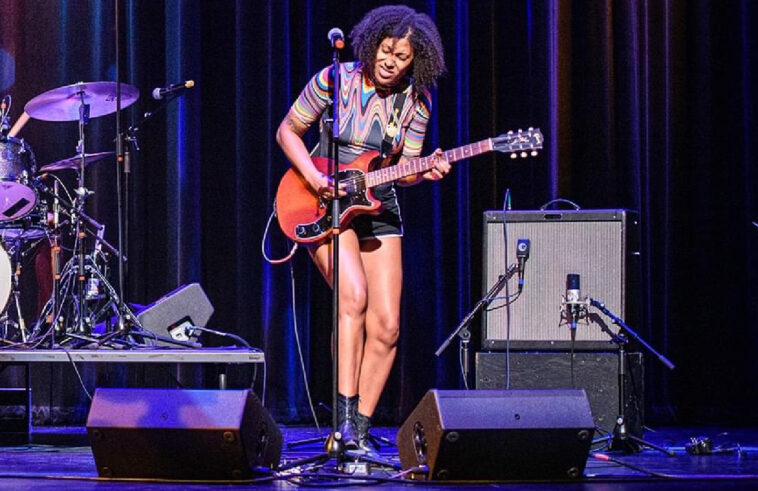
Today is Tuesday. I got home on Sunday from a trip to San Francisco with my guitar and pedals, where I opened for Spike and the Gimmie Gimmes at The Kilowatt city venue. It was fabulous.
But while my pedal bag included a PolyTune, OCD and reverb, all I really needed was my beloved Vox wah-wah. Hello, my name is Eva Walker. I’m a wah-wah addict, and this is my story.
I remember my first wah-wah fondly. I didn’t buy it – it was gifted to me by an ex. But no matter the source, I marveled that I could manipulate my guitar’s natural tone with a simple flex or point of my foot. As a former dancer (tap and ballet) I could put my training to good use.
Latest Videos FromGuitar World
For me, the wah-wah is single-handedly the greatest, most recognizable guitar sound. The alternation between high and low frequency isn’t just a cool effect – it’s power! It’s the ability to influence the listener from sounding like a temper tantrum from my two-year-old daughter to the teacher on Charlie Brown giving a lecture.
What I love most is that it sounds like it could be talking or crying. Whenever I hear a player using it, I wonder: are they speaking or are they weeping?
One of my favorite weeping wah-wah songs is Maggot Brain by Funkadelic. As some guitar-heads know, George Clinton told Eddie Hazel to play the lead solo as if his mother just died. Mission accomplished!
Although I think it’s more that the Strat’s mother just died and Funkadelic are the pallbearers. Sometimes I can’t listen to the whole 10-minute song without feeling overly emotional.
The weeping wah-wah features prominently in plenty of songs from the 1960s and ’70s. Perhaps most famously is Voodoo Child (Slight Return) by Jimi Hendrix; he sounds like he’s wailing, screaming and even begging. Somehow, though, it’s just two tones on a seesaw.
As for that delightful talking wah-wah, players know that making a guitar talk isn’t the most difficult thing in the world. The talent is in how a player puts emotion into that language. One of my favorite examples is What I Am by Edie Brickell and the New Bohemians.
The guitar practically raps – clean, calm and consistent, the energy builds as it makes its final point. Kenny Withrow knows how to make his guitar talk. It’s like he gave it a public speaking class; he shows real diction and dexterity.
Another great example is Tell Me Something Good by Rufus and Chaka Khan. It’s as if Chaka Khan is Chuck D and the lead guitar is Flava Flav – yes, that’s the hype wah! The guitar offers two standout features that could carry the track on their own, yet they prove to be complimentary in the background; the peanut gallery.
More of my favorite wah-wah comes in 1970s Afrorock songs from areas like Nigeria and Zambia. W.I.T.C.H, Chrissy Zebby Tembo and the Ngozi Family kill me. Tracks like Coffin Maker and Troublemaker are Zamrock staples that heavily stand on the fuzzy wah-wah.
The recordings at times even sound cheap or low quality – muffled. But it’s the talent and the choices made by the musicians that make them some of the best recordings I’ve ever heard, where the wah-wah displays rawness, resilience and frustration from civil wars and economic struggle.
Another example is Blacky Joe from the Nigerian band PRO (People’s Rock Outfit). The tune puts me in the shoes of the titular Joe, who’s burnt all his bridges in town. He’s a misfit, constantly in shady situations. The guitar solo at the end could easily be Joe running away or begging for his life. It’s the sound of a defenseless man.
The best compliment I’ve ever gotten came from a man in New York. I’d just come off stage after an hour with my favorite pedal. “Wow!” he said. “You’re like Jimi Hendrix but with a better ass!”
I’m pretty sure I hugged him. Hey, addicts have to stick together.