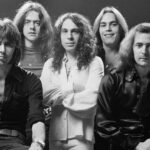
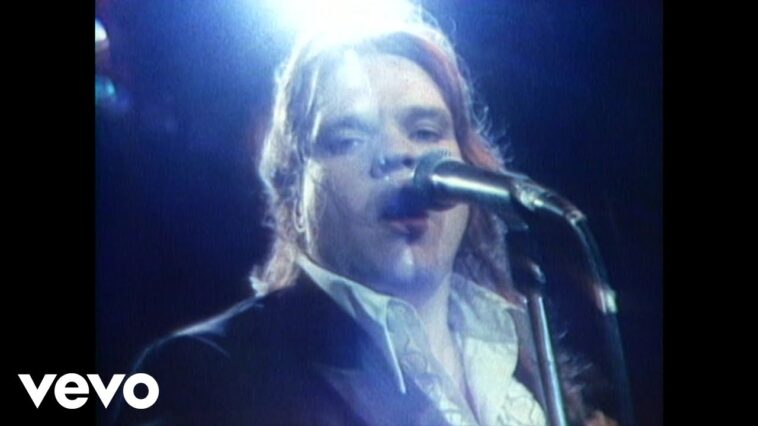
Kasim Sulton didn’t fancy himself as a session musician – but that hasn’t stopped him from appearing on dozens of iconic records.
He’s worked with everyone from Steve Stevens to Richie Sambora, but it’s his relationship with Todd Rundgren and Meat Loaf that he’s remembered most for – especially Meat Loaf’s Bat Out of Hell. “I had no idea the album would become one of the top-selling records of all time,” Sulton tells Bass Player.
“Jim Steinman was shy and reserved; Meat Loaf was loud and boisterous. Together they bottled lightning. Of course, the musicians involved – myself, Todd Rundgren, Roy Bittan, and Max Weinberg – took our performances seriously.
Latest Videos FromGuitar World
“But for the most part, the music and the sessions were quite funny. You couldn’t help but laugh at the content of most of the songs!”
Sulton was also a member of Rundgren’s Utopia, and tours with the guitarist’s solo band today. “Todd is demanding, but he trusts the people he surrounds himself with. We just celebrated 50 years working together, and I feel we have a pretty good understanding of each other.
“As long as you’re working hard and not slacking off or dialing it in, Todd is easy. If you ask him what you should be playing, he’ll probably tell you, ‘I don’t know! Figure it out – that’s why I hired you!’”
Now 70, Sulton remains very inspired. When he’s not working with Rundgren, he’s writing solo music. Looking back, he says: “What kept me working with Meat Loaf was a true sense of what Jim Steinman’s original idea was and how best to perform those songs.
“Not too many people were in the room when that record was being made. I was. I’ll remember Meat as a big teddy bear who loved performing in front of an audience. And Todd is the consummate artist – one of the best lyricists in the second half of the 20th century. I’m proud to have worked with them both.”
How did you break into session work?
I never really considered myself a session musician. I cut my teeth in live situations. I was always happy to be in a recording session or going into the studio to work on my own music; and I always looked forward to performing in front of an audience. I think I became pretty popular on the studio call list because of my work with Todd and Utopia.
What led to your landing the gig with Utopia?
I was close with [orchestrator and pianist] Michael Kamen, who was friends with John Siegler and Roger Powell, both in Utopia at the time. John was leaving the band and asked Michael if he knew anyone who might take his place. He recommended me.
After borrowing $20 from my uncle, I took a bus up to Woodstock, where the band was based, and auditioned. Utopia were a prog rock band at the time and my bass playing was adequate – but my real selling point was the fact that I could sing.
Tell us about Meat Loaf’s Bat Out of Hell sessions.
About six months after I joined Utopia, I was sitting in a rented home in Woodstock, New York. Todd called and asked if I wanted to play bass on a record he was producing. I said, “Sure,” and asked what the artist’s name was. When he said, “Meat Loaf,” I thought he was joking, and I said as much. He said, “Just show up at the studio tomorrow!”
Next day, I witnessed Jim Steinman sitting at a small upright piano and Meat Loaf, Ellen Foley, and Rory Dodd performed the entire record. There was no demo tape – just these four people belting out the seven songs for Bat Out of Hell.

What was it like working on songs like Bat Out of Hell and Paradise by the Dashboard Light?
No one gave me any direction. I had free rein to come up with any bass lines I thought would be good. In retrospect, I took liberties that might be frowned on in today’s sessions – what I mean is, I played a lot! I riffed and stuck in little ad-libs all over the place that, to this day, I’m extremely proud of.
Todd has been critical of Meat Loaf and how people view the project on the whole. What were your thoughts then compared to now?
I wrote Set Me Free in 20 minutes. It became the only top 40 hit Utopia would ever have
After we finished the record, I honestly thought I would never hear it again. It was great to have a hand in that music, working with Jim, Roy Bittan, Max, and Todd.
But at the time it didn’t strike me as a landmark record. In hindsight I can see that it spoke to a segment of youth that connected with the brilliance of Jim’s lyrics.
Elsewhere, you played a big role in Utopia’s only top 40 hit, Set Me Free.
I was signed as a solo artist to Bearsville Records during Utopia’s time on that label. I was given 100 hours a year to work on demos, and I used every minute recording what I hoped would be my first solo album. I went in to see Albert Grossman to tell him I was ready to officially start on that record, but he didn’t think I was, and that I needed to write more and record more demos.
I disagreed. As a hot-headed 21-year-old, I told him I wanted out of my contract. He said, “Sure thing, that’ll be $50,000 and 5 points on whatever you record. Welcome to the real world!”
That’s when I took out my frustration in a song. I wrote Set Me Free in 20 minutes. It became the only top 40 hit Utopia would ever have – thanks in no small part to the contributions of Todd and the band.
In the ’80s you worked with Steve Stevens and, later on, Richie Sambora. What was that like?
Steve is a brilliant guitarist, and I had the pleasure of working on his solo album along with my childhood friend, drummer Thommy Price. His influences span a pretty wide spectrum, from Segovia to Robert Fripp.
I toured for a year with Richie, and it was one of my most memorable experiences. Richie is an exceptional guitarist and was so generous and kind to me that I wrote his mother a letter at the end of the tour, telling her what a great son she raised.

You were also a member of Joan Jett’s band.
I played with Joan from 1986 to 1989. Thommy Price was her drummer – we grew up together. When her bass player left Thommy thought to call me. Like most successful artists, Joan knows exactly what she wants. Not so much demanding, but confident.
I’ve found that people hire me not only because of what I bring to the table, but because I’m clear on who I’m working with. Doesn’t matter if it’s Joan Jett or Celine Dion, I’m there for them, not for myself.
We had an idea that Bat II was going to be decent-sellling. We didn’t expect it to sell 17 million
Meat Loaf had a big rebound with Bat Out of Hell II, which you were a part of. Did you see that coming?
Who could have predicted lightning striking twice in the same place? When Todd and I recorded all the background vocals on Bat II, we had an idea that it was going to be a decent-selling record. We didn’t expect it to sell 17 million copies! Kudos to Alan Kovac, who managed Meat Loaf at the time and was integral to the success of that record.
Later you were a member of The New Cars. What did you make of Benjamin Orr’s playing style?
The beauty of Ben’s playing was in its simplicity. The New Cars was a pretty cool project. I know Ric Ocasek didn’t like it! We were writing new music and hoping that we could continue. Were it not for an unfortunate accident involving Elliot Easton, it could have survived much longer.
How has your rig changed from your early days to now?
I like to keep it as simple as possible, whether with Utopia, my solo band, or anyone – an amp and a bass. Unless, of course, the gig requires a pedalboard with some effects on it, in which case an Eventide H9 and a couple of Keeley stompboxes do everything I’ll need.
Any regrets?
I’ve met three Beatles and worked with one. I wish I could have shaken George’s hand and thanked him. I’m proud of the fact that I’m known and respected by musicians I grew up listening to and admiring. What more can a kid from Staten Island ask for?