![Array]](https://backingtracksfullcollection.com/wp-content/uploads/2026/05/Array.svg.svg+xml "“I don't have enough breath, and you don't have enough tape, for me to explain that even remotely”: How Dimebag Darrell pushed Pantera bassist Rex Brown to his limit 18")
From Pantera to Kill Devil Hill, bassist Rex Brown has come to personify the rock ’n’ roll lifestyle, and he’s got the stories, the surgeries, and the scars – as well as the hard-won sobriety – to prove it.
“All I’ve ever known in life is bass,” Brown told Bass Player in 2017. “There’s not a lot else that l care to do, or be as good at, but I know the bass guitar. I know how to play them, how to fix them, how to build them, and how to break them.”
Standing toe to toe with Pantera guitarist Darrell “Dimebag” Abbott, wielder of one of rock’s most massive guitar tones, Brown asserted his own sonic identity while also keeping pace with drummer Vinnie Abbott’s jackhammer beats.

“With Pantera it was so hard because that guitar sound was so big, the reverb on the snare was so loud. Dime would hit at like, 3.5 to 4 kilohertz, and that’s where I would try to get my bass attack.
“If it were up to Dime, he would have had me to play everything in unison. But being a bass player, I felt that there were certain variations I could play within the riff – and within the context of the riff – that made it unique.
“It would have been very easy for Dime to just pick up a bass and play along with his guitar tracks, but as a bass player who knows composition and how things fit together, I didn’t want to do that all the time.
“I wanted to have a huge, monstrous sound underneath Dime, but we were flying at 188 beats a minute. I had to be articulate, and sometimes, you can’t do that when you have a huge sound.”
What’s the secret behind your distinctive tone?
I don’t think I got my SVT until the first official Pantera record. But once I got my SVT stacks, that changed everything. For so many years, I had to play so hard to be overheard above the reverb of Vinnie’s snare and over Dime’s crazy guitars. That’s probably where it culminated.
I also downstroke a lot, and I can play incredibly tight. I attack the bass; I don’t just sit there and stumble around. When you hit a note, you gotta fucking hit it. That’s your note – go get it, and don’t pussyfoot around with it.
![Pantera - Walk (Official Music Video) [4K] - YouTube](https://img.youtube.com/vi/AkFqg5wAuFk/maxresdefault.jpg "“I don't have enough breath, and you don't have enough tape, for me to explain that even remotely”: How Dimebag Darrell pushed Pantera bassist Rex Brown to his limit 20")
Has your bass playing changed over the years?
I still get up every morning and play the bass for 30 minutes. And if someone asked me to get onstage any open night, I would get up there and unleash it.
I’m not a Billy Sheehan type of player. I love Billy and he’s a good friend, but my mentality is more to push that bottom as much as I can and incorporate the riff into what I’m doing to lock it all down. However, at a point I got sick of being just the pocket guy, so l started stepping out and playing in different ranges, too.
What were the biggest things that sculpted you from your time in Pantera?
I don’t have enough breath, and you don’t have enough tape, for me to explain that even remotely. You have to all strive for a common goal, and eat, sleep, and breathe it until you reach that shit.

I was 17 when I joined the band in 1981, and it’s been my life ever since. Vulgar Display of Power came out in 1992, which is probably my favorite record, and I remember finishing that album like it was yesterday.
How important are chops?
It’s all about the song. It’s not about ego or who’s playing where. It’s about knowing when to play, when not to play, and what’s going to hold down that fort.
I can sit and play guitar all day long, but when it comes to bass playing, it’s a totally different game. I have to keep that low-end so everything else can breathe and so that the vocals paint the picture.
![Pantera - I'm Broken (Official Music Video) [4K Remaster] - YouTube](https://img.youtube.com/vi/2-V8kYT1pvE/maxresdefault.jpg "“I don't have enough breath, and you don't have enough tape, for me to explain that even remotely”: How Dimebag Darrell pushed Pantera bassist Rex Brown to his limit 22")
But ‘The Riff’ is sacred, right?
When you’re talking about very specific riffs – something like I’m Broken – you’d better believe it. But there’s a certain way you can instil that main riff while still putting your mark on it.
It’s all about knowing when to shine and knowing when not to. I definitely tried different things during the lead section, but not all over the song.
Some bass players these days play and play even when the vocalist is singing, and it just clouds everything up.
Did you guys work out how you’d support Darrell’s guitar solos?
Some of the Pantera basslines I’m proudest of happened underneath Dime’s solos. Sometimes l’d say, ‘Let me try a part for the solo,’ and we would just jam it; if it worked, it worked. Pretty much any time he’d go to the upper register, I’d keep it real solid on the bottom, down with the kick.
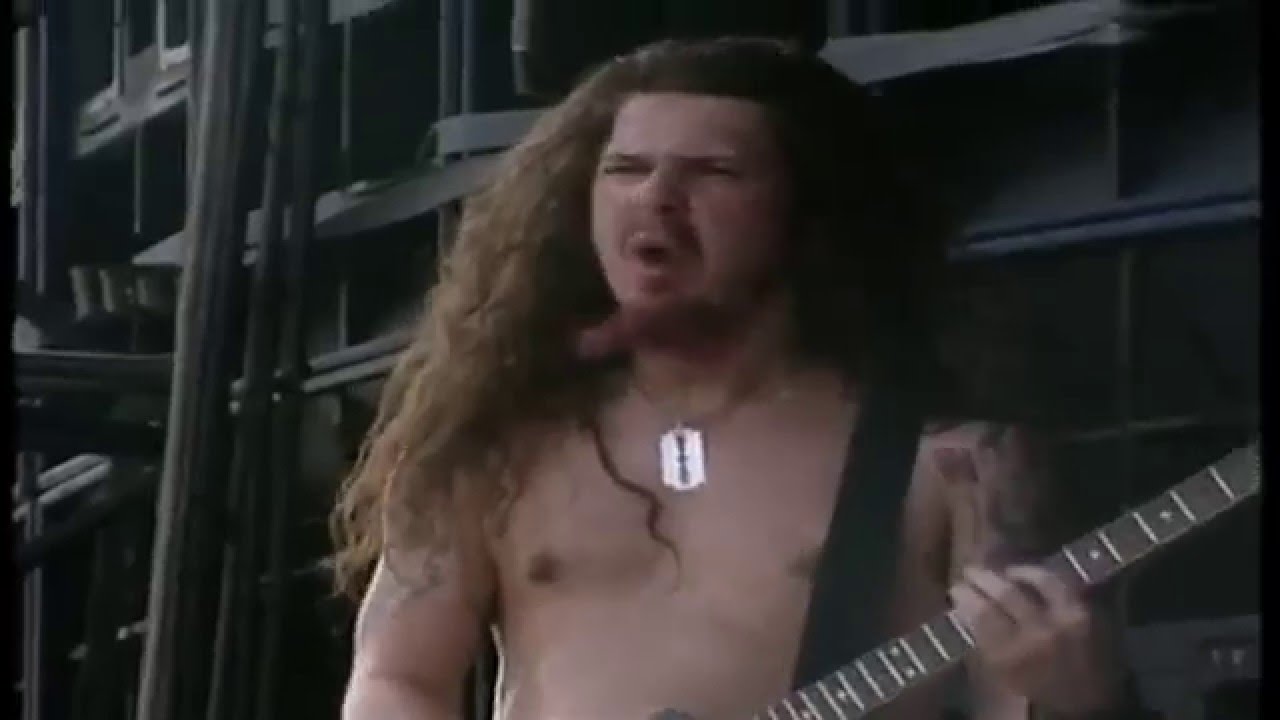
So if you notice in Rise, for example, it’s me just playing straight 16ths or eighth-notes. And a lot of those times when he went in the upper register I would play eighth-notes or 16ths under him, and then when Dime came down, we would play everything in unison. But you know, we didn’t even think about it back then. It was just second nature. It was magic.
![Array]](https://backingtracksfullcollection.com/wp-content/uploads/2026/05/1779850244_Array.svg.svg+xml "\"Although Dylan showed me what I wanted to be, Syd Barrett showed me how I could be it. And I actually wound up sounding like John Lennon\": cult rocker Robyn Hitchcock opens up about unique career 30")