
![Array]](https://backingtracksfullcollection.com/wp-content/uploads/2026/05/1779850244_Array.svg.svg+xml "“I kept it a cappella, and began to sing it this way in my live show. This detail affected everything to come”: The butterfly effect of Tom’s Diner – how Suzanne Vega’s choice affected the way we all listen to music 18")
A capella hit singles are a rarity in pop. In fact, you can probably count them on the fingers of one hand: The Flying Pickets’ versions of Only You and When You’re Young And In Love and The Housemartins’ Caravan Of Love.
And Tom’s Diner, an oddity that somehow became Suzanne Vega’s biggest song, as well as playing a crucial role in the development of the MP3.
More of that later, but the song dates from the early 1980s when Vega was starting as a singer-songwriter. You surely know it: based around a simple ‘do-do do do da-do do do’ refrain, Vega recites an observational tale of sitting in the titular New York cafe reading a paper and watching life go by around her. Heard the first time, it’s a striking piece that seems to freeze time.

Vega first wrote the words sometime in late 1981. Tom’s Diner is, of course, a real place. Situated on the corner of 112th Street and Broadway on Manhattan’s Upper West Side, it’s actually Tom’s Restaurant, though ‘diner ’, as Vega has pointed out before, scans much better.
“It was really written from the point of view of my friend Brian, who is a photographer,” she explained on a 1987 interview LP, Portrait Of An Artist. “He had made a comment to me one day that he felt that as a photographer, he saw his life through a pane of glass, and always felt like he was the witness to a lot of things, but was never really involved in them.”
“So I was sitting at Tom’s Restaurant one morning, and suddenly I guess I got this weird feeling. It came over me, and I thought ‘well, if I were Brian today, how would I be perceiving these different things?’ And in a way it was supposed to be slightly humorous and not entirely to be taken seriously. And also I thought of it from a male point of view.”
“The line about the actor ‘who had died while he was drinking’ was true: William Holden’s obituary had been in that morning’s paper,” Vega told the Guardian in 2016, dating the day inspiration struck her as Wednesday 18 November 1981. “The ‘bells of the cathedral’ were those of St John the Divine up the street, though I made up the bit about the woman ‘fixing her stockings’.”.
The melody came to Vega as she was walking down Broadway. “I wanted something jaunty,” she wrote in a New York Times essay in 2008. “I remember liking the near rhymes of ‘diner’ and ‘corner’, ‘sitting’ and ‘waiting’. I was imagining it as a kind of French film soundtrack, something vaudevillian on piano, like a background to a Truffaut film.
“But I didn’t play piano and didn’t know anybody who did. So I kept it a cappella, and began to sing it this way in my live show. This detail, singing the song alone with no accompaniment, affected everything to come.”
At her live shows, Vega noticed that if she started singing the song unaccompanied, people would immediately stop talking and pay attention. “So I used it as an opening song. I can’t think of a single time that this didn’t work. Even at the Prince’s Trust concert in 1986, in front of 10,000 people, I went onstage as the opening act and began the entire concert with that song – and it worked!”
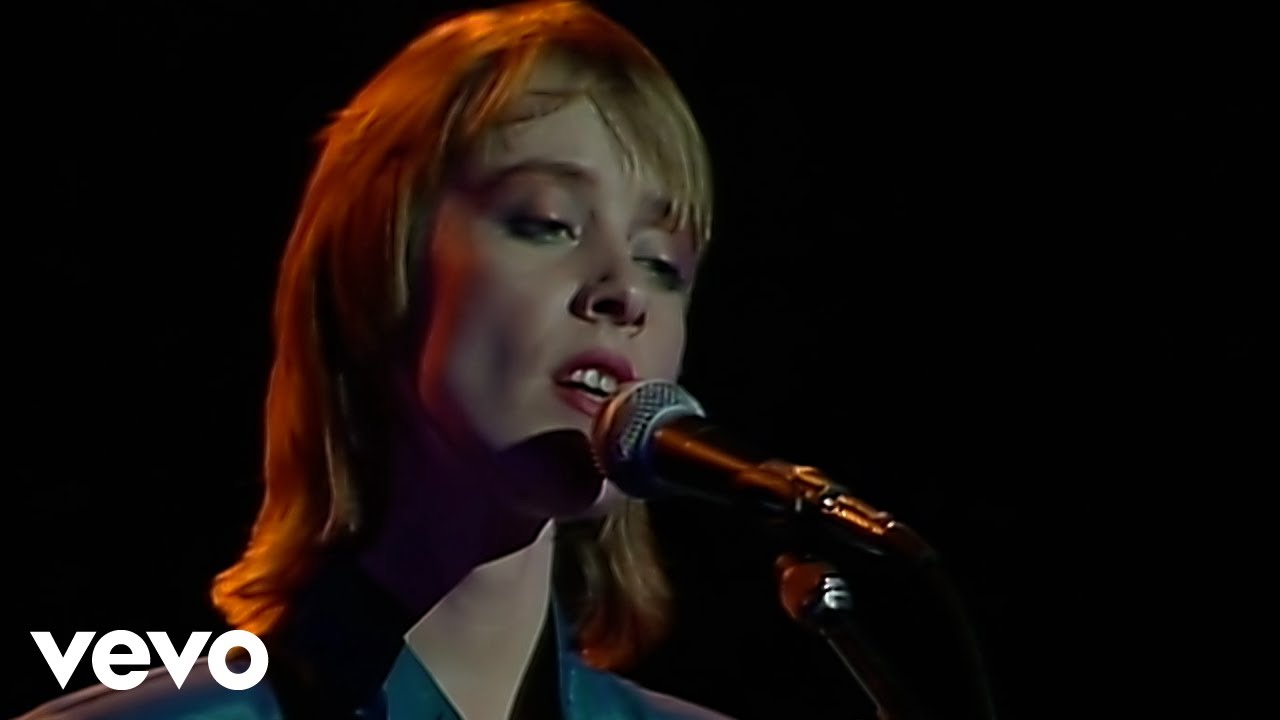
By that point, Tom’s Diner had already been released once, in the January 1984 edition of Fast Folk Musical Magazine, a kind of audio mag that showcased the best of up-and-coming singer-songwriters of the folk/ acoustic persuasion. The exposure led to her being signed by A&M later that year.
Vega released her self-titled debut album in 1985. Both a critical and word-of-mouth success, it spawned a pair of UK hit singles – Marlene On The Wall and Left Of Center. Tom’s Diner eventually emerged on the following album, 1987’s Solitude Standing. Indeed, it appears twice, once as the opener and again in reprised form at the end. There was enough interest in the track for it to be chosen as the second single, though it was only a minor hit, reaching Number 58 in the UK charts in the summer of 1987.
And there the track might have remained, as a curio from a well-regarded album, were it not for Nick Batt and Neal Slateford. The Bath-based pair were at that point just another team of bedroom producers exploring the possibilities opened up by the then-new sampling technologies. Speaking to the Guardian in 2016, Batt remembers the genesis of their idea.
“Neal brought in Suzanne’s song and said: ‘I reckon we can stick a beat under this.’ I came up with a bassline, strings, a bit of piano. In those days, it was impossible to get a whole song into a sampler, so we spent evenings and weekends cutting Suzanne’s vocals into little bits.”
“We sent it to a mate who was a rep in London, and he took it around the shops. I went away for the weekend and came back to a phone full of messages. Everyone was talking about the track. Radio 1 even broke its policy of not playing bootlegs, which is all it was at that point.”
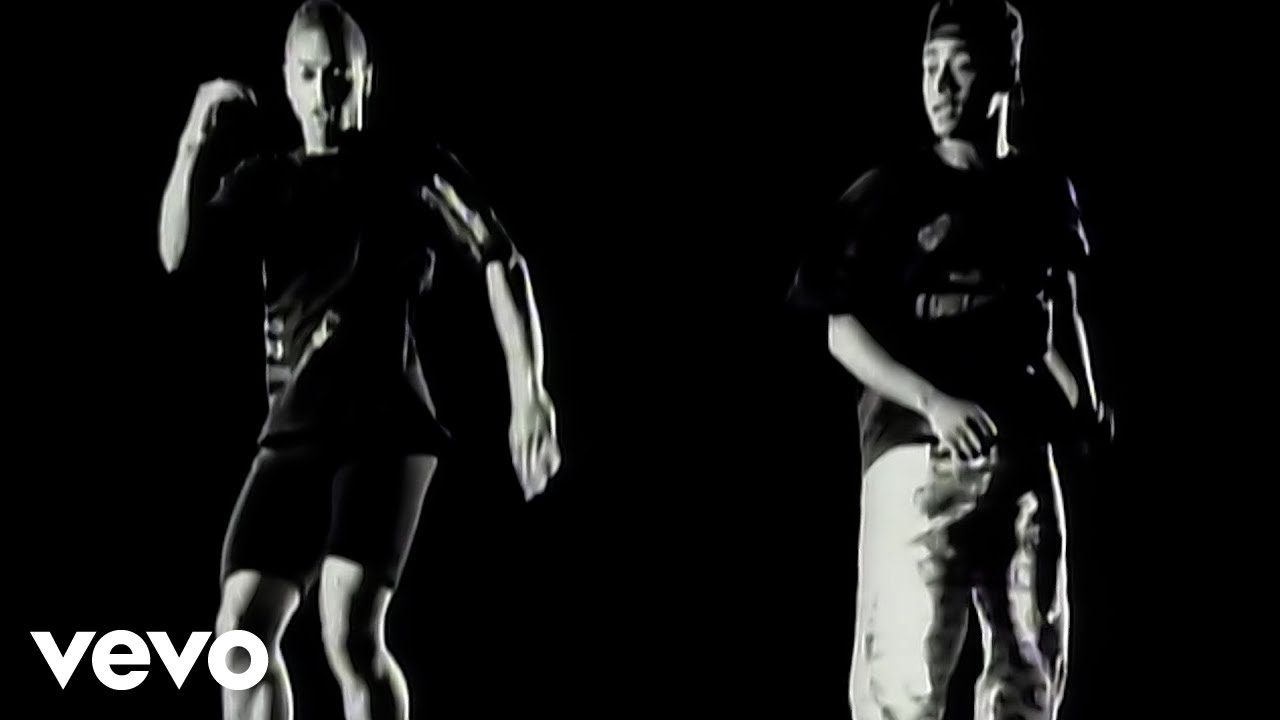
On the other side of the Atlantic, Vega was promoting her third album Days Of Open Hand. It wasn’t going well. Reviews had been mixed and audiences had visibly dwindled. Writing in the NYT, she remembers: “We were backstage at the Arsenio Hall show when my manager told me that some boys calling themselves DNA, in England – Bath, to be specific – had taken Tom’s Diner and put a dance track to it. They had ‘re-mixed’ it.
My manager, Ron Fierstein, told me that A&M and Polygram were considering taking legal action against them for copyright violation.”
But Vega listened to the bootleg, which at that stage still had the title of ‘Oh Susanne’ and found, to her surprise, she rather liked it. “It made me laugh. It wasn’t a parody, which is what I was afraid of. The song is the same, my voice is still my voice, the story still the story, even though they left out the very end (they told me later they thought it sounded weird, musically, to keep the ending).”
“It was so obvious that these boys were not slick hi-fi wizards, as the sound was boomy and the arrangement repetitive, but the raw energy of the idea jumped out right away. These were not boys with means and money, and I liked it that I had kindled their imagination.”
Vega and her management arranged a meeting with DNA, where she discovered – again, to her surprise – that they were white middle-class boys rather than the cool urban dudes she was expecting. A deal was worked out whereby Vega retained the rights in return for DNA being paid a flat fee. The track was released as ‘Tom’s Diner by DNA featuring Suzanne Vega’.
Both parties assumed that the track would be an underground hit at best. But bolstered by daytime Radio 1 play, the new version of Tom’s Diner reached Number Two in the UK, was a Top Ten hit all over Europe and even reached Number Five on Billboard, a rare feat for the British dance record in 1990.
But the success of the DNA remix didn’t seem to assuage appetite for the track. The number of covers, versions and interpolations of Tom’s Diner began multiplying exponentially from then on. Vega even compiled them onto an album called, inevitably, Tom’s Album, in 1991. “It was a logistical nightmare to administrate,” she admitted in 2008. “I had to go back to all the people who had taken the song without permission, and ask their permission… to use their version of my song!”
Since then it’s been covered by Giorgio Moroder and Britney Spears and REM and been sampled or interpolated by acts as varied as Public Enemy, Fallout Boy, Tupac Shakur and Lil’ Kim. According to Spotify, as of 2023, there have been over 50 different versions of the song. It’s probably an underestimate.
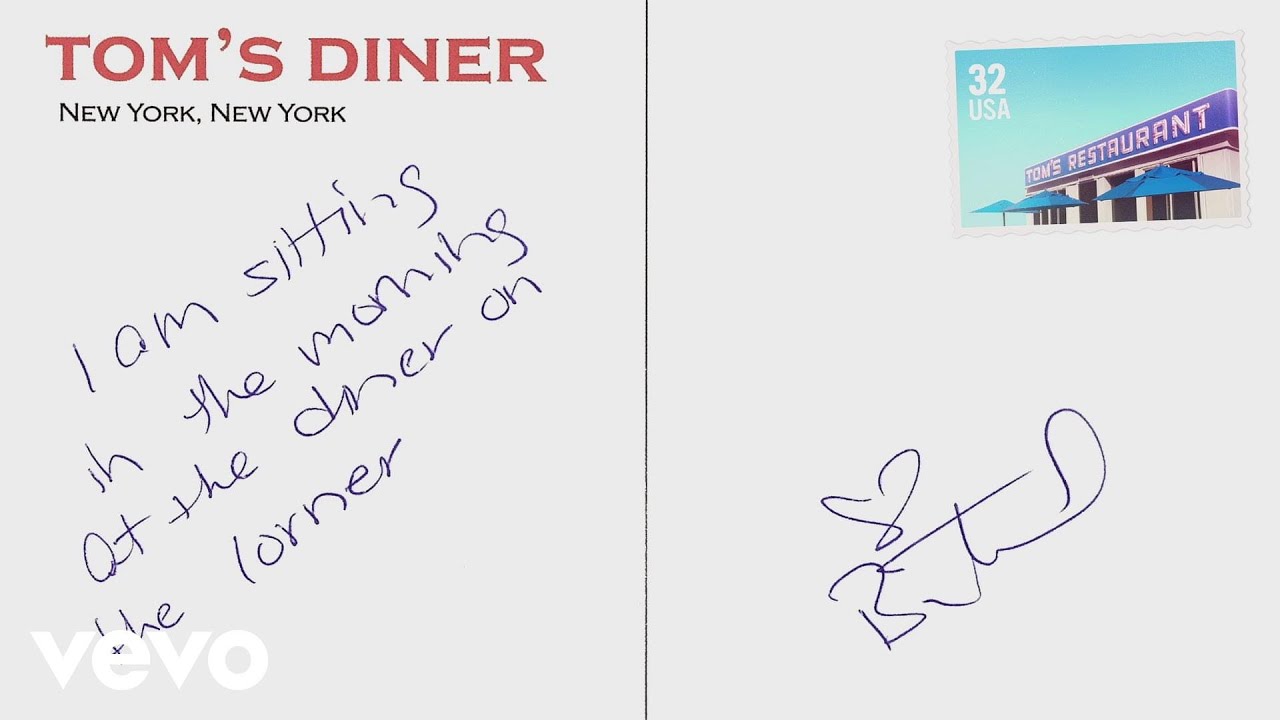
But this song’s shaggy dog tale doesn’t even end there. Tom’s Diner played a not-insignificant role in the development of the MP3. In the early 1990s, the German electrical engineer Karlheinz Brandenburg was working on the design of the file, especially the tricky problem of compressing an unaccompanied human voice. “I was ready to fine-tune my compression algorithm,” Brandenburg told Business 2.0 Magazine in 2000. “Somewhere down the corridor a radio was playing Tom’s Diner. I was electrified. I knew it would be nearly impossible to compress this warm a capella voice.”
Indeed, when compressed, Vega’s voice sounded hopelessly distorted. Brandenburg decided that going forward he’d use the track as a measure of how much progress he was making to perfect the compression process.
He calculated that he’d listened to Tom’s Diner “thousands” of times before he was satisfied that he’d cracked the problem. Among audio engineers, and later by sheer repetition, Vega has ended up being dubbed ‘the mother of the MP3’.
It’s a title she clearly looks on with wry amusement. In 2007 Vega met Brandenburg and his team at the Fraunhofer Institute in Erlangen, Germany, a meeting that was flagged up by the press as ‘the mother of the MP3 comes to the home of the MP3’.
Writing in 2008, she recalled: “We had a press conference at which they played me the original version of Tom’s Diner, then the various distortions of the MP3 as it had been, which sounded monstrous and weird. Then, finally, the ‘clean’ version of Tom’s Diner.”
“The panel beamed at me. ‘See?’ one man said. ‘Now the MP3 recreates it perfectly. Exactly the same!’”
When she suggested that the original has more warmth and bottom end, “The man looked shocked. ‘No, Miss Vega, it is exactly the same.’”
She held her ground. “’Everybody knows that an MP3 compresses the sound and therefore loses some of the warmth,’ I persisted. ‘That’s why some people collect vinyl…’ I suddenly caught myself, realising who I was speaking to in front of a roomful of German media.”
The man insisted. “’No, Miss Vega. Consider the Black Box theory!’”
Vega stared back blankly.
“’What goes into the Black Box remains unchanged! Whatever goes in comes out the same way! Nothing is left behind and nothing is added!’”
At which point, the woman who started it all, who on a cold autumn Manhattan day all those years ago wrote down those words that have led to so many different versions and interpretations and indeed shaped how we listen to music today, politely backed down.
Clearly, on this occasion, discretion was the better part of valour.
![Array]](https://backingtracksfullcollection.com/wp-content/uploads/2026/05/Array.svg.svg+xml "The inside story of Gibson's Century Collection acoustics 29")