

This interview originally ran in Guitar Player’s October 1986 issue.
Steve Vai is the most exciting hard-rock guitarist since, well, Eddie Van Halen. He is as unique in his own way as Van Halen or Adrian Belew — or Allan Holdsworth, for that matter — are in theirs. Flashy, funny, and unpredictable, he boldly goes forth where no man has gone before. And now, performing for his biggest audiences ever with David Lee Roth, he may well become a touchstone for new directions in rock guitar.
On Eat ’Em and Smile, Roth’s group is rounded out by former big band drummer Gregg Bissonette and the inimitable Billy Sheehan. The pairing of players the caliber of Vai and bassist Sheehan is almost unprecedented in rock, and it works.

From the album’s opening sounds — Dave’s conversation with Steve’s talking guitar in “Yankee Rose” — it’s clear that listeners are in for an extraordinary performance. The musicians deal in swampy grooves, uptown blues, big band jazz, and heavy metal. Stunning unison fingertaps on bass and guitar break new ground. Vai laces his fills and solos with amazing whammy feats and unexpected turns. At the heart of it all is his unique personality and sense of humor — his attitude, as he calls it.

Vai first met singer David Lee Roth at a Hollywood after-hours club. At odds with the rest of his band Van Halen, Dave tapped Steve for songs for his upcoming movie Crazy from the Heat. When Van Halen reformed with singer Sammy Hagar and the Crazy from the Heat film deal fell through, Dave asked Steve to help him form a band.
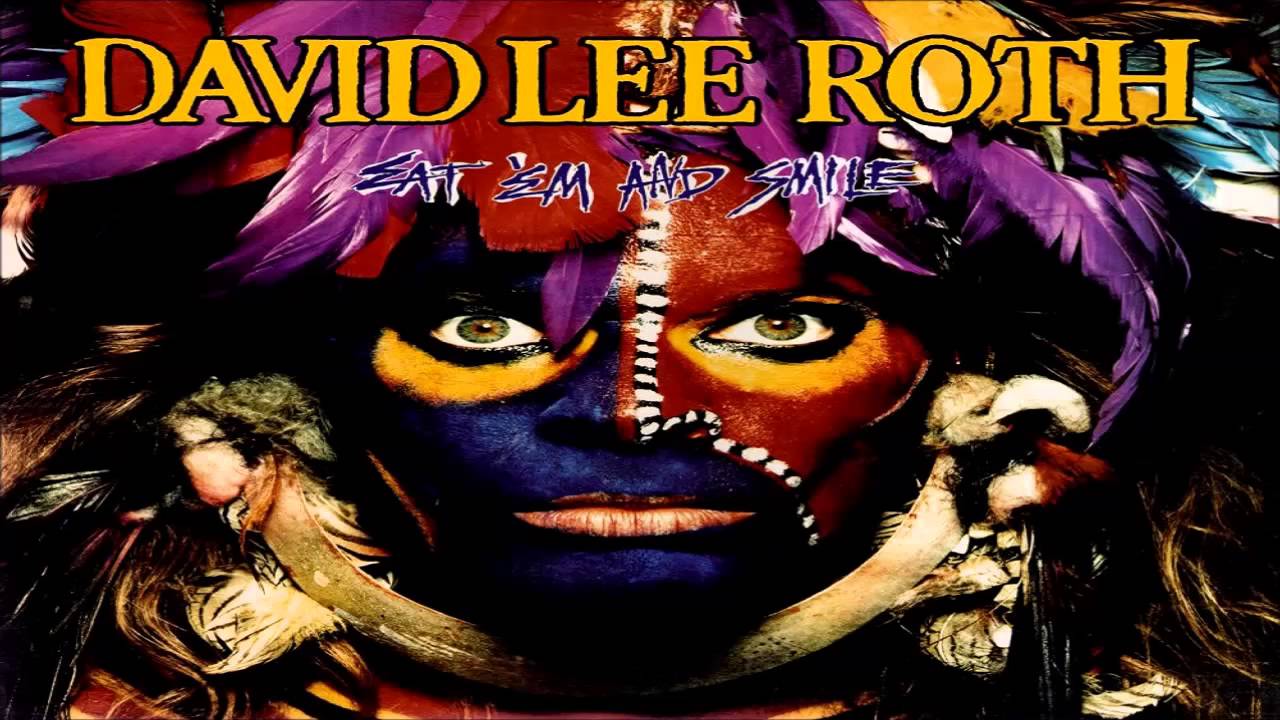
The duo composed “Yankee Rose,” “Goin’ Crazy!,” “Elephant Gun,” “Big Trouble,” “Bump and Grind,” and “Ladies’ Nite in Buffalo?,” and brought in producer Ted Templeman to man the consoles at Fantasy Studios in California and the Power Station in New York.
On the day of this interview, Vai was home preparing for a year-long tour. Afterwards, he plans to record another solo album.
Do you feel much pressure replacing a famous guitar sound behind a famous voice?
No. I don’t feel like I was replacing Eddie, but I know we’ve got to go out there and prove ourselves. This is one of my biggest stabs, and I’m aware that every single thing I do is going to be under a microscope. But I can’t think of that, or else it’s not going to allow me to be at my best. I was nervous for about a minute, and then I said, “Forget it. It’s not worth my energy.” A lot of energy goes into being nervous.
People think it sounds so amazing, but Bill and I are scratching the surface of what we’re going to be doing together in the future. Honest.”
— Steve Vai
How does playing with David Lee Roth stack up to past projects?
It’s completely different. I’m freer to do a lot more things. He pushes me; he really likes to hear a lot of guitar. When I think I’m just about to go on the verge of overplaying, he says, “No, keep going.” Dave’s very constructive. He’s a crazy man [laughs], but he really knows what he’s doing. I trust the guy. I’m thoroughly enjoying the gig, and I’m honored to be here.
What’s it like working with Billy Sheehan? Was there ever a danger of overkill?
[laughs] There always is a danger of overkill with me and him on the same stage! I had seen Billy perform before with his band Talas, and I was pretty amazed by his technical prowess. But I thought that I could never play with a guy like that. He’s really good, but he plays like a guitar player. I was nervous when I heard that he was going to be doing the gig. I thought, how is this going to work? Upon rapping with him, though, I realized that he’s a very mature musician. He respects me as a guitar player, and together we work things out. We set aside places for each guy to do his thing. There are really no weird vibes or attitudes. Our relationship gets closer every day. We do some pretty funny stuff together, which you’ll hear and see onstage.
The unison two-handed bass and guitar parts in “Shy Boy” may well be unprecedented in rock.
Yeah. See, that’s why Dave’s a really smart guy. That’s why he got Billy and me — for things like that. It’s funny — people think it sounds so amazing, but Bill and I are scratching the surface of what we’re going to be doing together in the future. Honest.

Is it tough confining yourself to 4/4 after all your time with Frank Zappa?
I can play in odd meters just as well as I can play in 4/4. But no, I don’t find it hard at all, because there are things that I have to do inside of this 4/4 framework that are different than what I had to do with Frank. Now I get to express myself more as Steve Vai, as opposed to expressing myself as Steve Vai playing Frank Zappa’s music.
Does much trial-and-error go into the parts you come up with, or do you work them out before playing them?
When I’m writing a song, my best stuff usually comes when I pick up the guitar and play. “Goin’ Crazy!” was like that. I had been working with Ry Cooder on Crossroads, and he inspired me. I’d be playing all these notes, and Ry would sit down and start tapping his foot and playing these grooves — and I felt embarrassed. God, man, this guy knows where the beat is! This guy’s got serious soul. You ask him to play thirty-second notes in 10/16 time, and forget it. But I was very moved.
One day he was warming up, getting ready to lay down a track, and I couldn’t have paid enough money to be able to watch what he did in a half-hour. Later on, I was in Dave’s basement, picked up my guitar, and said, “I wonder how he fingerpicks like that?” I started using three fingers to play this lick that I used to flatpick, and that’s how the “Goin’ Crazy!” lick came out.
I’m used to sitting in the studio and tweaking and playing and punching and tweaking some more and EQ’ing and punching again. With this, it’s get in there and kill the guy with the ball. It really works.”
— Steve Vai
Writing, for me, is a reflection of my state of mind at the time. I wrote “Big Trouble” in a hotel room in Albuquerque, New Mexico. It was a beautiful day out, I loved being on the road, and five minutes before we had to get onto the bus, I picked up my guitar and blam — the song came out verbatim. Then there are things like “Ladies’ Nite in Buffalo?” which took a long time. I pieced it together a little bit each day. It’s more of a construction.
Do you come up with lyrics, too?
No. Dave comes up with all the lyrics and every ounce of vocal melodies, like he always has in the past on all those Van Halen albums. I come in with different guitar parts, and we collaborate at putting them together. Sometimes the band pieces the music together before the lyrics are written. We try to get it tight before Dave comes down and does his thing. Then he helps get the arrangement together, we work it up, and he starts doing his vocals. If he’s working on a vocal line, I might say, “Why don’t you try it like this?” And he might make suggestions about a guitar lick. It’s a really nice chemistry.
Did it take less time to record Roth’s album than, say, Alcatrazz’s Disturbing the Peace?
It took less time than Alcatrazz, but more time than the average Van Halen album because we had horns to do and stuff like that. At times I didn’t know if I liked it or not, because I wasn’t quite used to Dave’s and Ted’s approach. But then I realized, boy, it’s really fun. Get in there and do it. We kept about 50 percent of what Dave sang on the basic tracks.
I’m used to sitting in the studio and tweaking and playing and punching and tweaking some more and EQ’ing and punching again. With this, it’s get in there and kill the guy with the ball. It really works.

Were you constantly aware of how the music would translate to the stage?
Yeah. A lot of it’s live, and then I doubled many of the guitar parts. I’ll give an example: The rhythm guitar in “Yankee Rose” was played all the way through, and then I doubled the whole thing verbatim. The halftime section in the middle had this nice little arpeggiated chordal thing that was kind of open and bare. So I said, “Let me try putting a solo on it. Let me try something weird.” I hooked up a couple delays set to some long delay, checked my volume, and made sure I was in tune, and they rolled the tape. They liked what I did and kept it.
For the solo at the end, Dave said, “You should try to do something that’s going to be very animated in the video.” He had seen the Alcatrazz video where I shove the guitar between my legs and throw it down, so he wanted something like that. I said, “Hey, sure. What am I here for?”
Were the talking wah-wah guitar and vocal exchanges at the beginning of “Yankee Rose” cut at the same time?
Oh, yeah. When Dave and I first started doing that, we sat and just talked to each other for hours like that.
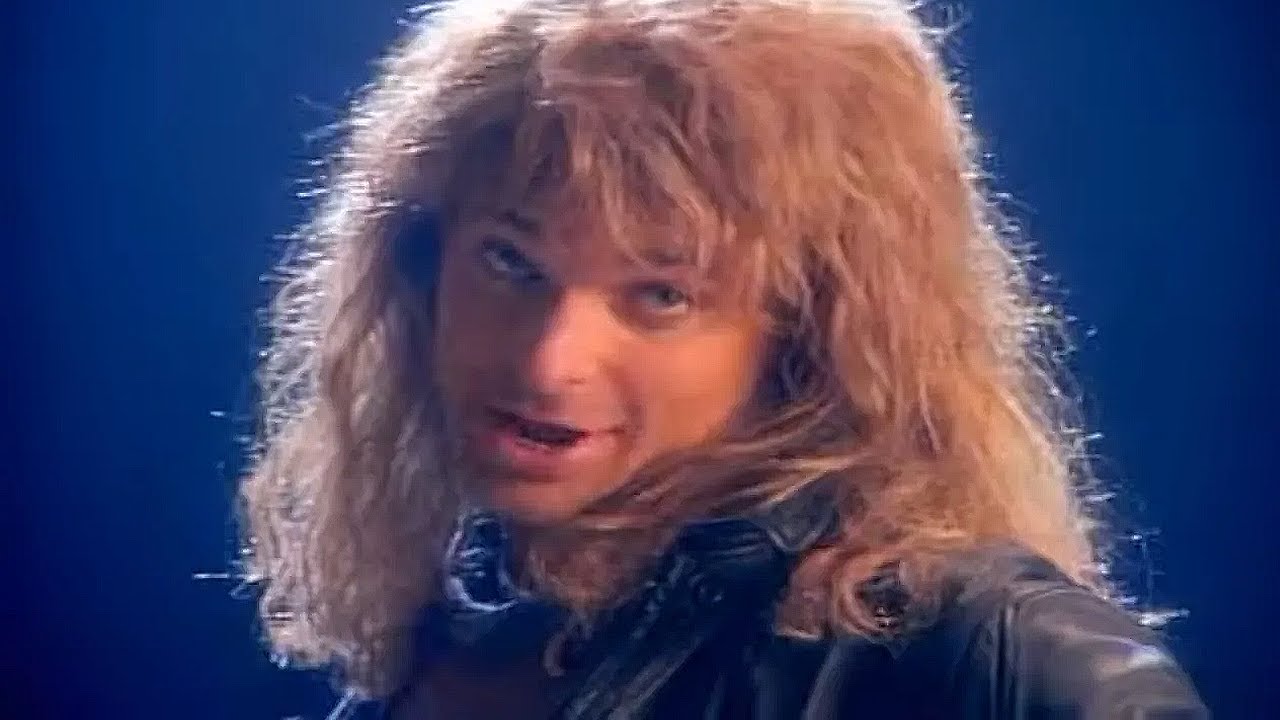
![David Lee Roth - Yankee Rose (Official Video) [HD] - YouTube](https://img.youtube.com/vi/65o3MFsb0BY/maxresdefault.jpg "“I was nervous for about a minute. And then I said, ‘Forget it’” Steve Vai on replacing Eddie Van Halen as David Lee Roth’s guitar foil for ‘Eat ‘Em and Smile’ 23")
Was the opening of “Shy Boy” recorded at a high volume?
[laughs] When we did that, I was in the studio, as opposed to sitting in the control room or being isolated from my amps. I ran over to the amp at the beginning of that song, got down, and let it feed back like crazy. I ended up doubling that really fast lick when the band comes in. And then I just played through the whole song with one guitar — a couple of punches here and there.
How did you and Billy cut the unison duet?
That whole thing was almost all done live. I cleaned up a couple parts on it — I’m not going to tell you, “Yeah, sure, I went into the studio, plugged in, and just wailed.” That happens a lot on this record, but there are times where I wanted to clean up little things. The very first part of the “Shy Boy” solo was done on the original track, and it wasn’t doubled. I just played along and then stopped. I overdubbed the second part, the real fast thing, and doubled it. You can hear it when it comes in: it’s panned left and right.
For the siren effect, I switched on my delay, which was set to like a 792-millisecond delay with a lot of echo. I hit a harmonic and pulled up on the tremolo bar. If the pitch rises slowly, the echo pitch rises too, but it’s a little delayed. This creates a real dissonance.
Is that your horn arrangement in “I’m Easy”?
Yeah. I wrote the score and directed the horn section. You should have seen it: I had snakeskin pants on, my hair was flipped out, and I was sitting in this director’s chair with a baton in one hand and a big score in the other. Twelve of New York’s best studio players were there, and I’m going, “Okay, now, can you make this a little more staccato over here?” [laughs] That was a pretty straight-ahead arrangement.
I loved doing that — Berklee training, you know. I’ve always written big band charts. I have a stack of orchestra scores that I’m waiting to hear one of these days when I’ve got the money to have them done. I love big band music. Listen to Frank Sinatra and Count Basie at the Sands — incredible stuff, man, conducted and arranged by Quincy Jones. It’s so big, it’s like heavy metal in a sense. There’s a lot of energy to it.
What inspired you to play blues fills through that track?
I originally comped through the whole thing with a tinkly clean guitar tone, but it was a lot more complicated. It was real voice-leading and had a lot of movement. Ted gave me the idea to maybe put bluesy-sounding guitar over the whole thing. So after I recorded the laid-back comp guitar, we did the horns. Then I did the guitar over the top of it with my pink Jackson.
My tone and everything I play on that is a reflection of Ted Templeman getting me to do it, because I always view myself as being the world’s worst blues player. I’m always thinking, “This isn’t working; this isn’t happening.” I enjoy it in a sense, but I’m not an authentic blues player. But Ted kept saying, “It sounds good. Keep going.” So I said okay, and just did it.
How do you finger the very last note of the solo?
I just tapped it with my right-hand finger. It’s not a harmonic, but you can do it with your tongue right on the harmonic [picks up guitar and quickly demonstrates]. Sounds great and feels tingly.
I feed off of other people’s energy. I wonder if it’s good for me sometimes. I just get crazy. And with Dave, this is the situation where it happens most of all.”
— Steve Vai
How do you think up strange approaches like that?
It’s weird; I don’t know what comes over me sometimes. It’s like walking into a room where there’s a putter and a cup five yards away. You hit the ball, you know it’s going to go right into the cup, and it does. You’d scare the greatest putter alive.
Sometimes you just know when it’s going to connect. You don’t know why it does it, and you can try it again but it will never happen. Every now and then when I’m playing, that happens. I feel like I’m in a frenzy or something. I could know a solo perfectly, but when I get in front of people and play it, I might do something completely different that’s twice as good. I feed off of other people’s energy. When the sound is there and the attitude is right, I get so excited.
I wonder if it’s good for me sometimes. I just get crazy. And with Dave, this is the situation where it happens most of all.
How did you put together “Ladies’ Nite in Buffalo?”
The whole album was written, but there was a certain area that we wanted to attack that wasn’t quite established by Dave yet — something in a dance area, something that had sort of a cool New York sound. I went to work and came in with a completed demo, except for the vocals. My demo was much more elaborate, but Ted decided to chop a lot of stuff out, which was probably for the best of the song.
We had all the parts, and we just exchanged some of the spots, like the chorus became the bridge. Then Dave just did his vocals on top of it.
It’s interesting how that riff expands as it goes along.
There were originally three different guitars — one track just for solos, one for the chorus melody, and one for stuff so it all overlapped. When we were recording it, the band needed a scratch guitar track to lay parts down with, so I said, “Okay, let me try to play all three guitar parts at the same time.”
I threw on my guitar, didn’t even tune up or play with the settings on the amp, and bang — one time through, we did it. I was going to redo all the guitars later on, but Ted liked the feel that I produced just from sitting in there with no pressure or anything.
Of course, being an artist I hemmed and hawed: “I want to do it again. There are mistakes, blah blah, woof woof.” But they convinced me that it was really beautiful the way it was.
Did you double part of the solo?
Yeah, the second half. It’s funny — I started out with a completely different solo in mind, and just when the tape was rolling, I said, “Ah, the hell with it,” and that’s what came out.
At the beginning of the solo, I hit a note and used the bar to play a melody. The second half of the solo was originally the first half — the sextuplets. I decided to build it, add some speed to it, and climax — that’s a high G that I’m stretching to. And doubling always gives something like that a nice effect.
What was your approach on “Goin’ Crazy!” and “Tobacco Road”?
“Goin’ Crazy!” is just one pass all the way through, except for the solo, because I wanted to have a rhythm guitar underneath it.
“Tobacco Road” was almost one take all the way through; I broke a string during the solo, and I had to punch in the last lick. One of the most uncanny things that ever happened to me in the studio occurred during “Tobacco Road”: if you listen to the last time Dave sings “In the middle of Tobacco Road,” the guitar goes bill and says “tobacco” right along with Dave. It’ll never happen again in a million years.
Of all the songs on the album, “Elephant Gun” seems to have the most Vai-like characteristics.
Yeah, the sort of high-energy approach. I literally did that one time through and then doubled it. We were in a rush to finish it, and we had another few minutes in the studio before Cyndi Lauper had her time booked. I said, “Let me double this. I know what it’s going to sound like.” And nobody thought I could do it in five minutes. I said, “Just let me try it. Roll the tape.” Plugged in, rolled the tape, and boom — done.
You must have a phenomenal memory.
No. I just work really hard. I’ve got a good memory, but it’s short. We worked out a lot of “Elephant Gun” in the basement. Bill and I are doing a lot of stuff in there together.
Did you work out the “Big Trouble” solo in advance?
I knew what I was going to do. First, I did the song with the band and doubled it. There was one lick in the bridge section that I couldn’t get quite right; I had to do it a couple of times. We did a first take on the solo, but it was a little sloppy here and there, so I did the same thing again and the parts were cleaned up. I had a blast doing that solo. It always moves me.
Your fills in that tune come in at the same volume as Dave’s vocals.
I was riding the guitar on the mix because I knew where all the fills are. So every time there was a fill, I’d throw it up there.
A few seconds into the solo, you get a very different tone for a few notes.
Where it sort of sounds like an Indian from Venus?
You take the Floyd Rose tremolo bar, turn it around so the handle’s back over the fine tuner for the high E, and pull up on it. I bounce the bar on my hand. The most traditional way of playing the vibrato bar is to just push it down. I have my guitars rigged so that I can pull up on the bar so the strings go sharp. I do that by routing out the guitar.
You can raise the pitch when the bar is in standard position, but it’s cooler when you turn it around and bounce it. I don’t pull it all the way back, but just enough to make it go sharp about a half- or whole-step. If you do it real sharp and fast, it gives a cute little effect. If you push back or pull up far enough on the bar, the strings fret out. That’s how I got the little mouse sound.
What’s the first sound in the “Bump and Grind” solo?
You take a scruffy pick and scratch it across the high strings. That solo sounds like ponies on ice. And then there’s one sound where I pulled the B string off the fingerboard.
I also ran up to the microphone stand and went rrrr, rubbing my strings on it and hitting the volume control so the echo would produce that effect. Originally, that solo started off really different. There was a lot of hammering, but I wanted to stay away from that a little bit. The last part of “Big Trouble,” where it plays really fast, is all hammer stuff.
What can you say about “That’s Life”?
I recorded it with a big Ibanez jazz guitar, just bopping through the chords. You should see the arrangement that we did beforehand — it was completely balls-to-the-walls. I was really rocking it out, and that’s the way we’ve decided to do it onstage.
At 33 minutes, Eat ’Em and Smile is a fairly short album. Were other songs recorded?
A lot of songs. We had quite a few, but we wanted to print the album at a very hot level in the disc. When you do that, you have to keep it short because the louder you cut and the more bottom you have on the record, the deeper the grooves are.
What guitars did you use for the project?
I recorded about 80 percent of the album with my green Charvel [a Strat-style model, serial number 3733]. The others were the pink Jackson and a couple of Guilds. I used a Coral Electric Sitar on a couple things, but it never made it to vinyl. I also had a beautiful Guild 12-string and a Fender 12-string, and I may have used an Ibanez on a couple of tracks for background things.
How did you route your signal?
For my live setup, I went directly into the amps — either the Carvin X-100Bs or, for the dirty stuff, Marshalls that were modified by Lee Jackson or Jose Arredondo. On “Shy Boy” and “Tobacco Road,” the Jackson-modified amp is on the left and the Jose amp is on the right. A lot of the other stuff is just the Carvin amp going directly into a cabinet, and that’s it.
I split the amps in stereo with a Roland SDE-3000 delay and miked it from there, and maybe I went into a Boss overdrive or something. I used a little AMS digital reverb on a couple of things, and an Eventide SP-2016 signal processor that does everything — you can make your own effects. It’s got auto-panning, stereo panning, stereo chorusing, stereo flanging, big rooms, little rooms. It has this one patch called “dual robots.” It’s ridiculous, really amazing.
There are a couple of songs where the tone was put through maybe a pitch-bend or a little Harmonizer.
Do you sense competition with other rock guitarists?
Consciously, I don’t participate in competing with them. But subconsciously I can’t tell you whether I do or not. I would suspect that somewhere in there, Steve Vai is a very competitive person. I would very much not mind being in the greatest rock band of the day. Everybody is striving for something out there. But I really don’t feel like I’m competing with people, because everybody expresses themselves differently. There’s enough success to go around.
More than most players, you’ve managed to push far past your roots.
My influences are the same as anybody’s, in the sense that they are events. But when people play an instrument, it’s very personal because they are creating a complete reflection of their personality. What you create is what you are, and what you are is a product of your experiences in life. I don’t mean to say that if somebody is a sloppy player, they’re a sloppy person. It goes far beyond probably what you or I can analyze, but it’s there and it’s naked. If you’ve got your head on straight enough, you can see right into it. There’s no hiding who you are when you create music.
I could sit here and say I love Jimi Hendrix and Jimmy Page. Sure, they inspired me, but what brought me to be turned on by that music? Attitude is a big part of the way you play. I practiced endlessly when I was young. I still do, but what I do now is the way I feel now. An event that happens tomorrow could completely change the way you approach everything. You could have the same equipment and know the same scales, exercises, and bends, but they’re going to sound completely different. You’re a different person.
So your personal relationships have more impact on your style than other musicians do?
Exactly. There was a point in my late teens where I thought it was really cool to be miserable and hate things and think that people were assholes, because then people gave me my space. And then I realized that it was just an act of my ego and that I was becoming a miserable person. The world started to take on an ugly glow.
I reached a point in life where, through the grace of God, I went into a dark night of the soul. I realized that many of the things I loved to do weren’t good for me, and I said I don’t need this. I can play you tapes that I made back then, and you wouldn’t believe the same cat was doing it. “Chronic Insomnia” [from Vai’s Flex-Able Leftovers] came out of that period, as well as darker things that I can’t even bring myself to listen to.
And that stuff wasn’t an accident — I could duplicate it for years. But I don’t want to go there anymore; there are other places I can go now. I was very lucky to have supportive people around me. My parents were the greatest. God bless them. Going on the road with Frank Zappa at such a young age was a bit traumatic, but I started appreciating other people’s efforts. I began to realize that you have to be compassionate to the way anybody expresses himself and try to home in on the beautiful things that a person tries to do. I became a happier person, and I was able to relate to people better.

What are the drawbacks of being a rock guitar hero?
Well, I never really saw myself that way, so it’s hard for me to comment. There are so many great players, I can’t consider myself a hero. I’m a reckless player. I’m sloppy sometimes, but I love playing. It’s very hard for me at times, and then sometimes it’s so easy, I just lose my mind.
The kids are going to listen to what I do, and if they like it, they’ll try to cop some of it. And then they’re going to realize that this is the starting point, and that they’ve got to take it a lot higher than this. So to stroke myself and say, “I’m a guitar hero” will be very embarrassing in the future when somebody comes along and does what I’m doing at a technically infinite level.
What do you think the future holds for rock guitar?
I can visualize what the next step could be, but I’m not sure I can explain it. It’s an approach where there’s no technical or physical limitations — except, of course, the impossible ones. This kid might be in kindergarten or whatever, but somebody’s going to come along who thinks of something like speed with a completely different attitude than what everybody thinks of it now.
Speed is just going to be a silly device to make a very serious point. I could even see myself doing it, but it would take total concentration for a long period of time to develop this new approach. This person will do things that nobody else is doing, whether it be with unequivocal speed, vibrato bar work, a new device that could be put on a guitar, or a new piece of outboard gear. It could be anything. But it will take imagination and a certain personality. And then, of course, everybody will jump on it.
What are your views on young players mimicking their favorite guitarists?
Jumping on something right away and copying it verbatim shows you where you’re standing. It’s an insecurity statement. I don’t want to freak anybody out, but it’s saying, “I can’t come up with things on my own. I’ve got to grab this.” This is not to say that it’s not beneficial to cop somebody else’s stuff. I’ve copped a lot of Hendrix; that’s how I got the basic foundation of my whole way of approaching chords.
But there’s a fine line between inspiration and loss of identity. That’s something kids should be really careful of. Ask yourself; you’ll always know. When you’re doing it, there’s a little voice that’s telling you whether it’s the right thing to do, or whether you’re doing too much of it. You’ve got to listen to that voice and believe it.
It’s always fun to do what somebody else is doing, and maybe even play it faster or with more vibrato, but still, you’re better than that because you’re your own person and you can be original.
What’s your ultimate goal?
My goal in life is to be internally happy. I love music, but there are other things. To sit here and say, “Well, my goal is to have my own studio, to make my own records” — that’s petty. I can make my own music on a cassette player if I want. One match, and the whole studio is gone. One axe, and my hand is off. One car accident, and I might never see you again.
I accept that these things are possible, but believe me, I have a great time in life. I very much appreciate being able to do what I like. You might laugh, but if I wasn’t a musician, I probably wouldn’t mind being a mailman. Look at it — you get to exercise. You get to walk in the rain and sun; you meet people. It’s your attitude that’s going to make you happy.
It’s awfully nice to know that you can make somebody else happy, too, but the only way that you can do that is to first make yourself happy.
When all is said and done, your sense of humor seems to be at the very heart of your playing.
Good. I don’t want people to think I’m too serious. All the musicians who are reading this have a sense of humor. Apply it to your music. That’s where all the diversity comes from.
![Array]](https://backingtracksfullcollection.com/wp-content/uploads/2026/05/1779850244_Array.svg.svg+xml "\"Klang.io promises to turn audio into notated transcriptions, lead sheets and guitar tabs – but does it actually work?\": Klang.io Transcription Studio review 38")