

If there’s one man who understands the current state of the music industry ecosystem, it’s John Dahlbäck. A DJ and production legend in his own right, Dahlbäck has weathered the changes of over two decades facing both the crowd and the execs.
Amassing over 664 million streams across numerous platforms, The Swedish house heavyweight has had high profile collaborations with the likes of Kaskade and the late, great Avicii – before the success of Levels launched him stratospheric.
Having signed songs to majors in Sweden – and a label owner himself – John has now pivoted away from the big leagues to help a whole new generation of music-makers build their careers without signing their rights away, and compromising on their just financial rewards.

We spoke to John about his role at artist and label partner Amuse – as well as digging a little more into his past – and those days he spent with a young Avicii…
MusicRadar: Hi there John, let’s begin by talking about your role as Head of A&R at Amuse. I’m fascinated by its artist-first ethos, and how you’re able to help artists navigate around the traditional route…
John Dahlbäck: “What I really like about Amuse is that we are 100% independent, so we’re not under any sort of umbrella to anyone, we handle everything directly to the DSPs. It’s all very transparent, which I think is important these days.
“Amuse is also two different businesses. The core is obviously the distribution side of things, where anyone can just self-release and upload their songs – and they get 100% of the shares. There are a bunch of add-on features that they can adapt to.
“My part is on the licensing bit and the partnerships-side. We partner up with people that we believe that we can do good business with, whether that is to help monetisation grow or just taking care of someone’s back catalog. We help with the back-end. They [artists] can manage it themselves, but sometimes an artist just needs to be in the studio making music.”
MusicRadar: Do you think that rushing to sign-up to a major label is often a mistake that new artists make?
JD: “Well it depends on which stage you’re in as an artist. If you’re starting out, it can be very helpful to be attached to some sort of established brand or label. I have so many records with so many different labels in the past that felt right at that time. I might regret that now but starting out, I think that could be very helpful – to be part of something bigger.
“But then there are also stages where you manage [wider reach] already. You might have an active audience on socials, or whatever you have, but you have a base. So then it might not make any sense to sign off your rights.
“Then again, then there’s those in the top 30 or 20% on the verge of absolute stardom, when you need a major label to push that through. We try to focus on the mid-section when it comes to partnerships.”

MR: So in your role John, what are your main responsibilities, and how much are you able to get hands-on with artists themselves?
JD: “I’m very attached when we initiate conversations about a potential license agreement or a partnership, and then it’s about where that person goes. That person might just end up having help with their catalog, which is then [given to] a certain team, and they have a point of contact at that team. Or, it’s about frontline music, and then that person lands in our artist marketing team.
“I’m always here though. I have all the artists I’ve signed, or labels I’ve signed, on my WhatsApp, so they can freely talk to me whenever they want. I don’t have any expertise when it comes to catalog management or a marketing effort in that sense, so it makes sense for me to not be that looped in.”
MR: What are the biggest issues that artists face in today’s music ecosystem would you say – is it primarily that ‘time’ thing of being an artist and managing everything else?
JD: “Yeah, I think that’s always been the case. That’s why artists turn to management or to labels. For independent artists, we try to just be there for sort of the day-to-day distribution side of things, and make sure that runs smoothly, so that you can focus 100% on being creative, whether that is on socials or actively making music.
“I personally prefer to leave artists be, but they need to trust that whoever is handling their back-end is still doing a proper job.”

MR: It sounds like Amuse has got lots of facets, how would you like to see it grow and evolve in the future?
JD: “Well, we have a very exciting product that we’re launching after the summer, that is more of a label and management tool that gives a nice dashboard with fantastic insights that we’re providing.
“I think a natural step for us would be to involve more labels or management companies and help them see what’s bubbling somewhere in the world at some DSP, giving them that insight and providing a good service. But the core, for my team, has always been directly working with independent artists.”
MR: That’s interesting, and that dashboard and those metrics you mentioned, will they be using AI-driven insights into streaming data?
JD: “Not so much AI, more just total transparency of where the stream comes from – and why that stream happens in the first place. I think all the artists should know why people are streaming their stuff, and where – I think that’s very crucial.
“People can say, ‘I have so many streams’, but then I see that it’s all editorial – meaning that Spotify added it to a playlist. That can be withdrawn from that playlist at any time – and what happens then? This is why I always speak for organic growth – talk to your audience and build it up to develop organic streaming. You can turn organic streaming into algorithmic streaming”

MR: Pivoting slightly from your role at Amuse John, I know you’ve recently become an adopter of using AI in a musical context, how do you use it?
JD: “I tend to make music on a daily basis – when the family and kids are asleep. I release heavily still. I tend to turn to AI for inspiration mainly. I use it more of an instrument – just as I would Splice or a synthesiser. Just as you’re tweaking things on a synth that eventually leads to something, I do the same with AI. I can feed [it] that beat that I’m doing, and it gives me ideas of where to develop it.
“[When I was younger] I was heavily into sampling. The way I would use samples is that I would try to re-create it rather than just include it in the final product. The same goes for AI in my case. I’m also a firm believer in voice-changing tools with AI. I sing something in the microphone with my horrible singing voice, and I change that into a beautiful singing voice.
“I’m very excited by AI if the person using it is also creative and not just lazy.
“My brother is a very old-school music producer, he records a lot of bands traditionally. Anyway, I used to be scared of AI in music, and he told me it was fantastic, he’d tell me that he had a singer who came in to do a full vocal, but then she left the studio, and he realised he didn’t have backing vocals. So, he just loads in her acapella, and he gets great stems and just backing vocals by using AI. It made the vocals more full. I just thought that was a brilliant use of it.
“I spoke to the producer of quite a famous Swedish singer (I can’t mention her name) she had discovered tapes from when she was singing at five years of age. and they are planning on doing a project by teaching AI on her singing voice at five years old, so that she can duet herself being her age now versus five years – it’s kind of incredible.
“I’m all for that, and like I said, I don’t like when it’s just anyone sloppy using AI to just [generate] a pop song, then export and then upload Spotify. That doesn’t make any sense.”
MR: It does feel that culturally, there’s a bit of a knee-jerk reaction to the merest mention of AI, but like you say – there’s creative potential in it…
JD: “One of my favourite synths that I use regularly is called Synplant. It’s fantastic – it’s shaped like a seed, and you can just do whatever you want with it. But they also introduced an AI function, where you would just describe what you would like to do with the sound. I love that.”
MR: It’s still that fundamental joy of discovery isn’t it. Speaking of which – how did you first discover music and how did it become your passion, John?
JD: “My father is a drummer – everyone seems to be a drummer in my family – but he played in a bunch of progressive rock bands in the 60s and 70s. I grew up on that music, and I’ve always enjoyed making music.
“He had an old Atari computer with the first version of Cubase. I started using that when I was 10, just making music.
“I discovered electronic music through my cousin Jesper (who is sort of a pioneer within the electronic scene here) So I started liking that music and started making that type of music.
“I think what was always different with me was that I didn’t discover it through clubbing – I discovered it by listening to it. So I made house music before I’d even heard it in a club. It’s usually the opposite. You go out, you listen, you hear a Prodigy song and you want to make that. I just heard it on CDs,
“So I was already making music when I discovered electronic music. When I was 17, I had to start DJing. The request came and I was like, ‘well, maybe I should’, because I needed to get my music more out there. I released songs for about two years before my first show, and then I got booked into some weird club in Amsterdam or Rotterdam, and then, yeah, then I continued on that path for a long time.”

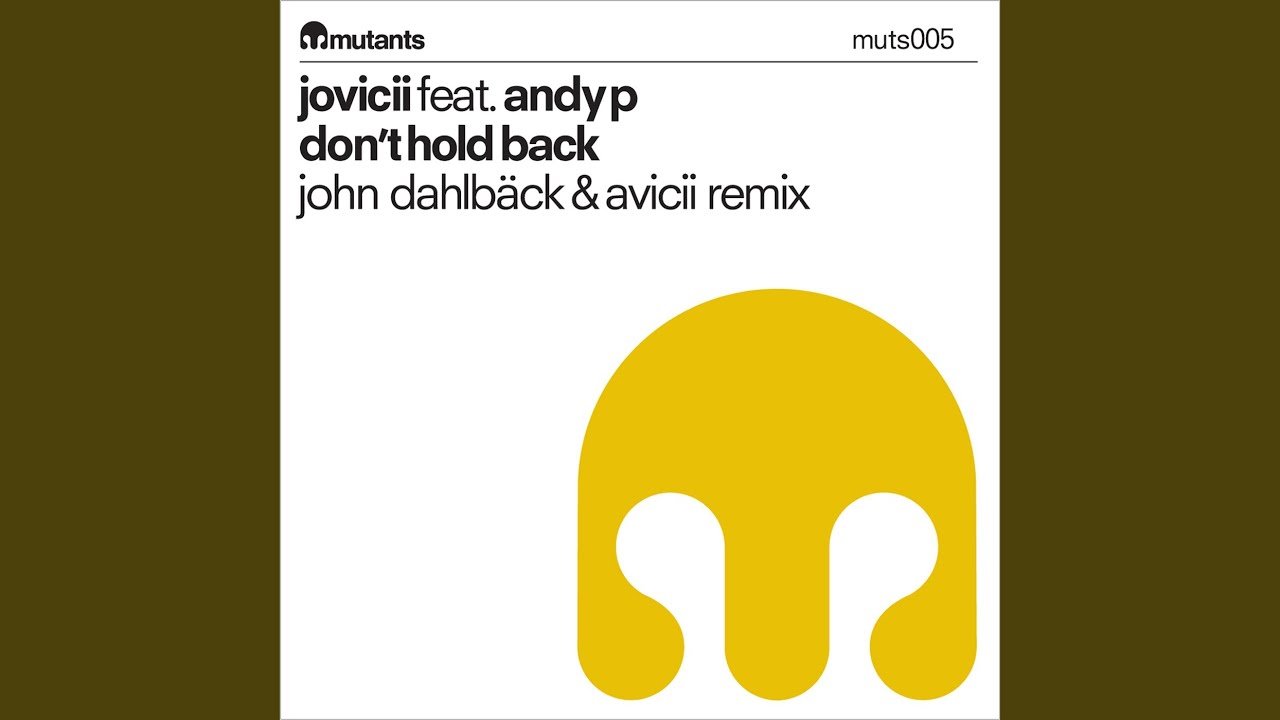
MR: Of course one of the most notable moments of your career was when you collaborated with the late, great Avicii on Don’t Hold Back (under the name Jovicii) What do you remember about making that track with him? At that point I guess he wasn’t quite the global superstar that he’d inevitably become.
JD: “It was right on the verge for him to become that. We spent a lot of time in the studio right at the point when he started getting requests for DJ shows – like his first ones. He was just extremely talented musically. We spent a few weeks in the studio making a bunch of songs, and that was the only thing that we finished, before he released a track called Bromance [later re-released in vocal form under the title Seek Bromance] and then right after that came Levels. I only met him at airports after that.
“It was a good few weeks for sure. I wish the other songs we did were better, but we did a few songs, and there’s a reason why we never put any of those out. But yeah, he was phenomenal with melodies, and just linking everything together.”
MR: Did you have an inkling at that point that this guy was going to end up going to the places that he went to?
JD: “Yeah, yeah, of course. He moulded himself. There were a bunch of things going on in Sweden at that time, where blogs were breaking artists, and Avicii was just one of those guys who was bubbling on these forums and blogs.
“I would go to these forums on a daily basis because if they wrote about a song you knew it was going to be big. They were writing about Avicii all the time, so you could sort of sense where things were going.”

MR: As someone who has been on both the artist and label/distribution side, how has the industry changed – it must be quite different now to that early 2010s period, right?
JD: “I was firmly against streaming at first – because I came from vinyl. I just wanted to continue with this vinyl thing. and then streaming happened, and you can’t just [ignore] that and leave it be. So I adapted to that.
“What was interesting about that time was that there was a big label focus. I would go to the record shop and the records were structured under labels. The categories were all these labels, and not artists. That was very interesting to me, because I had so many projects – I’ve had 15 aliases!
“The fun thing with that was that I could [put out a track] with another name, and then release it on this label, because I knew that it was going to get picked up by someone. It was quite a fun time running all these different sorts of genre-based names at the same time.
“Then when streaming came, it became a lot more difficult, obviously. Now it’s much more artist-driven – and even song driven.
“Today, there are artists where I’ll listen to one song by them. I have no idea what their discography looks like. But back in the day, for example, I was a big fan of Cassius [French house duo]. I would listen to everything they put out. But now I can listen to one song from an artist – and that’s it. So it’s gone from a label focus to artist focus to song focus almost. That’s a fairly interesting thing.”
MR: Do you think that’s a positive development?
JD: “It’s a different thing. It sounds bad when I say it, but I’m not against it necessarily. Spotify feeds us new artists, and I listen but sometimes I don’t even bother to follow them. I listen to one of their songs and move on to the next one.
“It’s good for the listener. I’m perhaps not the best advocate for it, but I should follow these artists that it sends me to, which I hope other people are doing better than I am! But music discovery these days is fantastic in that sense.
“I wouldn’t have done the same thing browsing records in that record store, you know, 20 years ago, I would just be like, what’s this label, I don’t know, I’m not even going to listen to it. Now it’s much more open.”

MR: So what would you recommend that new artists starting today prioritise?
JD: “If I was 25 years younger, I would 100% start independently, but I would just do so much content as possible to build that fan base. I cannot do that these days. I’m horrible with content, but I think if I was younger, I would not have seen it as ‘cringy’ as I do today.
“Building a fan base is crucial – and talking to your fans is so important. I hate my own ways of doing it, because I’m not doing what I think is the best key to success. You need to promote all the time – not just the first couple of weeks before or after [a release]. You make this music, you put it out there. And then what.
“There used to be a hype around releasing something, oh, this guy or this girl is, they’re promoting their singles, can release it in six months from now on. People were hyped. Now those same artists are releasing two double albums in a month. There’s so much music.
Axwell from Swedish House Mafia is known for being very detailed. He almost overworks a song because he wants it to be completely perfect when it comes out. Most people these days, they do something sort of quick, and then put out, and then they move on to the next single, which is going to be released in a week’s time after that. I don’t think it’s wrong – I think you need to to keep your audience entertained. Look at Skrillex, he’s always delivering albums. He wouldn’t do that 10 years ago. But you need to do that now.
“I don’t know if it’s good or bad, but it is what it is.”
![Array]](https://backingtracksfullcollection.com/wp-content/uploads/2026/05/Array.svg.svg+xml "“It was only supposed to be a joke”: Relic’ing guitar stickers are now a thing 34")