
![“It was deeply moving. It felt like a conclusion”: Unraveling the enigma of Abba’s poignant farewell.]](https://backingtracksfullcollection.com/wp-content/uploads/2026/05/It-was-deeply-moving-It-felt-like-a-conclusion-Unraveling-758x426.jpg "“It was deeply moving. It felt like a conclusion”: Unraveling the enigma of Abba’s poignant farewell.] 18")
Abba Voyage moves into its fifth year next week, but there’s one of the group’s classics that has been conspicuous by its absence in the much-praised, long-running avatar show. For that matter, it was also omitted from both Mamma Mia film and its 2018 sequel.
The Day Before You Came is Abba’s own Banquo’s ghost. It doesn’t fit into the hen party version of the band; that is how mainstream culture prefers to view them. A bleak, haunting creation, six minutes long and without a chorus of any description, it’s one of the bravest singles they (or for that matter, any group of their standing) has ever released. It’s also one of their best.
Work on the group’s 1981 album The Visitors had been tense and frosty. By now, the two couples – Benny Andersson and Anni-Frid (Frida) Lyngstad and Bjorn Ulvaeus and Agnetha Falkskog were both divorced, and though no major announcement had been made, they had quit touring.

Early 1982 saw Benny and Bjorn start work with Tim Rice on a musical project that would eventually become Chess, Frida recorded a solo album with Phil Collins producing and Agnetha spent some time with her children.
Initially, it seems that Benny and Bjorn thought they could work on the musical concurrently with Abba and, in Spring 1982, the band were back in their own Polar studios in Stockholm, recording a new album that at this stage was tentatively titled Opus 10 (though confusingly it would have been their ninth).
But only three tracks came out of these sessions – You Owe Me One (which was eventually issued as the B-side of their final single Under Attack) I Am The City and Just Like That. The latter weren’t issued until the 1990s.
“Even when everything is working great, you have these ‘down’ moments every now and again, so at first you don’t take it as a sign that you’re getting tired of the whole thing,” Ulvaeus said later. “It’s only after a while that you notice that every time you go into the studio, it gets harder and harder.”
It was clear that something wasn’t clicking and a new studio album just wouldn’t happen in 1982. So instead, the group agreed to another greatest hits package, but with the addition of two new tracks, to be released that autumn.
The group returned to Polar studios in early August to record those new songs – Under Attack and Cassandra. But Bjorn and Benny were aware that neither constituted great comeback singles for the band and they required something stronger. They decided to do something that they’d hardly ever done in the history of Abba and write something right then and there in the studio. Using a Yamaha GX-1 synth and its built-in drum machine, Benny soon had the outline of a song, and within an hour, he and Bjorn had written the melody and given the track a working title: ‘Den lidande fågeln’ or ‘the suffering bird’.
Meanwhile, Michael Tretow, the engineer who worked on nearly all of the group’s records, recalled gating the sound of Benny’s Yamaha and thus creating a sequencer effect, which let the beat of the snare drum determine at what moments the synths would be heard or not. It gave the track a mechanised, circular rhythm, which gave his partner an idea for a theme.
Bjorn then went home and set to work on the lyric. He had an idea of an ordinary woman recounting the things she must have done on a day before her destiny suddenly changed. Talking to Abba biographer Carl Magnus Palm, Ulvaeus recalled that: “I already knew that the melody was such – from a technical point – that the lyrics had to be constructed so that they would lead up to the ‘day before you came’ in the melody.
“Then, when I got the idea for a theme, I wrote down all the everyday incidents and things I could think of that would happen to someone leading a routine kind of life. It was very difficult from a grammatical point of view to get it all to fit together, because it would all have to be logical, there was no place for any hitches.”
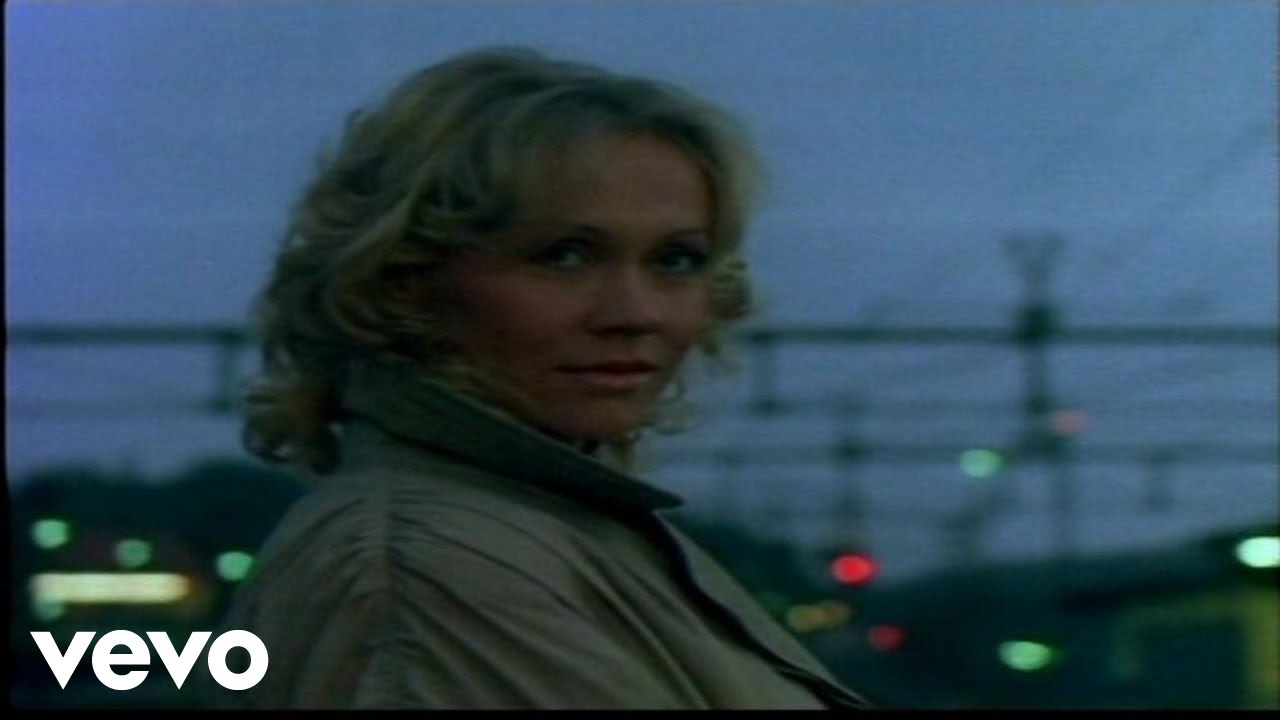
The lyric complete, the band reconvened on August 20 for the vocal session. It had been decided Agnetha would sing the lead, with Frida relegated to backing vocals. Benny and Bjorn instructed her to sing in character, as the ordinary woman who is the narrator.
Famously, the singer gave her performance with the studio lights all dimmed. Interviewed by Palm, Tretow recalled the session as “very emotional. There was a feeling that this was the end. Agnetha did her vocal with the lights down. The song still brings tears to my eyes.” It would be the last Abba recording session for 35 years.
The Day Before You Came was released in October 1982 and was greeted – at least initially – with a mixture of disappointment and bafflement. Record Mirror couldn’t get their head round it, describing it as a “morbid slice of crocodile tears” that “is tedium incarnate”. For Fred Dellar in Smash Hits, it was “the sort of song that usually accompanies romantic French movies,” but warned that its “very wordiness may be its chart undoing.”
Indeed, Tim Rice had warned Benny and Bjorn that though he loved it, he didn’t think it would be a very big hit. He was proved right. Though it went Top 10 in West Germany, Sweden and the Netherlands, in the UK (an Abba stronghold, lest us forget) The Day Before You Came could only creep up to Number 32 – their lowest chart position for seven years.
Once Abba had provided instantly catchy pop. But The Day Before You Came was almost the antithesis of Dancing Queen, Mamma Mia and the band’s classic uptempo hits. It’s a song that takes some time – years even – to appreciate, and in the decades since 1982 its reputation has grown and grown.
Just a couple of years later, the British synth pop duo Blancmange covered it and took it to Number 22 in the UK singles charts. And once Abba had been rehabilitated (at least, critically) in the early 1990s, it started showing up in those All Time Great polls that started proliferating around this time.
In 2010, ITV conducted a poll where fans could vote for their favourite Abba song. Incredibly, The Day Before You Came came in third, behind just Dancing Queen and The Winner Takes It All. Two years later, the NME, counting down ‘The Greatest Songs In Pop History’, placed it at Number Six.
Meanwhile, critics have sung its praises, commending its unconventional structure, those lyrics that paint of picture of numbing mundanity and the ominous, forbidding music. Perhaps more than any other Abba song, The Day Before You Came gets under your skin. And stays there.
It incites so many questions. What happened the day after the events painstakingly detailed in the song? What had happened in the narrator’s life to make her depressed? Was it simply the grind of a routine 20th-century working life? Or something darker?
And most of all, who is the ‘you’ of the title? The central mystery of the song has never been fully revealed and as songwriters you’d hardly expect Andersson and Ulvaeus to provide all the answers. The idea that the ‘you’ is merely a lover who lifted Agnetha’s character out of the dull routine that was her life doesn’t seem right.
The music is too bleak and full of dread, especially the long outro in which Frida’s wordless vocals, and banks of synths build up to create something truly funereal. In a 2010 interview with Bjorn in The Times, Pete Paphides asked that question, saying that whatever it was that happened, it wasn’t good. “Ah, you’ve spotted it, haven’t you?” Ulvaeus answered. “The music is hinting at it.”
So is the ‘you’ a murderer? Perhaps. But there is one more clue. The lyric mentions Agnetha’s character as reading ‘the latest one by Marilyn French or something in that style’. French was a radical feminist writer whose most famous work was her 1977 novel The Women’s Room.
The fight for female autonomy and independence in a patriarchal world was at the centre of French’s work. So is it possible to see Agnetha’s character as someone who is mourning a single independent life she didn’t appreciate at the time, before her life is turned upside down by the entrance of a male lover?
Well again, yes.. maybe. But this is the ongoing fascination with The Day Before You Came. A decade and a half before Mamma Mia and its will-this-do, back-of-a-fag packet plot, Benny and Bjorn had – in just one song – created a whole novel’s worth of intrigue.
Long after the four members of Abba leave us and the band exist only (along many others) in our collective memory as an emblem of pop music’s golden era, The Day Before You Came will still be provoking debate. It’s their final masterpiece, their eternal enigmatic question mark.
![Don’t wait for Memorial Day! Fender has launched early sales with discounts up to $600 on guitars. Check out these 5 amazing deals, including $230 off an all-solid acoustic and $74 off a fuzz pedal.]](https://backingtracksfullcollection.com/wp-content/uploads/2026/05/Dont-wait-for-Memorial-Day-Fender-has-launched-early-sales-150x150.jpg "Don’t wait for Memorial Day! Fender has launched early sales with discounts up to $600 on guitars. Check out these 5 amazing deals, including $230 off an all-solid acoustic and $74 off a fuzz pedal.] 27")
![The Watkins Rapier: A Guitar Series Tied to The Beatles]](https://backingtracksfullcollection.com/wp-content/uploads/2026/05/The-Watkins-Rapier-A-Guitar-Series-Tied-to-The-Beatles-150x150.jpg "The Watkins Rapier: A Guitar Series Tied to The Beatles] 28")