
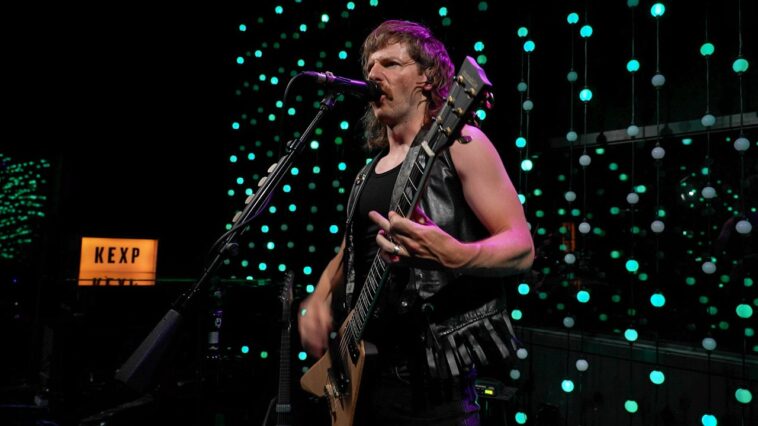
The trick with playing heavy metal is to take it seriously but not too seriously, and to reckon with the fact that, at heart, there is a certain absurdity and outsized theatricality to it.
It’s an antiestablishment art form that’s nonetheless governed by rules, oftentimes rigorously enforced – ‘Death to false metal!’ – and almost always arcane to all those within the cult.
The Colorado doom quartet Khemmis have been wrestling with these contradictions ever since they released their self-titled debut EP in 2013. Now, on album number five, again a self-titled release, after all these years, they’ve finally made sense of them. There’s a clarity about their mission and their sound.
Latest Videos FromMusicRadar
“We’re not the same dudes. We don’t play the same way,” says guitarist/vocalist Ben Hutcherson. “We don’t think the same way. We don’t feel the same way. We are, I think it’s fair to say, better dudes now than we were. We’re more holistically interesting dudes.
“I can say for myself that I’m a lot more chill, or at least try to be a lot more zen about stuff, and so, in many ways, that has allowed us to reconnect with those feelings of joy and the energy around just, ‘Let’s make heavy metal together.’ Like, that’s the mission statement. Capital H, capital M, heavy metal. What about it is joyous and raucous? What spoke to us all at such a young age, and still speaks to us, and how do we honour that?”
Khemmis, the album, finds bassist David Small joining the band full-time, and his talents on bass guitar – not to mention his jazz smarts – are brought to bear on an epic record that goes all-in with celebrating metal, with a full narrative concept, a cornucopia of gnarly riffs, and twin-guitar harmonies from Hutcherson and fellow guitarist/vocalist Phil Pendergast giving it the kind of melodic grandeur its concept deserves.
As Hutcherson explains, this is the sound of Khemmis taking their “responsibility” to metal seriously while recognising that their don’t-break-the-oath ethos depends on them reanimating the spirit of their teenaged selves.
“All we knew when we started was play loud, get free beer. Repeat. Like, that was it,” says Hutcherson. “Now, having a sense of, I think, responsibility to the art form – I can’t wait for online pundits to roll their eyes at me saying that about heavy metal. But it is! [Laughs] I mean, it’s an art form that we take very seriously. This is a sacred art form for us, but we also recognize it for what it is. And it’s at its best when it’s being performed by people who genuinely understand it in all of its complexities and flaws and still love it.”
Heavy metal, it contains multitudes. This is a record on which Pendergast is writing about – and channeling – a composer who is hearing “the music of the Spheres” and is possessed by the act of creation, and like some sci-fi Schumann-esque figure, he is going mad, astral projecting into all these scenarios in which he gains secret knowledge of the human condition yet surrendering to “creative madness” along the way.
Pendergast could see a little of himself in the composer as they worked 24/7 putting the album together.
“The idea of listening to music and then giving in to this madness and just seeing where it takes you, I decided was a cool concept for the record,” says Pendergast. “[The story] is a really a basic metaphor for what the record is doing on one level, but it’s also badass and heavy metal and has demons, and it’s cool because heavy metal is awesome.”

Khemmis are most definitely not the same players as they were on their 2015 full-length debut, Absolution, a fuzz-fried riff-burner that introduced them among the elite of US doom bands, Pallbearer, Spirit Adrift, Crypt Sermon et al.
Years of playing together have given Hutcherson and Pendergast a telepathic understanding of each other’s playing. Hutcherson teaches guitar. He has 17 students on regular rotation. He can explain what is going on in terms of music theory, but he is not thinking about theory when they are writing these songs.
“We have a very heart-first kind of writing, where we never sit down and think, ‘Okay, we want a riff to sound exotic. Well, let’s use harmonic minor for this riff,’” says Hutcherson. “My fingers know where to go to find the creepy or dissonant stuff, or at least where to start with that. And then we think, ‘Okay, now what’s the next layer that we want to add to this idea?
“Do we want it to be a more emotive moment? And if so, what kind? Is it going to be a diatonic harmony because it’s going to have that kind of tug-at-your-heartstrings feel? It’s going to be something in perfect intervals, fourths or fifths or just octaves to just give it a fuller sound?”
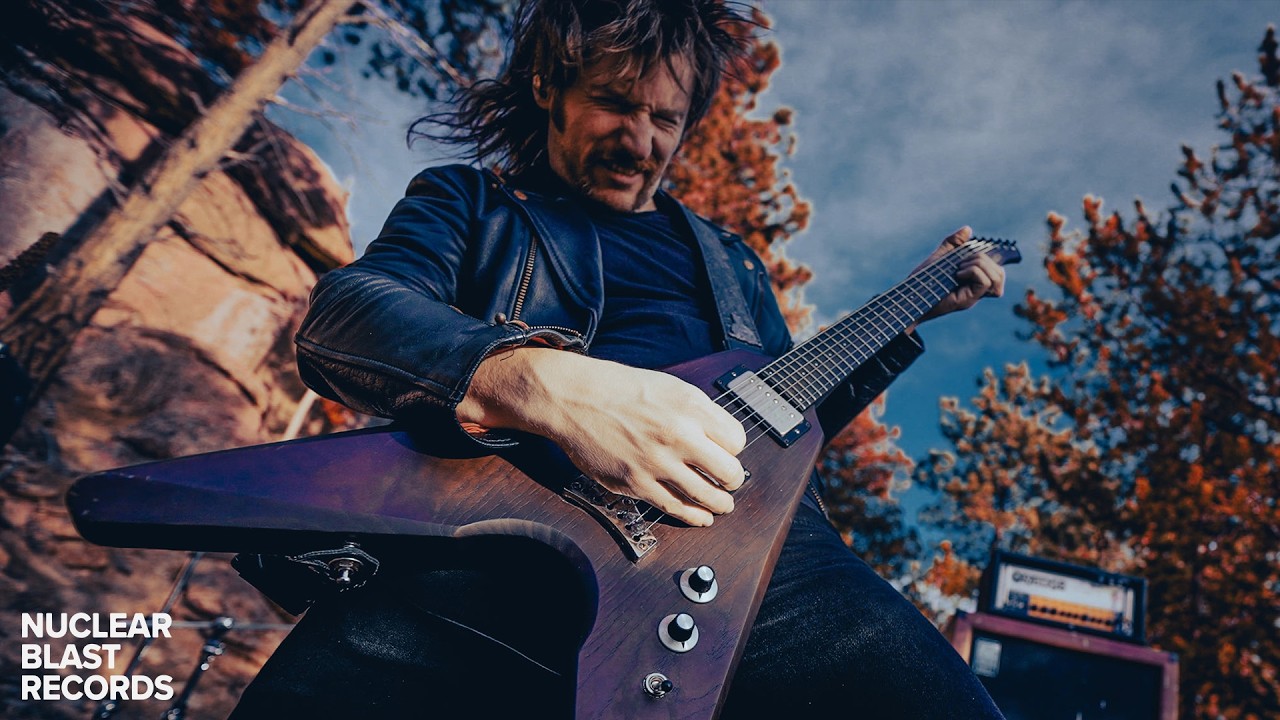
Like most metal bands, Khemmis’ arrangements don’t always conform to music theory orthodoxy. Finding passing notes that work within the composition is a labour of trial and error, learning “what doesn’t suck” and using that. “We just come up with badass shit and then we play it cool,” deadpans Pendergast. As Hutcherson says, “Theory Brain” can explain what’s going on, but it’s the gut that does the heavy lifting.
There’s this cheap-ass plastic f****n fuzz pedal that we’re playing in not-fuzz mode, that is all over the record, and I just think it’s hilarious
Phil Pendergast
Having Small on bass is affords them greater freedom on guitar. Hutcherson had played technical death metal with Small in Glacial Tomb, but even then he didn’t fully appreciate just what he could do for Khemmis. “When he brought in the riffs, I was like, ‘Oh my god, this guy rips! What the hell is happening?’” he says.
Small made an immediate impact on Tomb Of Roses, the first song they wrote for the record. Like all good bassists, Small knows when to lock in with drummer Zach Coleman, but he has an ear for when the bass can be the melodic counterpoint to the guitars. It might be a little cavalier a comparison, but nonetheless, you can’t help thinking that Khemmis have found their Cliff Burton.
“Oh my god, I’m gonna see Dave in an hour. When I tell him that, he’s going to shit his pants,” says Hutcherson. “Oh, he’s also really good at guitar. I mean, I think he’s probably the best musician any of us have ever met.”

Hutcherson and Pendergast both play Dunable electric guitars loaded with Bare Knuckle pickups. Hutcherson has one with a Black Dog humbucker at the bridge paired with a Cold Sweat at the neck; another pairs the Black Dog with a Supermassive 90; and a third is equipped with a pair of Rabea Massaad’s signature Silo humbuckers. Pendergast has a Riff Raff humbucker at the bridge and a Mississippi Queen V90 at the neck.
Both tune down to Bb, but with a lot of Khemmis rhythm parts played at the fifth position, the guitars still feel like a midrange instrument.
“We never have had an incredible amount of low-end in our guitar sound, not as much as you would think with that low a tuning,” says Pendergast. “Everything is pretty tight. We try and retain a lot of the note separation when we build guitar tones. We’re not using fuzz pedals to do this because it destroys that individual note character that’s so important to the types of riffs that we play.”
Pendergast did use one fuzz pedal, but only as as a boost. His $35 Behringer SF300 Super Fuzz – yes, the one with the plastic enclosure – was his always-on tone-sweetener.
“There’s this cheap-ass plastic fuckin’ fuzz pedal that we’re playing in not-fuzz mode, that is all over the record, and I just think it’s hilarious,” he says.
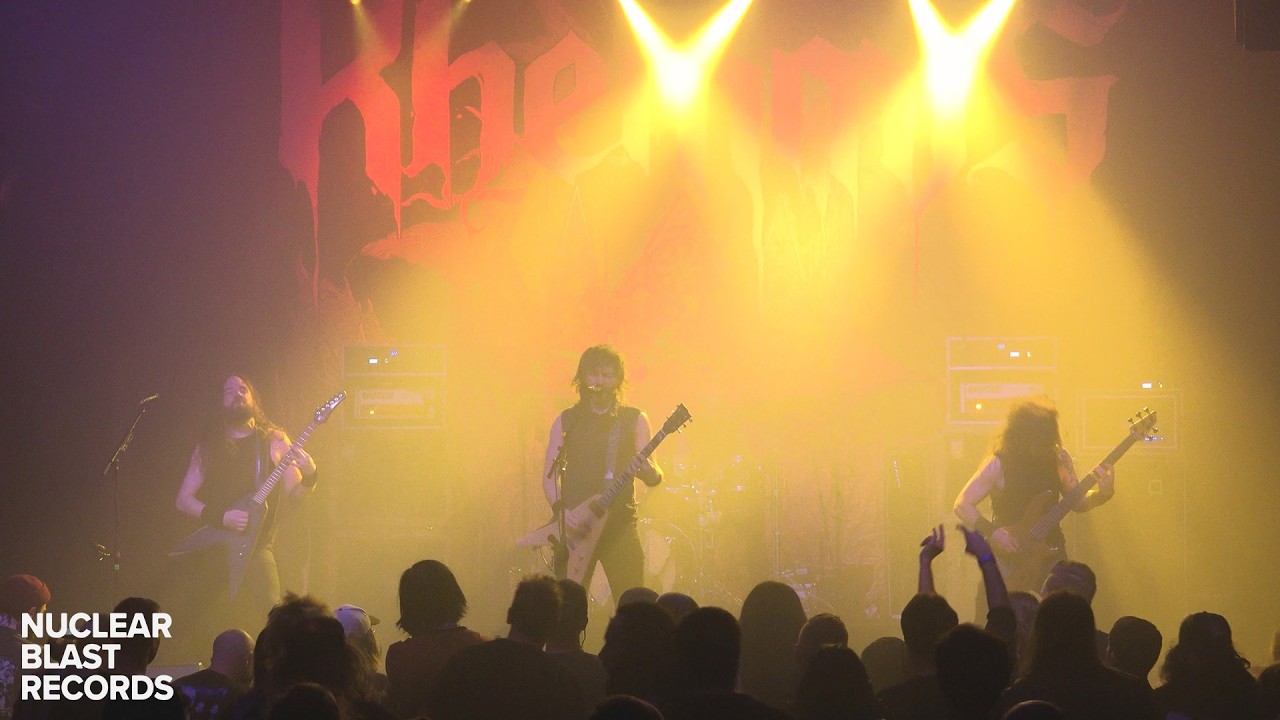
Khemmis are on tour in the UK right now and if you catch them live you might be shocked to find they’ve left the Rockerverbs at home. Neural DSP sent them a bunch of Quad Cortex units and they have been making digital versions of their rigs.

Going digital takes the pain out of touring. But leaving the tube amps at home – doesn’t this break one of the iron rules of doom metal?
Hutcherson is not about to decommission his tube amps any time soon. Nothing can beat them in the studio. But live, run an amp modeller through a power amp he says.
“Not worrying about tubes failing in the middle of a set, reducing your massive pedalboard with so many points of failure to one all-in-one unit, there’s a reason that all of these people do it,” says Hutcherson. “I mean, God, Kirk [Windstein] from Crowbar has made the jump to Quad Cortex, a dude that I never would have expected. If Kirk can get down with modellers, we can all get down with modellers.”
And besides, no one will notice.
“Nobody in the crowd is like, ‘Oh boy, I could really tell a difference when he stepped on that boutique delay.’ Most people don’t even play guitar. They don’t give a shit. Even the people that do, even the most cork sniffery blues lawyer, you can lie and tell them it’s a boutique delay. Then they’re like, ‘Oh, I could really tell with the way that the oscillation crept in.’ You’re like, ‘No, I lied, it’s a Behringer.’”
Hey, don’t knock Behringer when Khemmis roll into town. The SF300 is the one pedal to rule them all – the plastic stompbox that holds the secret to the Riddle of Steel.