He’s the country boy who was raised in London: one of the most respected pickers on the planet – admired from LA to Nashville – and a man who counts just about every guitar hero among his fans, with Jeff Beck, Jimmy Page, Eric Clapton and Eddie Van Halen among them.
He’s met and jammed with George Harrison, Paul McCartney and Ringo Starr. And yet, back in his hometown, he can wander down the street unrecognised. It’d be tempting to say this was unjust, but in some ways, we think this is just how Albert Lee likes it. If you know, you know.
We’re meeting at the Half Moon in Putney during one of his regular jaunts home from across the Atlantic. The legendary pub venue played host to sweaty backroom gigs from The Yardbirds to the Rolling Stones, John Mayall and The Bluesbreakers and most of the London folk icons in the ’60s.
Latest Videos FromGuitar World
Lee tells me he never performed here then, but he did visit with some fellow guitar royalty several decades later. “The first time I played here, I was doing a tour with Bert Jansch and, as much as I loved him, I didn’t have a lot to do,” he chuckles. “I was just tinkling away behind him. Jeff Beck came here just because he heard I was playing; I think he left a little disappointed. I wasn’t doing anything!”
Lee is wise enough to know when to strum – but even at 82, if he’s given enough leash he’ll still make your jaw drop with his kaleidoscopic melody, breakneck pace and a rhythmic sensibility that can run rings around any beat, but still keep your head nodding.
Truly one of the great guitarists of the 20th century, he sits down with a coffee and a smile to talk through his life from early gigs in the UK to playing right-hand man to Clapton, and why he made Eddie Van Halen nervous.
You played your share of London rock clubs, in particular the 2i’s Coffee Bar and the Flamingo, in the 1960s. What are your memories?
It was fun! I was playing a lot and at that point I finally got some decent equipment. I was lucky enough to acquire a Les Paul Custom, then I bought one of the first American amps that were imported to the UK – a Supro, with the 15-inch Jensen speaker.
So I had a pretty good sound. I wasn’t singing then, so guys would get up out of the audience and sing rock ’n’ roll songs. Jimmy Page used to come in regularly. We became good friends.
Is it true that he first got the idea of the Supro amp from you?
I think so. He liked my Les Paul a lot, and he saw the Supro, and he ended up buying a similar rig. I think his Supro was just maybe a 1×12 or a 1×10. Mine was a 15.
That kind of rig is pretty impressive for the time, especially in the UK. How did you come by it?
Luxury goods were hard to acquire at that time. When the post-war embargo lifted I’d gone to Selmers, a big guitar store in London. I was there when all the Gibsons came in – a whole wall of Gibson guitars – and I thought, ‘Great! Now things are going to change!”
I talked a friend of mine into buying a Les Paul Jr. He was going to buy a Burns. I said, “No, no, they’ve got Gibsons in Selmers! Get a real guitar!” And, of course, I immediately borrowed it!
Gene Vincent guitarist Cliff Gallup and Elvis guitarist Scotty Moore were big influences on your playing. When did you first hear country in London?
It was all rock ’n’ roll first, like Little Richard and the country rockers too – Carl Perkins and the Everly Brothers – and that kind of leant me towards the country side. I liked the blues players, but country seemed more melodic, and it influenced me more.

Scotty Moore’s stuff wasn’t that intricate, but he certainly got a great sound with Elvis, so he was a big influence. Years later, I did a show where there was a big video of him. And there I am, up there playing his solos to him! That was an honor.
How did you develop your technique and tone, with no country players around you?
Everybody was trying to copy Eric, and I was still tied into this Tele sound
It was all by ear. I’d hear records and I just kept putting the needle back. A little later on I discovered James Burton – it sounded kind of alien to what I’d heard before, because he was doing lots of blues bends. It Immediately became what I wanted to learn.
I think it was ’63 when I walked into Selmers. I already had my Les Paul. A friend of mine was a salesman in there and he said, “We just got this secondhand Tele in. Instant James Burton!”
And he was right. I took it home and I played it with a couple of bands. I couldn’t believe how wiry and electric it was, as opposed to the conservative sounds that I was getting out of the Gibsons.
No-one was really cranking their Gibsons up, getting the feedback from the humbuckers. That was a little later on, when Eric Clapton appeared on the scene and changed the world. But as much as I loved that, I preferred the sound of a Telecaster – that Fender sound – and that became my guitar.
When you started getting session work in the US, London had its own very vibrant guitar band scene. How did you find London versus LA?
I did quite a few sessions in London, but on the street everybody was trying to copy Eric, and I was still tied into this Tele sound. It was [Everly Brothers guitarist] Don Peak – who is still a great friend of mine and later became part of the Wrecking Crew – who encouraged me.
He said, “Hey, you should come to LA. You would do great there!“ I said, “You’re kidding! All those great guitar players!” So it was in the back of my mind. Then with the British Invasion, so many guys went over to the States, and I was really envious because they’d come back to England with arms full of guitars!
It wasn’t until 1970 that I finally got there and realized how appreciated I was. There were lots of guys who really loved the way I was playing, more so than in the UK.

Where does the song Country Boy fit into all of this?
The two main writers in [Lee’s British rock and country band] Heads, Hands and Feet were Tony Colton and Ray Smith. Ray Smith is the guy who worked in Selmers, so he figures in my history a lot!
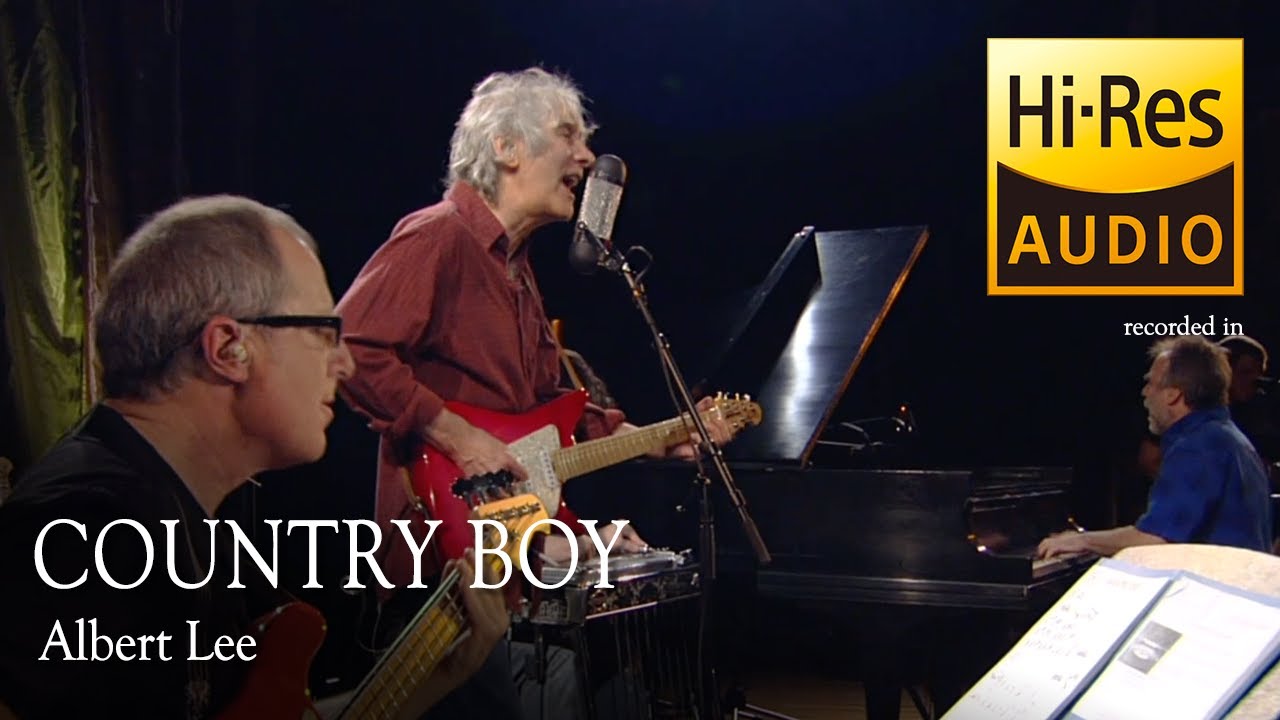
Ray and Tony decided they needed a vehicle for me to be featured on guitar. They pretty much came up with Country Boy and I was doing all the guitar playing, so I got my name on it too. And I’m still flogging it to death now!
Some people say, ‘I love the way you do that Ricky Skaggs song!’ It’s like, ‘Well, actually…’
I recorded it again in LA. when I got a record deal. I was with Joe Cocker, and the manager we had at the time talked [A&M founder] Jerry Moss into signing me. I still think he thought he’d signed Alvin Lee, not Albert Lee! So there is a version of Country Boy on that record.
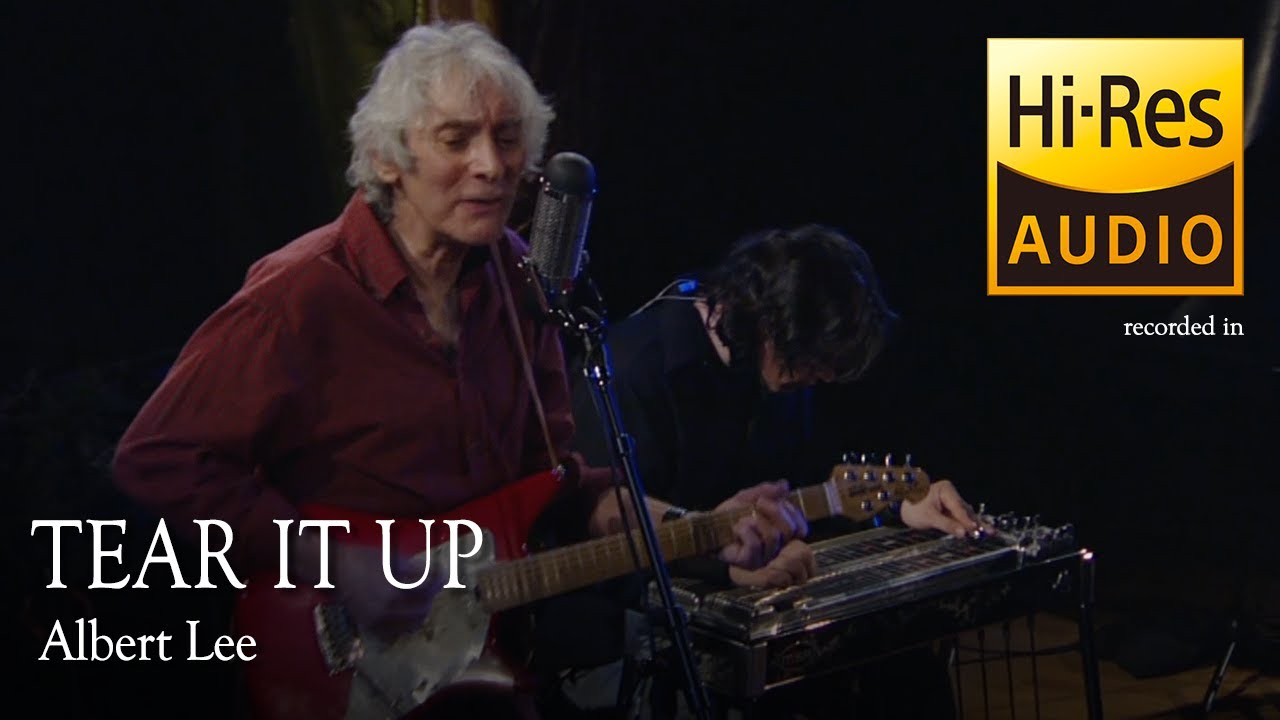
When I joined Emmylou Harris in ’76, we had the obligatory band bus. After a gig I played it for Emmylou and the band. They said, “Wow, that’s great –we’ve got to do that tomorrow night!” So we worked it up at the next soundcheck, and it was in the set from there on. Now it’s the signature!
It’s been good to you.
Yeah – and it really became good to me when Ricky Skaggs called and said, “I’ve done that song of yours, Country Boy.” He had a number one country record with it, which introduced it to a lot more people. Now some people say, “I love the way you do that Ricky Skaggs song!” It’s like, “Well, actually…”
In the late ’70s you became Eric Clapton’s sideman. How well did you know each other before you got the call?
We’d met a few times. When he was with Mayer I was with Chris Farlowe; we’d play at the Flamingo Club and run into each other fairly often. We didn’t hang out much, but he was really friendly; we saw each other a lot and admired each other’s playing.
I think his manager called when they were working on an album here with Mark Benno, a guy from Texas, and Glyn Johns was producing. I did a week in the studio with Eric and we had a great time. At the end his manager pulled me aside and said, “Do you fancy going on the road with him?”
My first album was just about to come out, but I thought, “I want to do this!” So off I went with Eric. He fired the whole band at the end of that tour, and I managed to survive. Two years later he fired another band, and I survived that time too. So he liked having me around, which is nice! I enjoyed it.

Eventually he was going through some health issues and decided that they wanted to make a change, so I left, but I’d seen a lot of guys come and go while I’d remained.
How did you go about finding your place as a player with Clapton? I’ve heard he’s very accommodating with other players.
I thought it would work really well because we’re so unalike. A lot of guys who play with him have always been blues players. But that’s his job, you know? So I thought, “I’ll do what I do and try and complement him.”
The 1979 show at the Budokan theater was immortalized on the live album Just One Night. What are your memories of that show?
Eric was very gracious. He let me play solos. I was stretching out towards the end. Maybe a bit too much!
Being in that building and seeing this huge Japanese flag with the rising sun and thinking, “Boy, what a place!” I think I did Country Boy on that show but it didn’t make the album, because Eric wouldn’t play on that – he’d usually sit behind his ampl with a cigarette and a glass of brandy, going, “Go on, Albert! Go on!” It was great. But I get a lot of comments about the song Cocaine [many people do not realise Lee contributed lead work on that recording – Ed].
At the first rehearsals I did with Eric, we were talking about guitars and I said, “I used to have this Les Paul Custom.” I think I had a picture of it. He said, “I’ve got one of those at home somewhere.” And the next day, Alan Rogan, the guitar roadie, walks in with this Les Paul Custom. That became my guitar for when I was working with Eric. That show at Budokan was with the Les Paul.
Eric was very gracious. He let me play solos. I was stretching out towards the end. Maybe I was stretching out a bit too much! But he’s had guys that do a lot of solos too, since me.
You played with him again later – you were one of the performers at Concert for George Harrison, for instance. How did that come about?
I wrote to him. I had no idea how big it was going to be; I thought it was going to be a little one-off gig. I said, “Hey, Eric, love to be involved.” I knew George loved Carl Perkins and rockabilly and so on. I never heard anything so I wrote to him again, and he wrote back and said, “Olivia really wants you to be there.” I thought, “Wow, great!”
I’ve done a few shows at the Royal Albert Hall, but that’s the one that stands out. It was such an amazing evening. There were six guitarists. We rehearsed for two weeks, and I think on the first song we played, Eric said, “Stop, stop! We have three electrics and three acoustics. Sort it out amongst yourselves!”
So I played a lot of acoustic. I was happy to. We’ve all been around the block and we knew what to do – not to play too much.

Did you ever meet George Harrison?
A couple of times. The first time was when he came to one of Eric’s local gigs. We’d always do a UK tour and then finish up at his local church hall or something . George was at one of them. We went back to Eric’s house, and we’re sitting on the floor playing guitars, and my parents were with me too! They had a really nice chat with George.
Another time was when I was with the Everly Brothers and we played in Adelaide. The next day was the Australian Grand Prix. We were in our dressing room, and who should show up but two of the Ferrari drivers with George! He got us pit passes and we were hanging out at the Grand Prix. He was introducing me to drivers. It was really cool.
If I could get up there and play with Luke, Steve Morse and Eddie, and be respected by them, I thought, ‘I guess I’ve arrived!’
We’ve spoken a lot about Gibsons and Fenders, but obviously, your enduringly popular Music Man signature is a massive feature of your sets now.
That started because the first time I came to the States with Head, Hands and Feet, Country Boy was on the radio a lot. Ernie Ball was a big country fan, so he and his son Sterling came to see a couple of our shows. Sterling was involved with the Music Man company, which was Tom Walker and Leo Fender. So in pretty short order, I had, I ended up with about 10 or 15 Music Man amps.
Did you meet Leo Fender?
I did – with Chas and Dave! They came out to help me record some tracks, and we went down to see Sterling at the Music Man factory, and Leo was there. I’ve got some photographs.
So how did the guitars come about?
They started to design guitars in ’85 or ’86. The first guitar they came out with was the Silhouette. By this time, Sterling had put a band together with friends, so we’d go and play. He called it Biff Baby’s All-Stars.
One day he said, “I’ve got a new guitar – you’re gonna love it.” He opened up the case and it was this all-maple guitar; the same shape as what I’m playing here. It was called the Axis at the time. I said, “I love it!” Sterling said, “Okay, it’s yours!” It was made for him, but that became my number one guitar for a long time.
They’d gotten involved with Eddie Van Halen, and Eddie could sell a few more guitars than I could, so they expanded the factory. One day Sterling said, “Albert, I think we’re going to put your guitar in the lineup. Are there any changes you want?” I couldn’t make up my mind. He said, “We’ll just go with what you’ve been playing, because you obviously like that enough!”

Steve Lukather brought up Biff Baby’s All-Stars recently, discussing how he tried to cop some chicken picking when you all played Country Boy. Who else was involved in that band?
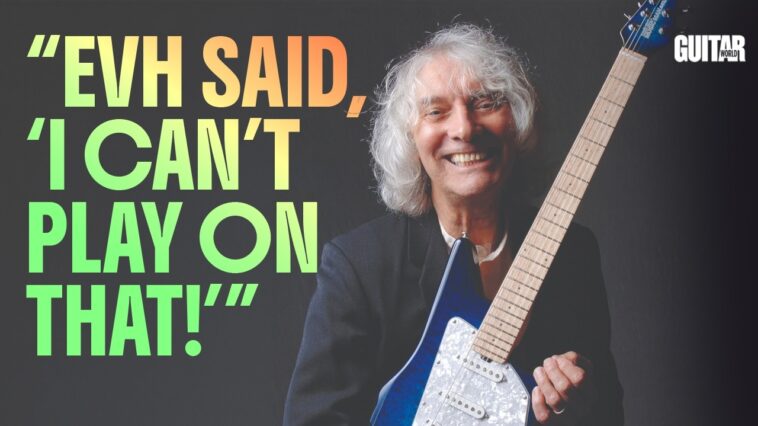
On a couple of gigs, we had Eddie Van Halen playing with us. He said, “I can’t play on that!” I said, “Yes, you can – you can do all that tapping!” And of course he was great.
So you had a track that Eddie Van Halen was nervous to play?
He didn’t think it was his style. I said, “Of course it is!” Every now and again we’d do odd gigs. We did one at the NAMM show, which people still talk about. They used to say, “That show you did with Steve Morse and Eddie Van Halen was great. Any chance of any more?” I’d say, “I don’t think so!’”
I’ve never earned enough money to retire. In a way that’s good
You’ve played with no shortage of guitar heroes – and you are one – but how do you feel when you play next to people like that?
It brings you to a position where you feel, “If I can play with these guys, I can play with anybody.” If I wasn’t ashamed of my playing, if I could get up there and play with Luke, Steve Morse and Eddie, and be respected by them, I thought, “I guess I’ve arrived!”
One thing that you didn’t have in common with those players is your tone. I’ve heard you say you actively dislike distortion.
I don’t like distortion. I love it loud and clean. You get away with all kinds of faults with that much distortion on a guitar. I think you’ve got to be pretty brave to get up there with the nice, clean sound.
You’ve never rested on your laurels or lost the gigging bug; you’ve just worked constantly.
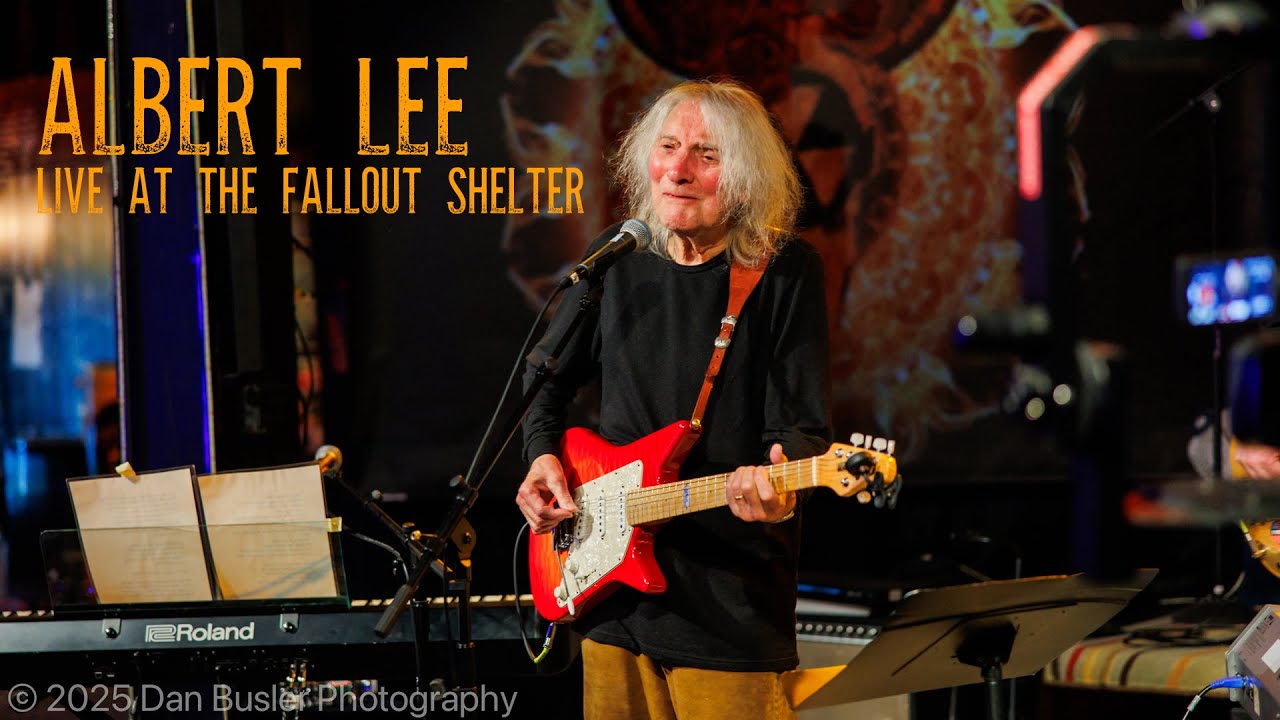
Well, I’ve never earned enough money to retire – put it that way! In a way that’s good, because you see some guys who make a lot of money, and they have to practice for a couple of weeks to get ready for a major tour. They’re not as good as they were. It’s bound to happen,. Now I’m 82, the skin gets a little thin if I’m not playing regularly, and it’s painful.
Why has the guitar stuck throughout that time and the ups and downs?
I consider myself very fortunate. I’ve always had a gig. I went from Chris Farlowe to Heads, Hands and Feet to Joe Cocker, Emmylou, Clapton and the Everly Brothers for over 20 years. Bill Wyman was about 15 years. And in between those gigs I was playing my own gigs. So there’s always been something there to pay the rent.
I’ve never had a real hit record to retire on. But I always thought I was pretty good at what I what I do. People still want to hear the way I play. Maybe it’s not quite the same as it was a few years ago, you know, but I can still tear it up when I want to – on a good night!