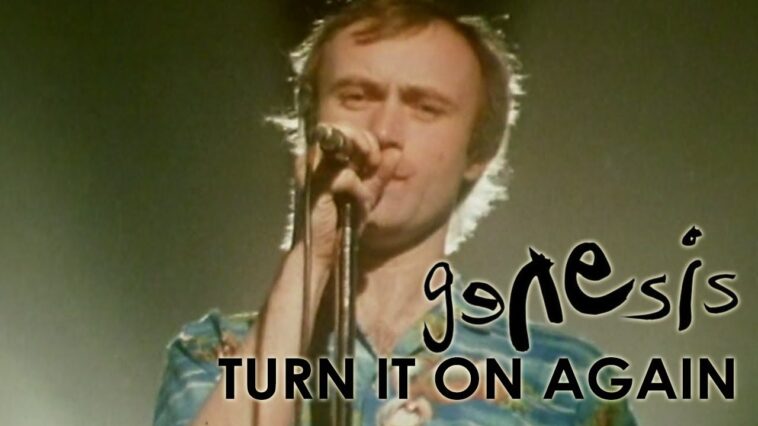
No band has navigated the path from esoteric ’70s progressive rock to massively successful ’80s pop-rock with quite such conviction and aplomb as Genesis.
When drummer Phil Collins took over on vocals following the departure of Peter Gabriel in 1975, the band charted a course that was still very much in the prog rock vein.
But all that began to shift in 1980 with the release of their album Duke, the key transitional release and their first No 1 album in the UK.
Latest Videos FromMusicRadar
By the follow-up album Abacab (1981) the prog leanings had diminished further as tighter new wave and rhythmic influences predominated.
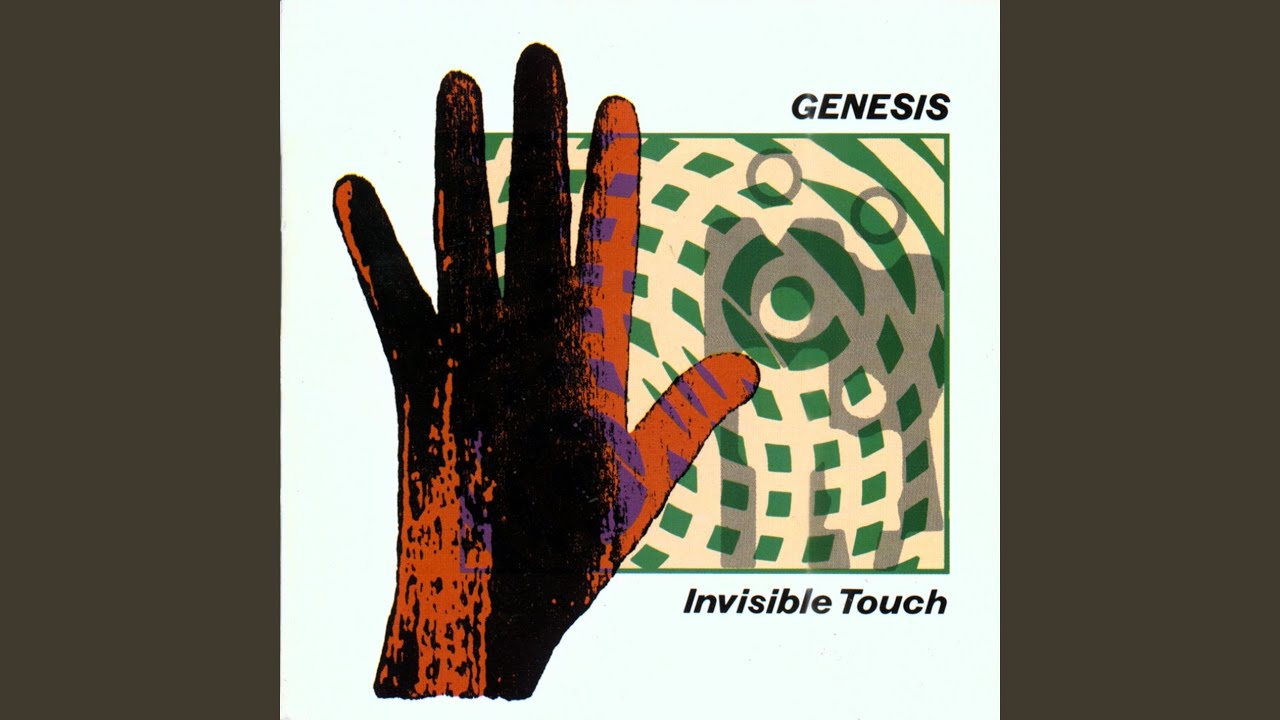
The 12 album, titled simply Genesis, was their biggest commercial success at the time but it was their next album, Invisible Touch, that catapulted them to global superstardom.
The album yielded five singles and it was the first of these, the title track, that gave them their one and only US No 1 single.
Invisible Touch is a song that cemented Genesis’s place in the mainstream pop market, with its sleek high-gloss sound, catchy synth hooks, lush bass and propulsive electronic drums. It is stirring and insanely catchy, and captures Genesis at the absolute peak of their commercial prowess.
By the mid-1980s Genesis were attracting some serious flak from critics and fans alike. Phil Collins’ solo success had fuelled the feeling that Genesis had completely sold out. In a piece in the Los Angeles Times, music critic Robert Hilburn described the band as “flabbergastingly insignificant”.
Rarely have fans and critics seemed so polarised in their opinions of a band. Many who championed landmark early Genesis albums such as Foxtrot (1972) from the Peter Gabriel era seemed to detest the Collins-fronted incarnation of the band, while those drawn by the Collins-fronted line-up found albums such as Foxtrot tedious and bewildering.
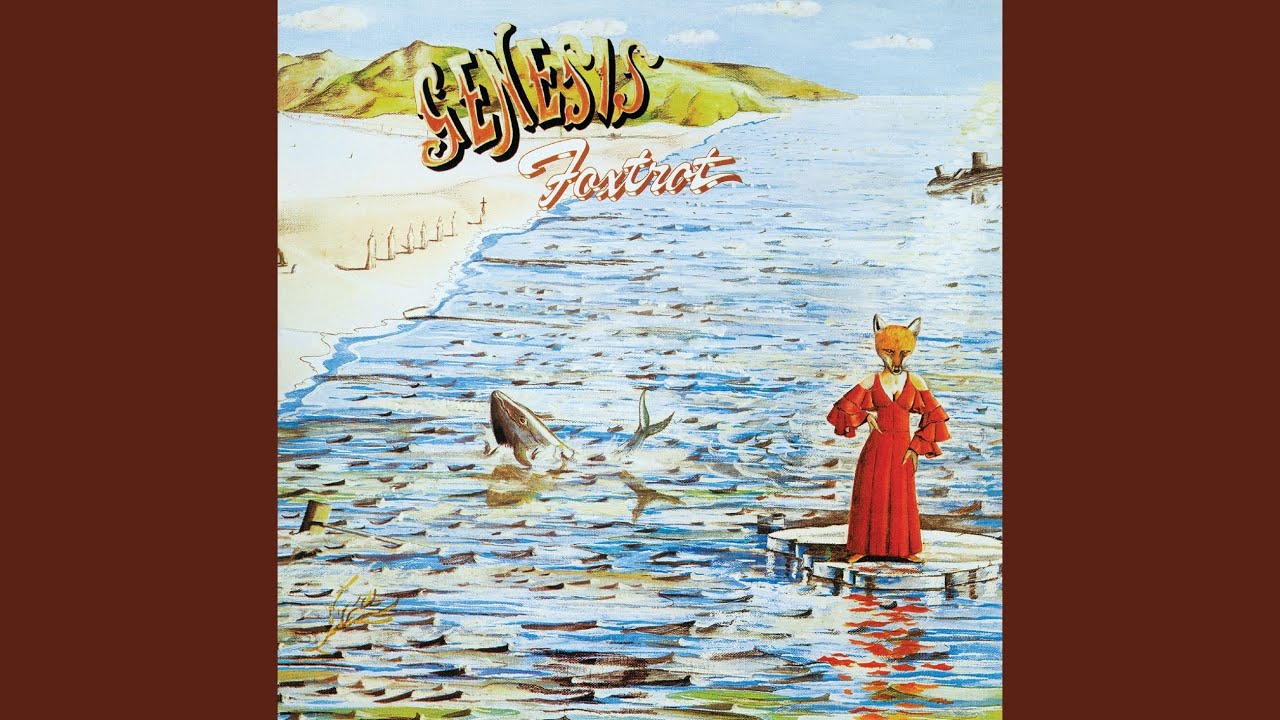
“There are few groups in the classic-rock canon with a more divisive discography than Genesis,” wrote journalist Jim Allen in a piece for Classic Rock in 2017. “Good luck finding anybody out there who’s equally enamoured by both sides of the band’s story.”
In an interview with Prog magazine in 2023, Tony Banks attempted to define the source of such division.
“We never had that definitive album the way Floyd had The Dark Side Of The Moon or the Eagles had Hotel California,” he said. “We haven’t got that universality of somebody like Queen, who everybody likes to some degree. We were considered too fey to be street cred, so some like us, some don’t.”
By the time the three members of Genesis assembled in October 1985 to begin work on the Invisible Touch album, they had each spent an 18 month hiatus pursuing solo projects. Keyboardist Tony Banks recorded his solo album Soundtracks, while guitarist and bassist Mike Rutherford formed Mike And The Mechanics, whose single The Living Years reached No 1 in the US and No 2 in the UK.
Phil Collins, meanwhile, resumed his solo career and busied himself with the job of becoming one of the most successful and unlikely pop stars on the planet. In February 1985, Collins released his third solo album No Jacket Required, an upbeat, dance-orientated record, which shot to No 1 in the UK, the US and nine other countries.
![Phil Collins - Take Me Home (Official Music Video) [HD Upgrade] - YouTube](https://img.youtube.com/vi/sRY1NG1P_kw/maxresdefault.jpg "“One day Mike played a riff on the guitar, with an echo, and I suddenly sang, ‘She seems to have an invisible touch – yeah!’ It came into my head fully formed”: How Genesis created their biggest hit – with a writing process “like jazz” 20")
Some observers pointed out that Genesis’s songs had become so pop-orientated that there was little to distinguish them from Collins’ solo material.
But Genesis themselves highlighted the strongly collaborative nature of the writing on the Invisible Touch album, particularly on its title track.
Collaboration was utmost in their minds when they returned from their 18-month break. They recorded at The Farm in Chiddingford, Surrey, the studio created by the band in 1980.
By then, Genesis were a massive live act, particularly in the US, and approached the sessions for the album with a greater sense of confidence.
They arrived at the studio with no preconceived ideas and the songs were developed by jamming, improvising and recording the results. This is how the song Invisible Touch came into being, as Phil Collins told writer Laura Barnett of The Guardian in 2014.
“Invisible Touch is my favourite Genesis song and it came more or less out of nowhere,” said Collins. “We would arrive in the studio every day and just start playing. One day Mike Rutherford played a riff on the guitar, with an echo, and I suddenly sang: ‘She seems to have an invisible touch – yeah!’ It came into my head fully formed.”
One of the real strengths of the band’s writing process, said Collins, was that they weren’t scared of making mistakes.
“I’m sure people have all kinds of ideas about how we wrote these songs they love or loathe, but really our writing process was close to jazz. We improvised.
“We weren’t afraid to make lousy noises. We knew each other well: if I started singing crap, no one would say, ‘What the hell are you doing?’ Still, there was a good percentage of crap.”
Mike Rutherford recalled that Collins’ energy and organisational skills were key to the writing of Invisible Touch.
“The best songs tend to get written quickly. That’s how it was with Invisible Touch. We’d rock up, have a cup of tea, see what happened. On day one, we had no songs, no ideas, and a blank bit of paper. Phil was always keen to fill that bit of paper – he was very organised – and we let him. It’s a wonderful song: upbeat, fun to play, always a strong moment in any gig.”
In his 2016 autobiography, Not Dead Yet: The Memoir, Collins said that “large chunks” of the song were inspired by his first wife, Andrea Bertorelli.
Two years earlier he told Laura Barnett of The Guardian: “I wrote the lyrics about a person – and I’ve known a few – who gets under your skin. You know they’re going to mess you up, but you can’t resist.”
Collins said that while he was working on Invisible Touch he was heavily influenced by Sheila E’s 1984 hit The Glamorous Life, which was written and produced by Prince.
Collins reportedly built the drum track for the song by using a combination of a Simmons electronic drum kit, a Roland TR-707 drum machine and an E-mu Emulator sampler.
It is also reported that producer and engineer Hugh Padgham routed the Simmons kit through a mixer and then a studio PA system, playing it back at extreme volume to give the electronic sounds more presence and weight.
Keyboardist Tony Banks, meanwhile, upgraded his set-up for the album, replacing his E-mu Emulator I with the E-mu Emulator II+ and adding that most ubiquitous of ’80s synths, a Yamaha DX7, alongside his existing Synclavier II.
While Invisible Touch was created by all three members of Genesis, it has all the songwriting mastery and craft of Phil Collins at his very best. It’s a song rooted in R&B and soul influences and one that opens the album in all its full-on synth pop glory.
From the outset, it hurtles along with intense urgency across an F-Bb-C chord progression. Rutherford’s jagged, catchy riff dominates in the mix before the whole pulsating track drops down to Dmin for the start of the first verse.
“Well I’ve been waiting, waiting here so long,” begins Collins, his echo-swamped voice sounding soulful and resonant. “But thinking nothing, nothing could go wrong.”
The song rarely sits still and that’s part of its twitchy, compelling appeal. It’s a glistening, streamlined production, dominated by stabs of thick synth brass and densely-layered synth strings. The whole song screams its digital presence and these are big, beefy sounds, offset by sizzling, high-frequency percussion.
There’s a nifty emotive shift in mood into an G major before the lines, “Ooh now I know/She has a built-in-ability.”
Rutherford’s riff comes piling back in for the stirring chorus over an F-Bb-C progression.
It’s a powerful, soaring vocal performance from Collins. The hooks are strong and when the chorus hits the whole thing just flies. Unsurprisingly, Collins locks right in with his vocal, as the fretless-sounding bass flows beautifully within the groove.
At 2:09, the song lurches into eight bars of middle eight, which signals a flurry of rapidfire synth wizardry from Tony Banks, before segueing into the third verse.

The arrangement is tight and lean, with the whole single edit clocking in at 3:27. The song also features what writer Dave Fawbert of ShortList described in 2017 as “one of the greatest key changes in music history”. This occurs at 3:08 as the chorus shifts from F major to G major.
Invisible Touch was released on 19 May 1986. Billboard dubbed it an “uptempo dance-pop workout with a clear Collins signature” while another US music industry trade magazine, Cash Box, concluded it was a “hook-laden pop workout”.
In mid-1986, Invisible Touch was knocked off the US No 1 slot by none other than the band’s former singer, Peter Gabriel, with the song Sledgehammer. It was an irony noted by Collins in his interview with Laura Barnett of The Guardian in 2014.
“I read recently that Peter Gabriel knocked us off the No 1 spot with Sledgehammer,” said Collins. “We weren’t aware of that at the time. If we had been, we’d probably have sent him a telegram saying, ‘Congratulations – bastard.’”
In 1996, Genesis released a live version of Invisible Touch as a single, which had been recorded in 1992 during the band’s We Can’t Dance tour.
While the original Invisible Touch single received some decent reviews, the album from which it came got some bad press.
“We hid in a ditch whenever we had a new record out,” Collins told The Guardian. “We’d been going more than 20 years, and by 1985 everyone had made up their minds about whether they liked us or not.”
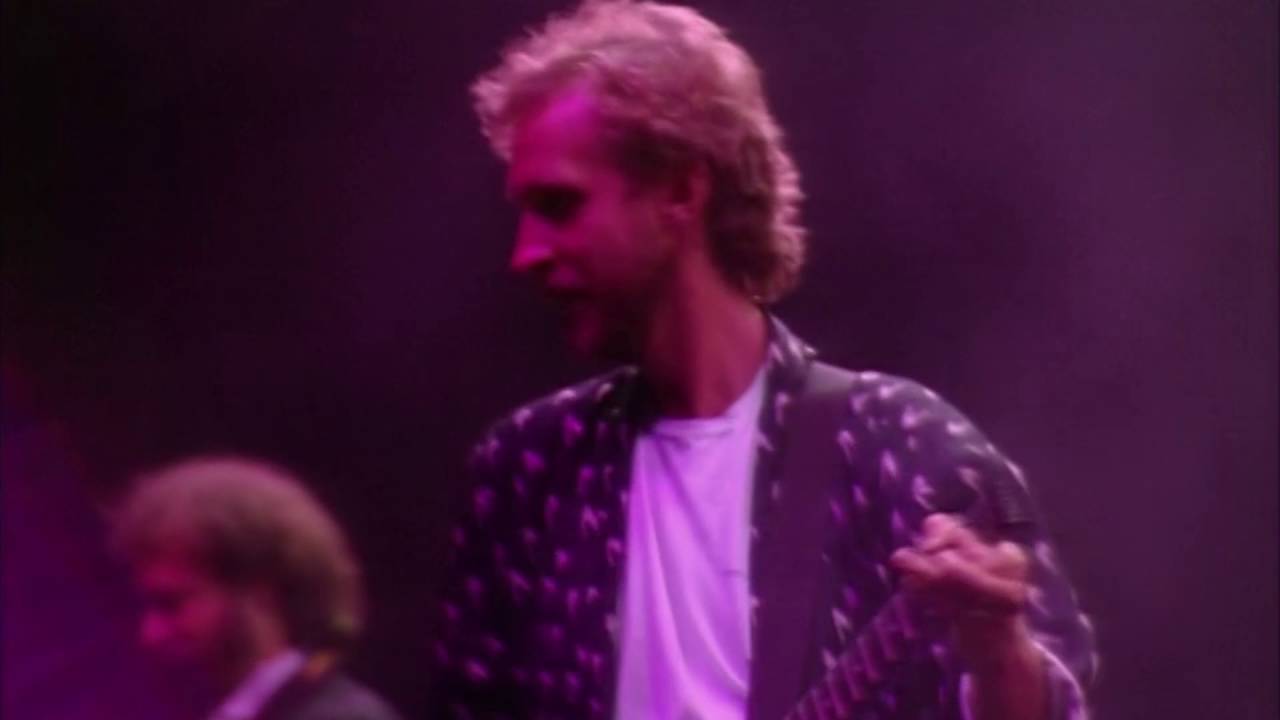
Despite the reviews, the Invisible Touch tour was a huge success, as Mike Rutherford recalled in The Guardian.
“We toured the Invisible Touch album in 1986 and 1987, playing four nights at Wembley stadium. It was a beautiful hot summer. As we went out on stage, I remember thinking, ‘This is as good as it gets’. And I was right. The next album, We Can’t Dance, did pretty well – I think it was worth about £10m – but Invisible Touch was the pinnacle.”