
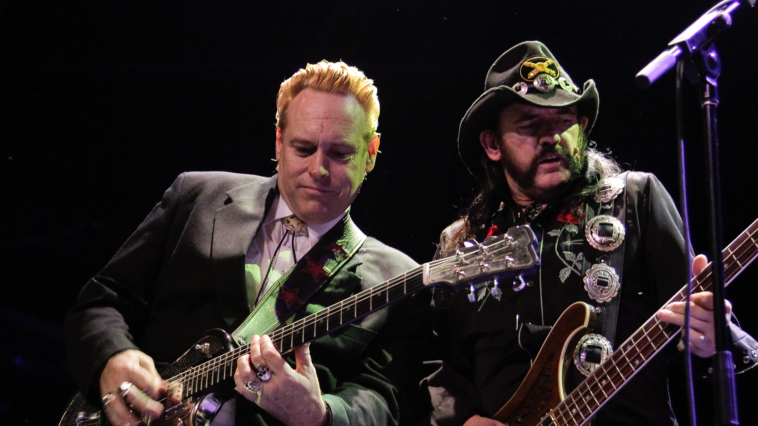
Riding high in the pantheon of the most aura-farming rockstars, Motorhead’s Lemmy garnered respect from all corners of the musical map.
Formerly of Hawkwind, Lemmy (aka Ian Fraser Kilmister) founded Motorhead in 1975 and remained the group’s only continuous member, with his coruscating vocals and thunderous bass the pivotal centre that his fellow Motorhead-men orbited.
But the sideburn-sporting Lemmy, who sadly passed away in December 2015, wasn’t just a lover of high-octane riffage, he also had something of a lifelong fixation with rockabilly; a genre that stemmed from the early rock ’n’ roll he’d first fallen in love with as a teen.
Latest Videos FromMusicRadar
Back in 2012, MusicRadar chatted to Lemmy about this unlikely side-passion which he indulged with his other band, The Head Cat.
The band included Stray Cats drummer Slim Jim Phantom and guitarist Danny B Harvey. Ahead of a show at the Roxy in Los Angeles, MusicRadar sat down with Lemmy for a chat about rockabilly and how this other strand of his career began…
“We were doing a track for this album [Swing Cats: A Special Tribute To Elvis], and when we were done, we started fooling around with guitars. Before you knew it, we were playing a bunch of songs. It came easy – and that’s the best way, isn’t it? That’s how you know you’ve got something worth doing,” Lemmy told us.
“I wasn’t looking to start another group, so it’s probably a big mistake that I went ahead with this. [laughs] But you know, when you’ve got some chemistry, and everybody knows the same songs, and they’re good at what they’re doing, why waste the opportunity?”
One of the big benefits of the Head Cat for Lemmy was the lack of pressure on it compared to Motorhead;
“Touring with Motorhead is so time-consuming. It’s all I can do to find the time to do anything else. I don’t know when The Head Cat is going to go into the studio again – there’s no plans – but if we get two days off, we could make another record.
“We just get together and play, that’s all,” continued Lemmy. “We can play just about anything, you know. Name a song, play it, see if the other guys know it – that’s what we do in the studio. If you can’t remember something, then pick another song. It’s pretty easy.”
His love of rockabilly (and indeed, rock in general) stemmed from attending a Billy Fury show in his youth, and that’s where his fixation began…
“Billy had the whole star thing down, had a silver suit and the whole bit. He was from Liverpool, same as The Beatles. Ballads were his main thing, but he did rock ‘n’ roll on his B-sides – that’s what I liked, the rock stuff.”

We asked Lemmy for his perspective on how that original form of rock ’n’ roll became more watered down and chart-angled as the 1960s grew. But Lemmy was surprisingly open-minded;
“I didn’t care, really – still don’t. Just as long as it’s a good song, that’s all I ever cared about. The word ‘pop’ is just shorter for saying ‘popular.’ Just ‘cause something’s popular, it can still be good. In fact, if more people are buying it, then you must be doing something right. People look down on stuff that sells. What do you call that? Downward snobbery, I guess.”