The unsung guitarist who shaped one of PRS’s most sought-after models
What makes a signature guitar successful is not just the name on the headstock but what that name is looking for from the instrument, and how their preferences resonate with the guitar-playing public at large.
You can put an A-lister’s signature on your headstock, swap out the stock pickups for the artist’s own, maybe apply a custom finish, and it’s job done. There’s your marketable signature model, complete with the artist kudos that we have recently discovered makes guitars hold their value in the used market.
But one of the most successful signature models of all time – and one of Paul Reed Smith’s most popular builds – was not for a globally recognized superstar. It was for the Texan virtuoso David Grissom, the guitar player’s guitar player, solo artist and session ace who played with John Mellencamp – and a former Guitar World columnist to boot.
Latest Videos FromGuitar World
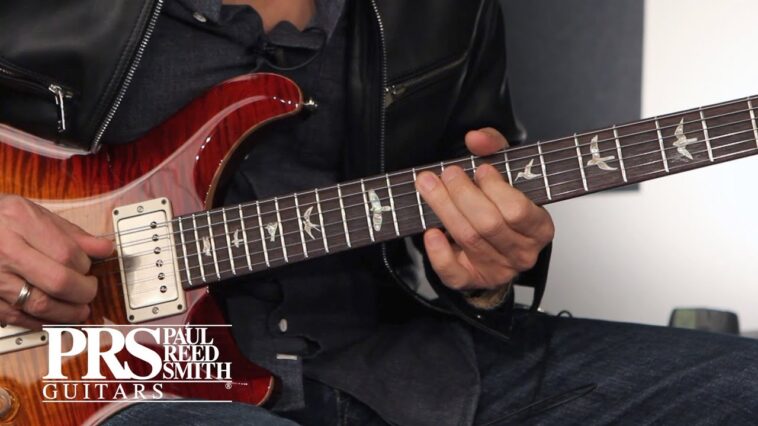
His PRS DGT is one of the great electric guitars of the modern era, long established as part of the Maryland’s US-made Core lineup and its Indonesian SE lineup. It came together out of Grissom and Smith’s long-standing friendship. And in a recent interview with Guitarist, Grissom and Smith reflected on the DGT’s evolution.
“David wanted a McCarty guitar with a tremolo, he wanted everything right,” says Smith. Grissom’s specs were put to work in prototypes that were rigorously tested each night. The DGT was “born out of thousands of gigs and hundreds of sessions”. Such was Grissom’s involvement that PRS even started changing the way it wax-potted its pickups. Grissom was worried that 10-minutes soaking in wax was killing something in their tone.
But the interview reveals something deeper – Grissom could have put his name on a PRS Guitar before. Smith had him onboard when he was testing out the specs for the guitar that would become the McCarty model, the guitar that Smith named in tribute to the former Gibson president and guitar designer extraordinaire Ted McCarty, who oversaw the Nashville brand’s golden era designs.
The DGT | Demo with David Grissom | PRS Guitars – YouTube
Grissom was PRS’s trusted test pilot and sounding board and his ideas brought in a raft of changes to the guitar, such as the thicker mahogany body and pickup design. He demurred when the prospect of his name being on the guitar came up.
All the latest guitar news, interviews, lessons, reviews, deals and more, direct to your inbox!
“I was really at the point where nobody knows who I am and I don’t want my name on the guitar,” says Grissom. “A lot of the ideas that I was trying to translate into the PRS were really ideas that Ted McCarty had pioneered at Gibson, and I thought it was extremely fitting. We bounced ideas off each other for years and we would always come up with different stuff.”
(Image credit: Future / Phil Barker)
But in Grissom’s hands, the PRS McCarty was about to change. He wanted an instrument that was designed exactly for how he played the guitar and Smith was going to make him it. When we talk about the success of the signature model, this is where it’s won and lost, in the details, in the physical geography of the instrument. The DGT became something grander than simply a next-gen McCarty – every single detail was gamed out, from the pickups and the search for the “sweet spot” of warmth and clarity, right down to the fret bevels.
(Image credit: Future / Phil Barker)
“We changed the control layout so the bridge pickup volume knob was closer to my little finger because I worked that constantly,” says Grissom. “We worked on the neck profile quite a bit over several years with quite a few prototypes.”
You can read the full interview with David Grissom and Paul Reed Smith in a the latest issue of Guitarist, available now from Magazine’s direct – subscribe and you will save a heap of money… Which would be useful if you are in the market for a PRS DGT.