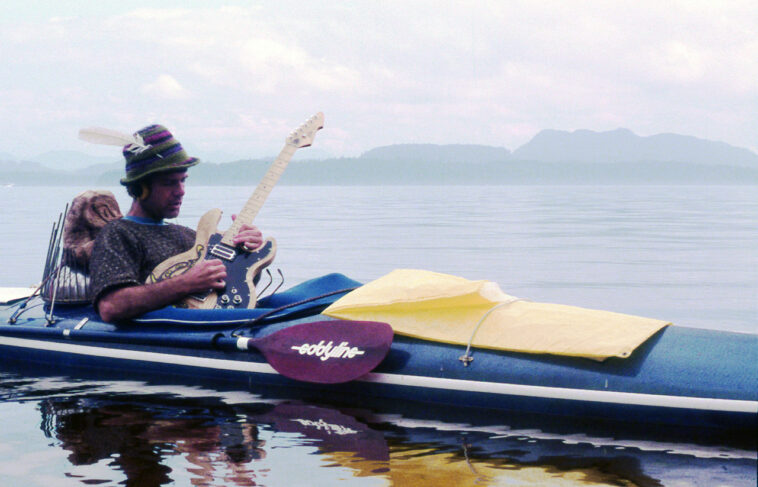
Jim Nollman once wanted to be the next Eric Clapton. Instead, his guitar playing took a surprising detour – specifically, via a sea cove in British Columbia – as he piped his sound underwater to create 65 hours of whale song/guitar recordings.
Now he is releasing a compilation of these interspecies jams on Smithsonian Folkways, collecting together highlights of the tapes made between 1985 and 2002 at his Interspecies non-profit in B.C.
Here, in his own words, Nollman tells us what it was like to spend his playing career making music with whales…
Latest Videos FromGuitar World
Pet Sounds
My background is in theater music. Absurdists like Eugène Ionesco influenced me, so [before the Interspecies residency started] I’d already done music with other animals.
I didn’t enjoy playing on stage, so I asked a radio station if I could produce a Thanksgiving Day show. I went to a turkey farm and recorded with 300 turkeys. It’s still played all the time on American radio. I realised I much prefer to play in nature than on stage or on the road, living in motels. I just wasn’t made for that.
[When I set up the British Columbia residency] we decided we would play from after dark until about midnight, otherwise there was too much boat noise in the water. We didn’t want to compete with outboard motors.
It was pitch black; we’d have to keep the electricity off and play with a couple of candles. It’s a strange place to play music because you’re in the bowels of this cabin cruiser, and if the wind is up the boat’s shaking and rolling.
After dark
This one orca came around at night. I was really into primitive country blues at the time. I played a 12-bar blues riff really slowly with a very strong beat. This whale, I swear, whenever I went up to the 4, he came in right on the beat. It was shocking to me that that could happen!
I quickly realized that I needed a sound system that would let me hear the orcas as well as interact with them. [Fortunately] I was getting so much publicity, it was easy to get funding and attract recording engineers.
I had an underwater speaker and a hydrophone. When they’re about 100 yards from the boat the orcas start echolocating, which is their way of perceiving distance and objects in their path; basically clicks. It sounds like giant woodpeckers, because it’s a couple of octaves below what a normal woodpecker does.
Deep blues sea
I was playing a lot of country blues to the whales. I played James Brown music and it was the best reaction I ever got. They weren’t impressed by human virtuosity – they didn’t need David Gilmour or Mark Knopfler. What they wanted was Jimmy Nolen, James Brown’s lead guitar player; they liked the groove.
In the beginning I was playing my Peavey guitar, but I soon attracted the attention of a young guitar maker in Oregon. He built me what he thought would be the perfect guitar to play with orcas; I made a few changes to it, though.
He put on a triple-bucker, and it was too AC/DC, too thick. It wasn’t what I wanted to give the orcas. He used lots of brass – it was a heavy instrument. I gave it to a great luthier, Bobby Warren, and said, “Can you lighten this up a little bit, give me sustain, but also make it really clean?”
The triple-bucker was set into a solid brass cup built under the strings, so Bobby took the center one out. There was this hole about an inch between the two, and being in that brass shroud made a unique, beautiful tone. I’ve been using that ever since.
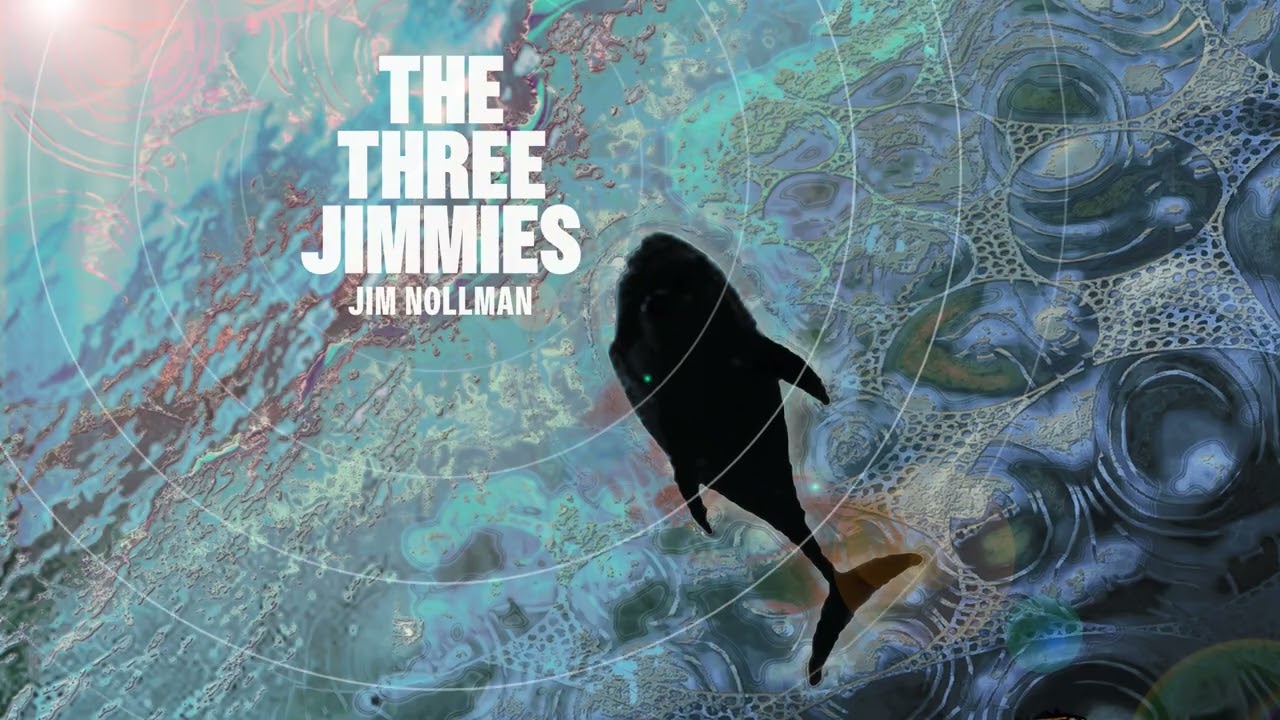
Communication Breakdown
An orca researcher camped down the strait from us, and he’d come up for dinner sometimes. Halfway through the project he said, “Those orcas that are coming to you – it’s a mother and her son. Most of the orcas don’t care about this music, but these two are coming to you every single night!”
The orcas are majestic, crazy loud, and in the key of D. Most of their calls are D to C to D. We’d have musicians start playing that riff, and the whales would sing it back to them. The musicians would get really excited: “I’m communicating with whales!”
In the last year the mother orca died of old age. The son lost interest in us. I gave up the guitar
I would always have to break the bubble: if you don’t play, they do the same thing. The whole point is to get them off of that D-C-D.
The record is all field recordings, exactly as it happened. I had the hydrophones about eight feet apart on the boat, basically starboard and port – sound travels almost five times faster under water than above water. So eight feet apart, it’s like having one microphone.
I would duplicate it and then shift it up, EQing the bottom on one track and the highs on the other track, to get a fuller picture. It’s all mono. If people are going to like it, they’re not going to care if it’s Dolby Atmos. It has its own built-in allure!

And I swear that I don’t have a gun
We played for them for eight years, and in the last year the mother orca died of old age. She was in her 50s. The son lost interest in us. When I moved to the island where I now live, I gave up the guitar and started playing mandolin.
The guy who made the guitar for me gave me a prototype guitar the size of a mandolin. I gave it to my luthier, who made it into an electric mandolin, and I’ve used that for the last 20 years, making music with different whale species.
I started playing with lots of dolphins – much higher pitched – and got into playing with beluga whales. They have this very different sound from the orcas. They’re much jollier and never stop talking!
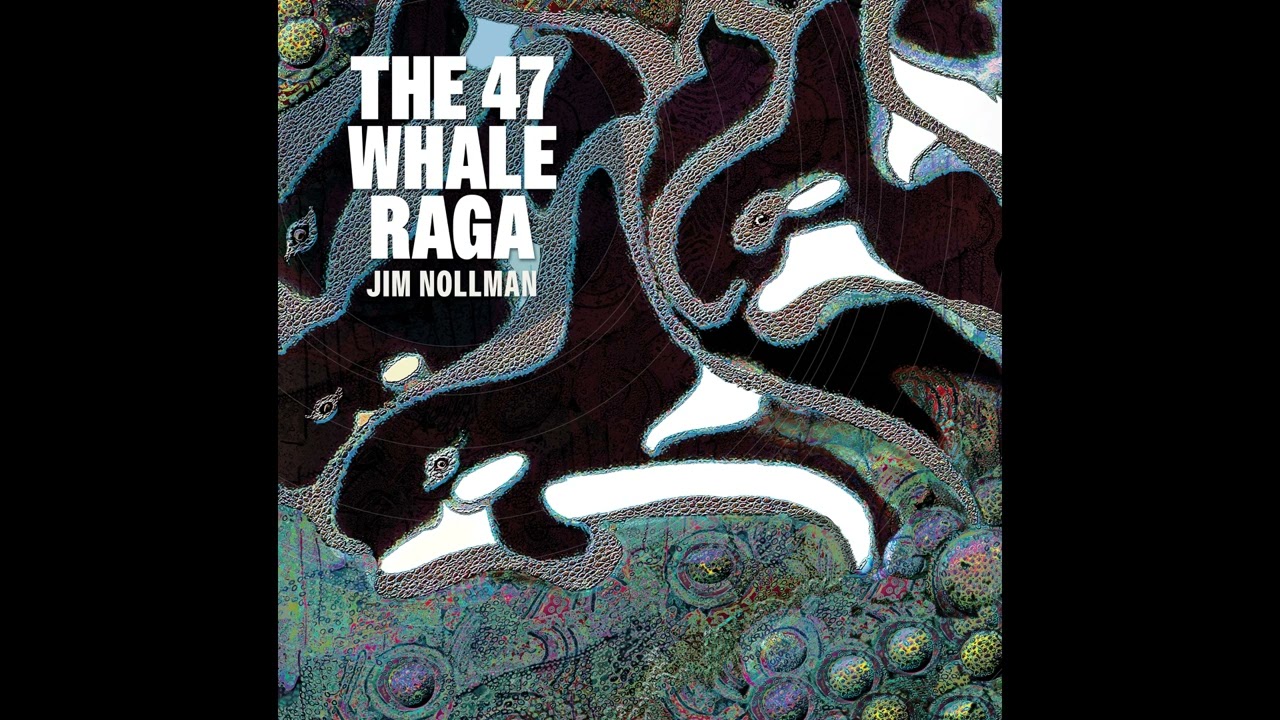
I’ve had almost no luck with them, though, because everywhere in the Arctic, beluga whales are being hunted by native people or being killed in oil discovery. I’m a guy on a boat standing up holding a guitar; the beluga would never come close because they don’t know the difference between a guitar and a gun.
I had a hard time figuring out how to justify what I was doing all those years, especially to the scientific community. I went to several whale science conferences and sometimes got booed off the stage because they felt I was trying to humiliate them.
But I never called myself a scientist. In my 20s I thought I was going to be the next Eric Clapton. As it turned out, I did something very unusual.
As told to Cheri Amour.