!["That track doomed Styx. It was genuinely terrible. Honestly, it was one of the most misguided concepts ever": The synth-rock hit that sold a million yet sidelined a superstar band.]](https://backingtracksfullcollection.com/wp-content/uploads/2026/04/That-track-doomed-Styx-It-was-genuinely-terrible-Honestly-it-758x427.jpg "\"That track doomed Styx. It was genuinely terrible. Honestly, it was one of the most misguided concepts ever\": The synth-rock hit that sold a million yet sidelined a superstar band.] 1")
In the early ’80s, Styx were flying high as one of the most successful rock bands in America – until they came unstuck when a million-selling single from a bizarre concept album alienated many of their fans and led to the band splitting.
Styx’s golden run had begun in 1977 when the power ballad Come Sail Away made the US top 10 and powered the album The Grand Illusion to sales of more than six million.
Another ballad, Babe, topped the Billboard Hot 100 in December 1979, and a concept album, Paradise Theatre, also hit No 1 in the summer of 1981.
Article continues below
It was Dennis DeYoung, the group’s lead singer and pianist, who created the concept for Paradise Theatre – the story of a fictional Chicago music hall that served as a metaphor for a rapidly changing America.
DeYoung had written the band’s hit ballads and served up another on Paradise Theatre with The Best Of Times, which made No 3 in the US.
The problems for Styx started when DeYoung unveiled his plan for the follow-up to Paradise Theatre. It was to be another concept album, this time with a vaguely Orwellian theme: a sci-fi fantasy in which a hero battles a fascist regime for the right to rock.
It had echoes of another famous rock concept album: 2112 by Rush.
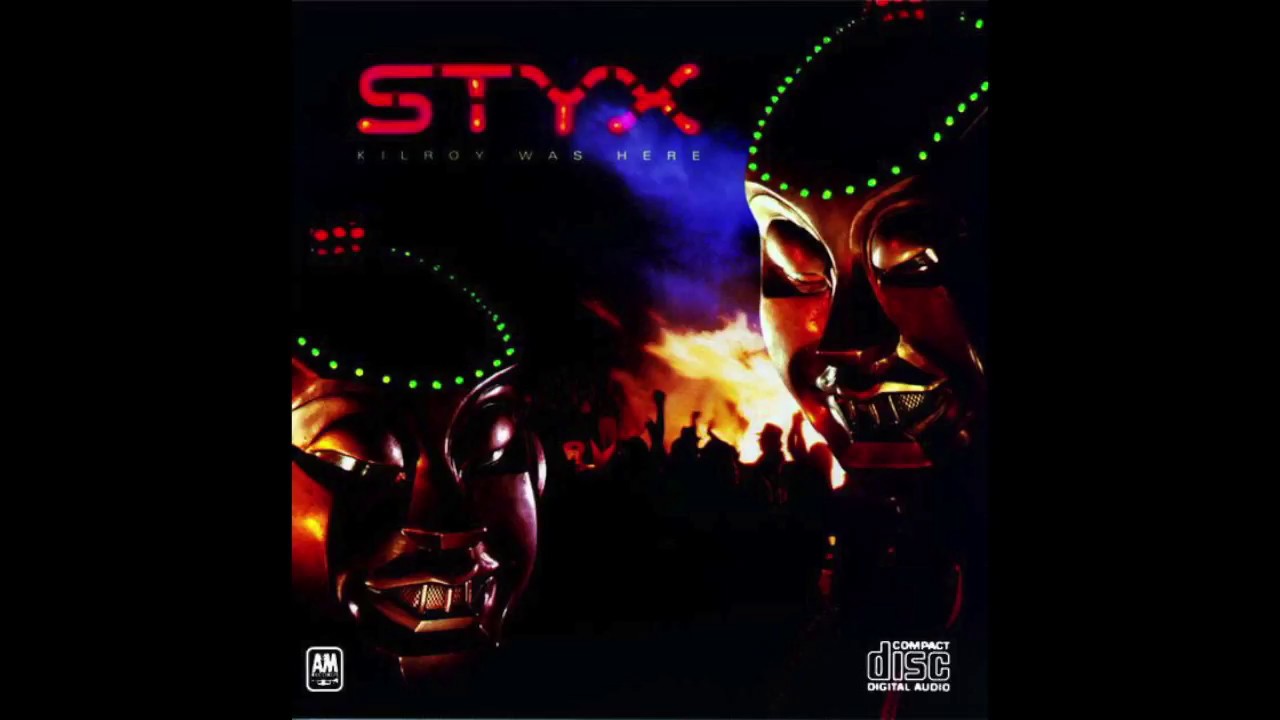
The hero of DeYoung’s story was Robert Orin Charles Kilroy, the name an acronym for ‘ROCK’. The album’s title: Kilroy Was Here.
The two guitarists in Styx, Tommy Shaw and James ‘JY’ Young, both contributed songs to this album. But as a whole, Kilroy Was Here was very much Dennis DeYoung’s baby, and it was his song Mr Roboto that proved divisive – for the band and fans alike.
Certainly, Mr Roboto is a highly unorthodox track: a synth-rock anthem with a theatrical vocal from DeYoung and a chorus in delivered in part in Japanese.
In Paul Rees’ book Raised On Radio, Dennis DeYoung and other key figures discuss the controversy around Kilroy Was Here – and how Mr Roboto damaged the band’s career.
James ‘JY’ Young recalls: “Dennis was a strong-willed individual and had the most success as a writer and lead singer in the heyday.”
Young says of Kilroy Was Here: “Dennis had this vision for an idea that none of the rest of us agreed with, and we battled about it for quite some time. We all finally gave in to him.
“He believed in it, but none of the rest of us really did. We tried our best to make something out of what we had.”
Dennis DeYoung admits: “I tried making another concept album with Kilroy Was Here. Was it too much? Maybe.
“I know what’s wrong with Kilroy Was Here as an album. There’s not enough rock ’n’ roll on it. For an album that’s about banning rock ’n’ roll, you might want to have some.”
James Young says of Mr Roboto: “I was so against that song. This thing is targeted at seven year-olds.
“The craziest thing is, it’s the only single that Styx put out that has sold a million records. I refused to play it.”
Dennis DeYoung counters: “Mr Roboto was dismissed by so many people because it was so doggone catchy and clever. You might want to go back to 1982, 1983 and see what was happening in the music world. ZZ Top had put synthesizers on their music.”
DeYoung quotes his lyrics in the song: ‘The problem’s plain to see. Too much technology. Machines to save our lives. Machines to dehumanise.’
“I wrote those lines in 1982,” he says, “and I think to myself, ‘Huh, that didn’t suck.’”
The video for Mr Roboto featured DeYoung playing the part of Kilroy, and a band of sinister dancing robots.
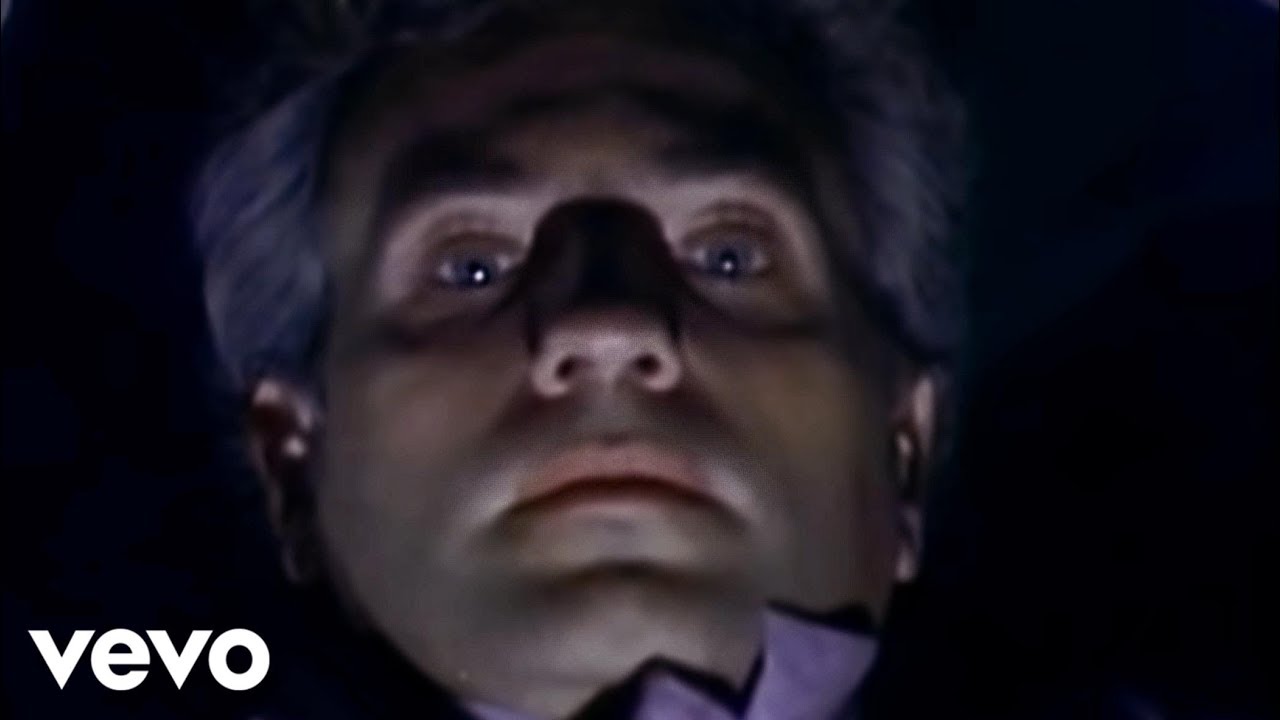
In Raised On Radio, Bob Pittman, co-founder and CEO of MTV, recalls: “That song, Mr. Roboto, it killed Styx. It was truly awful. I mean, that was about the dumbest idea ever.
“The first time we saw that video on MTV, it took your breath away. It was like, ‘Oh my god, they’re doing what?’ Styx was a pretty cool group until that moment.”
Mr Roboto peaked at No 3 on the Billboard Hot 100. Kilroy Was Here also made it to No 3. But the long term effect was damaging.
James Young claimed that Mr Roboto alienated half of the band’s audience. What is certain is that in the wake of this song and this album, guitarist Tommy Shaw departed for a solo career and Styx disbanded for the remainder of the ’80s.
Dennis DeYoung states in Raised On Radio: “Three things you never discuss at Thanksgiving dinner with Styx fans: religion, politics and Kilroy Was Here.”
But he adds, defiantly: “For all the people that didn’t like Kilroy, and thought Mr Roboto was almost as bad as spreading ebola, I can’t help them. It was one song.”