
 Lemon2021
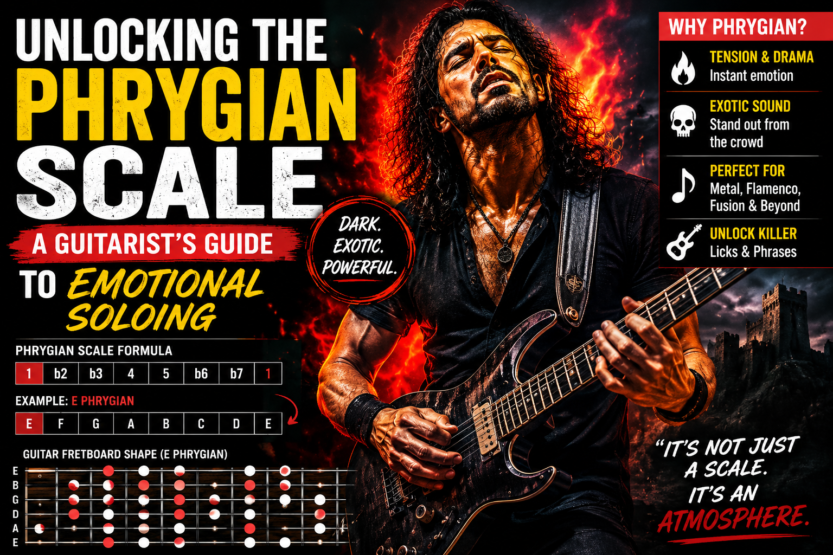
Unlocking the Phrygian Scale: A Guitarist’s Guide to Emotional Soloing
As a passionate guitarist, there’s a thrill in discovering the subtleties of different musical scales. Today, we’re diving deep into the Phrygian scale—a gem that can elevate your improvisational artistry and enhance your emotional phrasing. This isn’t just about notes on a fretboard; it’s about capturing feelings, painting soundscapes, and really letting your guitar voice speak. So grab your axe, and let’s unravel the mysteries of the Phrygian scale together!
What is the Phrygian Scale?
To put it simply, the Phrygian scale is the third mode of the major scale. If you take a natural minor scale, like A minor (A, B, C, D, E, F, G), and raise the second note, you get the A Phrygian scale: A, B♭, C, D, E, F, G. This distinctively exotic scale has a minor tonality with a unique bite due to that flattened second.
But why should we care? Well, the Phrygian is not just a sequence of notes; it’s a doorway to a world of emotional soloing, particularly within genres like fusion, metal, and modern progressive rock. It provides a rich palette for improvisation that can pull at heartstrings and invoke deep feelings.
The Emotional Power of the Phrygian Scale
When I first discovered the Phrygian scale, it was like stumbling upon a secret weapon in my musical toolkit. The scale’s dark and moody quality allows for complex emotional narratives that can truly resonate with listeners. Whether you’re trying to express longing, tension, or even euphoria, the Phrygian offers a unique voice.
Understanding the Scale
- Structure: The Phrygian scale consists of seven notes: 1, ♭2, ♭3, 4, 5, ♭6, ♭7. Each of these notes contributes to the scale’s distinctive flavor.
- Intervals: In terms of intervals, it follows the pattern: half, whole, whole, whole, half, whole, whole. This structure is what gives the Phrygian its exotic sound.
To really feel the scale, I recommend practicing it across the fretboard. Start slow, playing each note cleanly, perhaps even with a soft overdrive to give it warmth. As you become more comfortable, try incorporating wide vibratos or subtle bends on the key notes to add emotional depth.
Practical Applications of the Phrygian Scale in Improvisation
1. Phrasing Techniques
Phrasing is everything in improvisation. It’s not just about hitting the right notes; it’s about how you connect those notes to tell a story. Here’s how the Phrygian scale can aid your phrasing:
-
Accent the Flat Second: Use the flattened second as a springboard for expressive runs. For instance, when you hit a B♭ note, let it hang there for a moment before resolving to A. This creates tension and a sense of longing.
-
Use Call and Response: After playing a phrase from the Phrygian scale, leave space for silence before continuing. This ‘call and response’ technique makes each phrase feel like part of a conversation, allowing the listener to digest the emotional landscape you’re creating.
2. Fusion Techniques
In the world of fusion guitar, blending genres and techniques is key. The Phrygian scale allows you to mesh various styles seamlessly. Here are a few fusion tactics to try:
-
Hybrid Picking: Use a combination of pick and fingers to articulate notes within the Phrygian scale. This can produce a more fluid melody line that nods toward both classical and jazzy elements.
-
Augmented Chords: Pair the Phrygian scale with augmented chords to inject a fresh sound. Experiment with a progression like B♭maj7 to A minor. The tonal shift can serve as a striking backdrop for your Phrygian exploration.
3. Modern Progressive Concepts
For those diving into modern progressive guitar, the Phrygian scale melds beautifully with odd time signatures and complex harmonies. Consider these ideas:
-
Overlapping Rhythms: Practice playing your Phrygian phrases over unconventional time signatures (like 7/8 or 5/4). This keeps your ideas fresh and challenges your rhythmic feel.
-
Polyrhythmic Phrasing: Layer different rhythmic patterns over the Phrygian scale. For instance, you could play triplets over a duple rhythm, creating an infectious groove while still allowing for intricate melodic development.
Guitar Tone: Finding Your Voice
Let’s talk about tone. The right gear can amplify the emotional impact of your Phrygian explorations.
1. Gear Recommendations
-
Overdrive Pedal: A warm, creamy overdrive can help bring out the scale’s darker tones. Try to use a pedal that allows for a smooth sustain—think classic Tube Screamer.
-
Delay: Add a subtle delay effect (anywhere from 300-600ms) to create space. This makes your playing feel expansive and lush, particularly when using the Phrygian scale’s inherent tension.
2. Recording Techniques
When it comes to recording, capturing the essence of your Phrygian explorations can be equally important.
-
Reamping: Record your guitar clean and later reamp it to explore different tones. This allows flexibility in post-production, letting you tweak tones to suit your Phrygian-driven compositions.
-
Layering: Don’t hesitate to record multiple layers of your improvisations. This technique can create a wall of sound, amplifying the emotional punch of your Phrygian solos.
Practice Ideas for Mastering the Phrygian Scale
Now that you’ve dipped your toes into the Phrygian pool, let’s solidify your understanding and mastery. Here are some effective practice ideas:
1. Scale Exercises
Start with basic scale drills across the fretboard. Once you feel comfortable, experiment with playing the Phrygian scale in different positions and octaves.
2. Improvisational Freedom
Set a metronome and jam along with backing tracks that prominently feature minor chords. Focus on making each note count; play fewer notes but give them lots of emotional weight.
3. Transcription
Transcribe your favorite solos that utilize the Phrygian scale. This could be anything from a classic rock solo to a modern jazz lick. Learning directly from the pros allows you to internalize phrasing and stylistic concepts.
4. Collaborate
Find like-minded musicians to create with. There’s no substitute for real-time improvisation and feedback. Collaborating with others shows how the Phrygian scale can shift in meaning depending on the context.
Conclusion: The Road Ahead
The journey through the Phrygian scale is one rich with emotional possibilities. By understanding its structure, embracing its unique sound, and practicing diligently, you can unlock new dimensions in your guitar playing. Whether you’re diving into fusion guitar, progressive rock, or simply looking to enhance your emotional expression, the Phrygian scale can undoubtedly add layers to your musical storytelling.
For those eager to further explore their improvisational skills, consider checking out premium guitar backing tracks at music.backingtracksfullcollection.com/guitar-players. These tracks provide an engaging backdrop to your Phrygian explorations, allowing for even more creative expression as you continue on your musical voyage. Keep playing, keep dreaming, and let the Phrygian scale elevate your guitar journey to new heights!


GIPHY App Key not set. Please check settings