
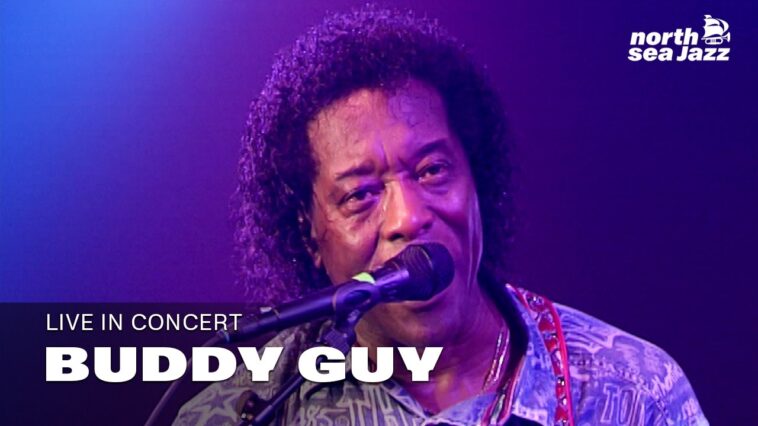
When Buddy Guy emerged from the clubs of the Chicago blues scene at the dawn of the 1960s as one of its most electric performers, charismatic and a not a little wild, something had changed. And it was he who was doing the changing.
Chicago was the proving ground for a generation of blues guitarists who had grown up in the South. Guy was not the first. He got there in the fall of 1957. The likes of Muddy Waters, BB King and Otis Rush were already doing their thing. It was Rush who introduced Guy to Waters at the legendary Bronzeville blues institution, the 708 Club, down on Chicago’s South Side.
Even now, aged 90, Guy often speaks as though he is still the outsider in the scene, the shy boy who had to be invited onto the stage to show folks what he was about. “I didn’t go there thinking I’d be good enough to play,” he said, speaking to Total Guitar in 2015. “I just wanted to watch these greats playing – Muddy Waters, Sonny Boy [Williamson], all those guys – and I got stranded.”
Latest Videos FromMusicRadar
But Buddy Guy, the world’s greatest living bluesman, was not stranded. He was simply out there on his own.
Music history resists grand proclamations. It’s too messy, too unwieldy. But there is a case to be made that Guy – this unassuming man, born George Guy, in Lettsworth, Louisiana, to sharecroppers Sam and Isabel – is the most influential guitarist of all time. This is the player whom Eric Clapton, the original guitar god, described as his Elvis.
Guy had made a name for himself in Chicago but it was time to plant his flag in other territories. Blues guitar was having a tough time breaking through the US. But maybe the UK would be more receptive. In 1965, he crossed the Atlantic to take part in The American Folk Blues Festival tour.
Eric Clapton was watching as Guy took to the stage at London’s Marquee Club. For Clapton, this was like watching the King play Hound Dog on The Milton Berle Show – it was the performance that changed everything.
“All in all, everything about that night was deeply profound for me,” said Clapton in 2005, when he and BB King inducted Buddy Guy into the Rock and Roll Hall of Fame. “The blues was clearly alive and well and it looked good too, for as well as being the real thing, musically Buddy was a star. His suit, his hair, his moves, his sunburst Strat, everything was sharp and perfect. He was for me what Elvis probably was for most other people.”
Within a couple of weeks of Guy’s Marquee set, Clapton quit the Yardbirds. He joined up with John Mayall and his Bluesbreakers to spearhead the British blues explosion.
But Buddy Guy’s performance stuck with him. When Clapton grew frustrated under Mayall’s charge, it was Guy’s performance – with only bass and drums backing him – that planted the idea to hook up with Jack Bruce and Ginger Baker and form Cream.
“That was what did it,” said Clapton in 2005. “What it said to me was ‘this was possible.’ If you were a good enough guitar player – like Jimi was when his time came round – you could just do it as a trio. I thought, ‘Oh?’ And also, it seemed to be so free. You could go any way and change directions. If you were the soloist, you could do whatever you like. You can dictate.
“So I think with Jack in my filing cabinet, in a fairly rigid structure like John Mayall’s band, where we had a set that we played every night, I was thinking about that as a way of breaking free.”
Guy was only getting started. His Marquee performance was two years before he would release his debut album, Left My Blues in San Francisco, and he had already blown Clapton’s mind and played a pivotal role in the creation of Cream. Guy had also converted Clapton’s fellow Yardbirds alumni, Jimmy Page and Jeff Beck.
His choice of guitar, a Fender Stratocaster, challenged their preconceptions, too. That was a country-and-western guitar, the “Roy Orbison-type thing” that all those cats in Nashville played.
“They all were telling me they didn’t know a Strat could play the blues and I laughed and said, ‘What do you mean!?’” Guy told MusicRadar. “Because they were all looking at the Gibson guitars and when they saw me, I went in there with a Strat and was playing them in a kind of wild and crazy way, and I was doing some of the things that I would do like throwing it up and catching it.
“I was amazed for them to tell me that they’d sat there and watched me and didn’t know the blues could be played like that on a Stratocaster.”
The Strat was the perfect vehicle for him. It would sustain. He could dig in and it would sting a note, and you could drop the thing and it wouldn’t break.
If you’d see me play, I wanted you to say, ‘He’s playing his guitar like he don’t care whether tomorrow comes’
Buddy Guy
“If you’d see me play, I wanted you to say, ‘He’s playing his guitar like he don’t care whether tomorrow comes.’ Because if people come see you, I think you should give them every damn thing you’ve got,” he said. “I knew the Strat could give me that and I’ve been in love with it ever since. It just stuck to me.”
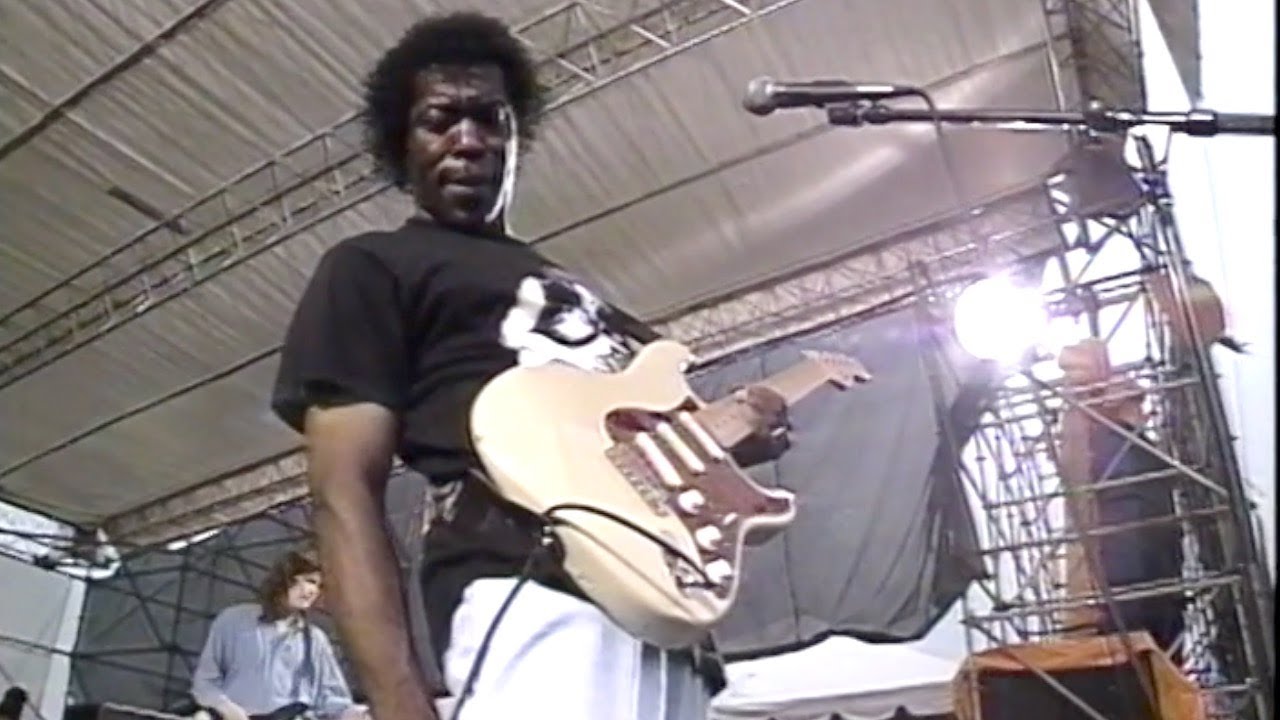
Guy’s live show was becoming the stuff of legend. He would walk the guitar right up to the edge. He always said he wanted to play like BB King but perform like Guitar Slim.
“In the flesh, he was earth shattering,” said Clapton at the Rock and Roll Hall of Fame ceremony. “His style on every level was fantastic. Doing all the things we would later come to associate with Jimi Hendrix, playing with his teeth, his feet, and behind his head. He brought the house crashing down.”
Guitar Slim might have influenced Guy but his style, his physicality with the instrument, was all his. Who else was doing this before him? Guy did to his guitar what Little Richard did on his piano. Would Jimi Hendrix have played a Strat with his teeth without Guy? Would he have set fire to one?
“He transcended blues and started becoming theatre,” Jeff Beck told Louder. “It was high art, kind of like drama theatre when he played. He was playing behind his head long before Hendrix. I once saw him throw the guitar up in the air and catch it in the same chord.”
There was no question Guy was the player Hendrix looked to. They first met in 1967. But they played together in 1968. It was an occasion that stuck in Guy’s mind; he remembers it as the night Martin Luther King Jr was killed.
“I was playing a little place in Greenwich Village called the Generation,” Guy told Billboard in 1993. “I was up there with my guitar behind my head and people started hollering, ‘Hendrix! Hendrix!’ He came right up to me and said, ‘Pay them no mind. Can I tape what you play?’ He was always so nice to me.”
When they played together at Steve Paul’s The Scene, Guy recalls it was the first time he ever saw a wah pedal. It would later become part of his live rig. He would put it to good use when covering Hendrix’s Voodoo Chile (check out his incendiary 1993 performance at the New Orleans Jazz & Heritage Festival below, which also features a cover of Cream’s Strange Brew).
Guy is too humble to accept the role he played in shaping Hendrix’s artistic sensibility. When out on the Experience Hendrix Tour in 2014 with Zakk Wylde, Dweezil Zappa, Eric Gales, Eric Johnson and others, Guy described Hendrix as “one of a kind”.
“I don’t want to take credit for someone like Hendrix,” he told Guitar World.
But Zakk Wylde saw it differently. The blues was the source. Buddy Guy was the source.
“That’s what Jimi Hendrix was doing,” he said. “He was copping Buddy’s licks before me and everybody else on this tour. That’s where it all comes from. If you’re a rock guitarist, blues is your foundation.”
Kenny Wayne Shepherd agrees. He was on that Experience Hendrix Tour, too.
“This guy is one of Hendrix’s biggest influences! I think one of the things that Hendrix got from Buddy Guy was the ability to just unleash on your instrument,” he told MusicRadar in 2016. “I mean, Buddy Guy, you can see him today and he’s 80 but he plays ferociously!
“It’s like his signature thing: he just unleashes on his instrument, and that’s something I think Hendrix learned from him. He’s another legendary player that has inspired so many people.”
The multi-generational reach of Guy’s influence lends further support the theory that he is the most influential player to have done it.
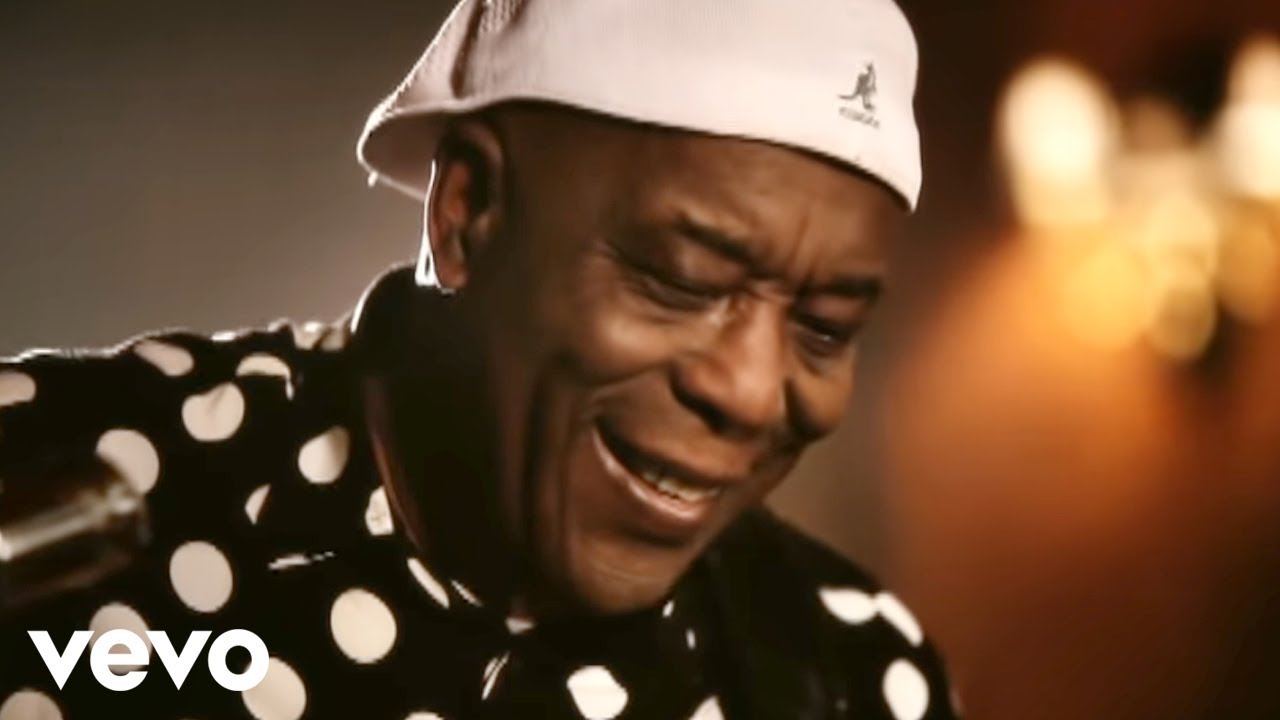
If BB King was the undisputed King of the Blues, its centre of gravity, Guy spun threw the blues out of its axis with his bold electric guitar radicalism, feedback, distortion, high volume – all that stuff that Chess Records used to give him grief about in the ‘60s is what today’s players seek him out for now.
“BB was the good guy and Buddy Guy was the bad boy,” Christone ‘Kingfish’ Ingram told the Boston Globe. “He’s the one I immediately wanted to be like, and I’ve definitely emulated him.”
Gary Clark Jr is another contemporary blues phenom whose imagination was lit up by the fire in Guy’s playing.
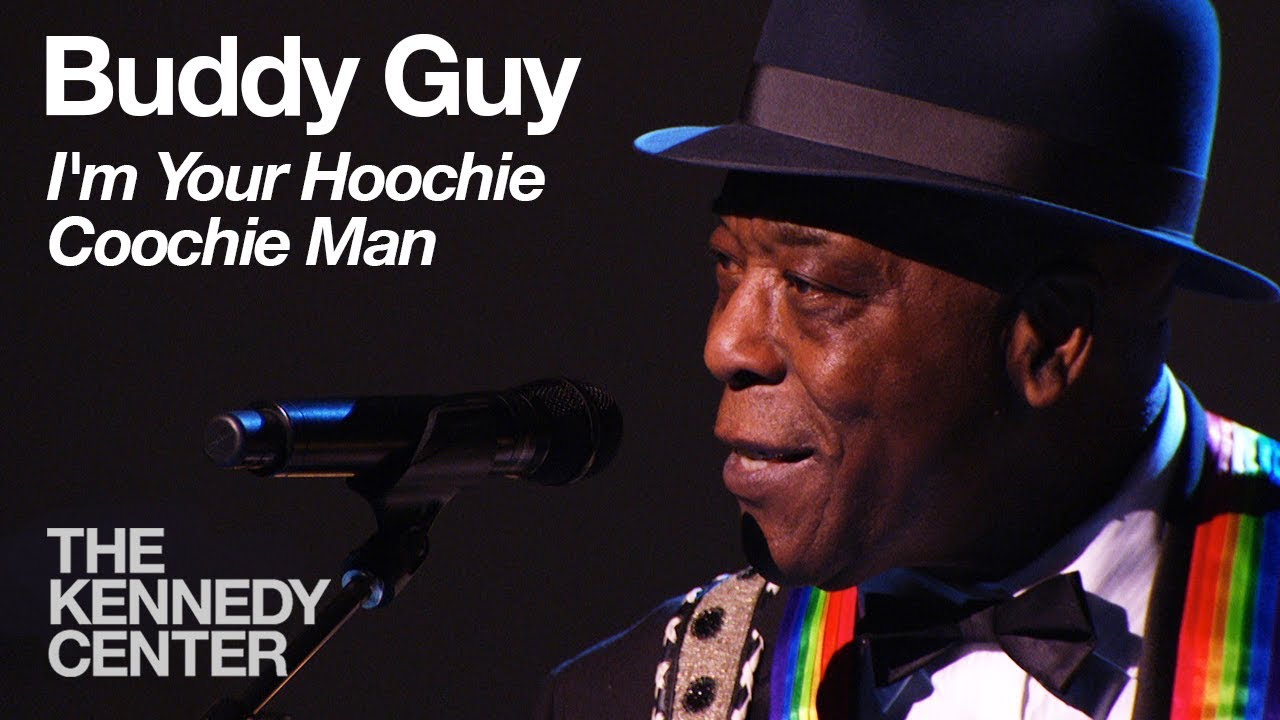
“My biggest tricks came from people like Buddy Guy, who would overbend his strings and exaggerate the hell out of it,” he told Guitar World. “It’s ridiculous how far that guy can bend a string! I learned how to do things like that in order to evoke emotion.”
Jonny Lang, who was also on the 2014 Experience Hendrix Tour, sees Guy as the player from that OG Chicago Blues generation who brought some danger to the art form.
“I remember seeing him play at some point early on in my career, just watching him go crazy onstage,” Lang told MusicRadar. “He wasn’t thinking about it at all. That’s what made me realise it’s okay to be reckless when you play music. That’s perfectly fine. It can actually help push you into a different place – that guy is the master of that. He’s amazing.”
Study Buddy Guy’s back catalogue, watch him onstage over the decades, and you’ll find a player who’s challenging orthodoxy and daring others to follow him there.
Gary Clark Jr gets frustrated by people who talk about keeping the blues alive yet fail to recognise that players like Guy – and pioneers such as Robert Johnson and Muddy Waters – were great because they sounded like no one else.
They put themselves into their art, and found a way to expand blues guitar’s vocabulary in the process.
“If you’re trying to do Muddy Waters, that’s some big shoes to fill, and I don’t really want to spend my time trying to be that guy,” Clark told Total Guitar. “People used to tell me all the time, ‘Just play the blues, you gotta preserve the blues!’ And I’d think, ‘Yeah, but look at Buddy Guy with a record like Sweet Tea – what the hell is that?’
“Why would people want me to sound like Buddy Guy’s old records when even Buddy Guy doesn’t sound like that anymore?”
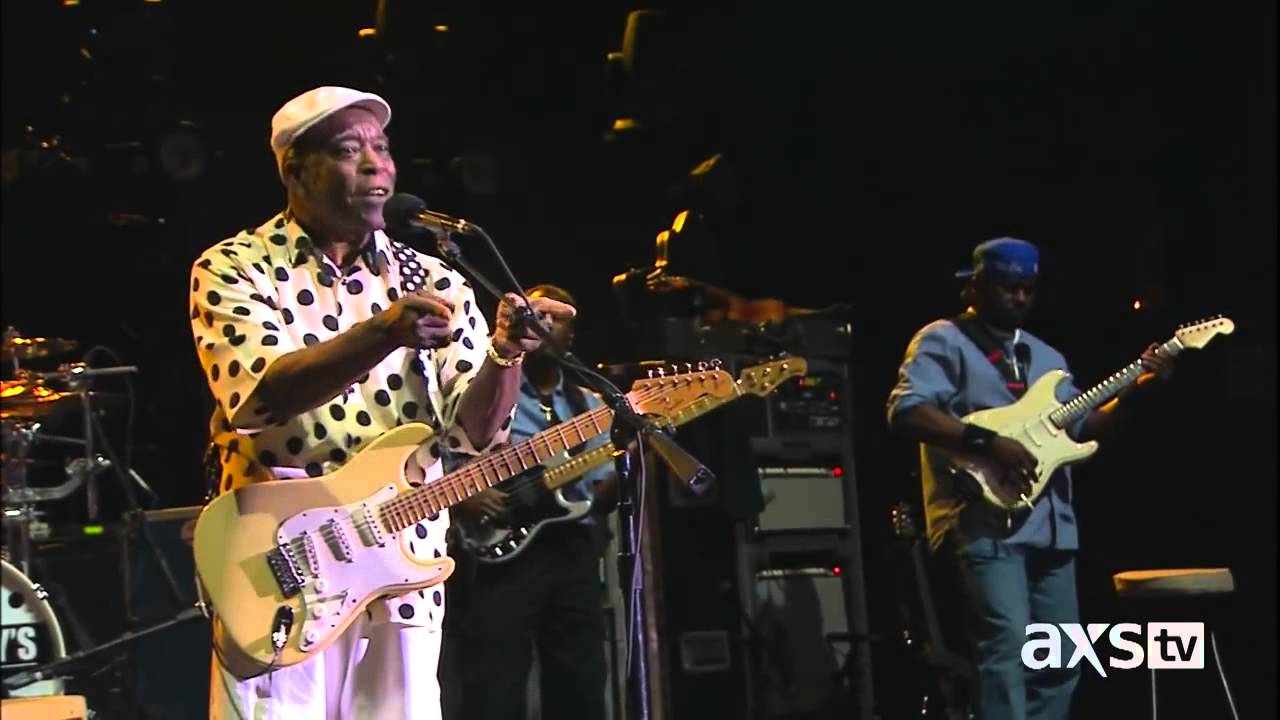
But keeping the blues alive is also about staying at at, and persevering. Buddy Guy is still persevering. He still plays his club in Chicago, Buddy’s Legends. Didn’t he announce his retirement, embarking on the The Damn Right Farewell Tour in 2023? Well, that was a bit of kidology, because he’s still going.
He’s on the BG90 Tour right now, a run of dates that terminates in Midtown Manhattan on October 1st when he plays Radio City Music Hall.
This will be quite the evening. Buddy’s Got The Blues: A 90th Birthday Concert will feature an all-star cast of guest players including John Mayer, Gary Clark Jr, Joe Bonamassa, Susan Tedeschi and Derek Trucks, Eric Gales, Billy Gibbons, Bobby Rush, Robert Randolph, Kenny Wayne Shepherd and more.
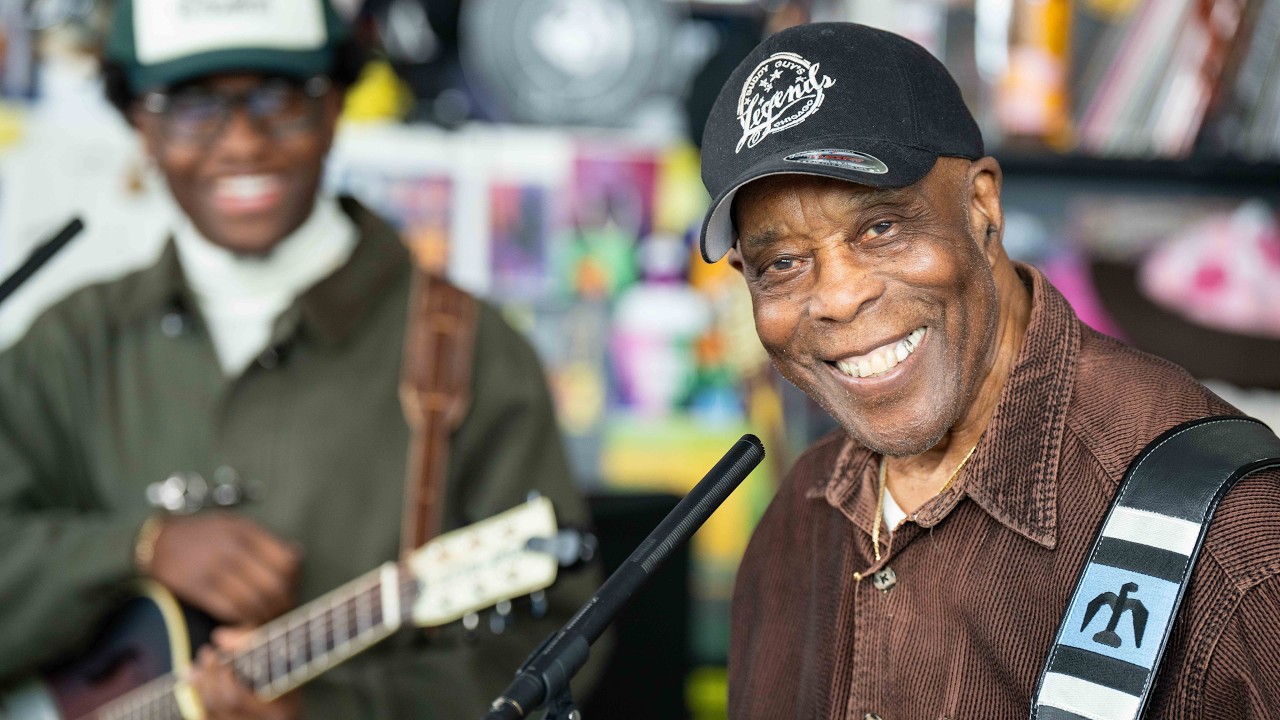
Eric Clapton will be there, too. But it’ll be another night in which all eyes will be on Buddy Guy, our greatest living bluesman, the puckish raconteur with the polka-dot Strat.
Who knows who might be watching in the audience, and what they’ll do with their guitar when they next pick it up.
- Head to Buddy Guy for dates and ticket details for the BG90 Tour.