![Array]](https://backingtracksfullcollection.com/wp-content/uploads/2026/05/Array.svg.svg+xml "“I always felt like Fender hit the sweet spot with those guitars. All my heroes – Clapton, Stevie Ray Vaughan, Knopfler, Buddy Guy – were playing them”: Philip Sayce on the greatest Strats, his tone secrets – and why he always has a Silver Sky in the mix 18")
From sideman to solo artist, Philip Sayce has carved his own lane, with his explosive blues-rock guitar playing and a soulful singing voice that follows close behind.
With more than two decades of touring under his belt, an electrifying live show, and a string of critically acclaimed albums, one enduring feature of Sayce’s playing is his affinity to the Fender Stratocaster, a tool that helps him continue his journey as an artist guided by heart, soul and authenticity.
He breaks down his essential Strats – and the secret to his electrifying tone.

What is it about your ’63 Stratocasters that makes them so special to you?
There’s just something about the ’63s from that era. I always felt like Fender hit the sweet spot with those guitars. You’d pick one up and go, ‘Oh, that’s a pretty good one… here’s another pretty good one.’ There was a consistency in the neck shape, the way they felt physically and how they sat when you played them.
The two that I have are from August and September ’63, and even though they’re different, they both just feel right. The pickups in both guitars are also outstanding.
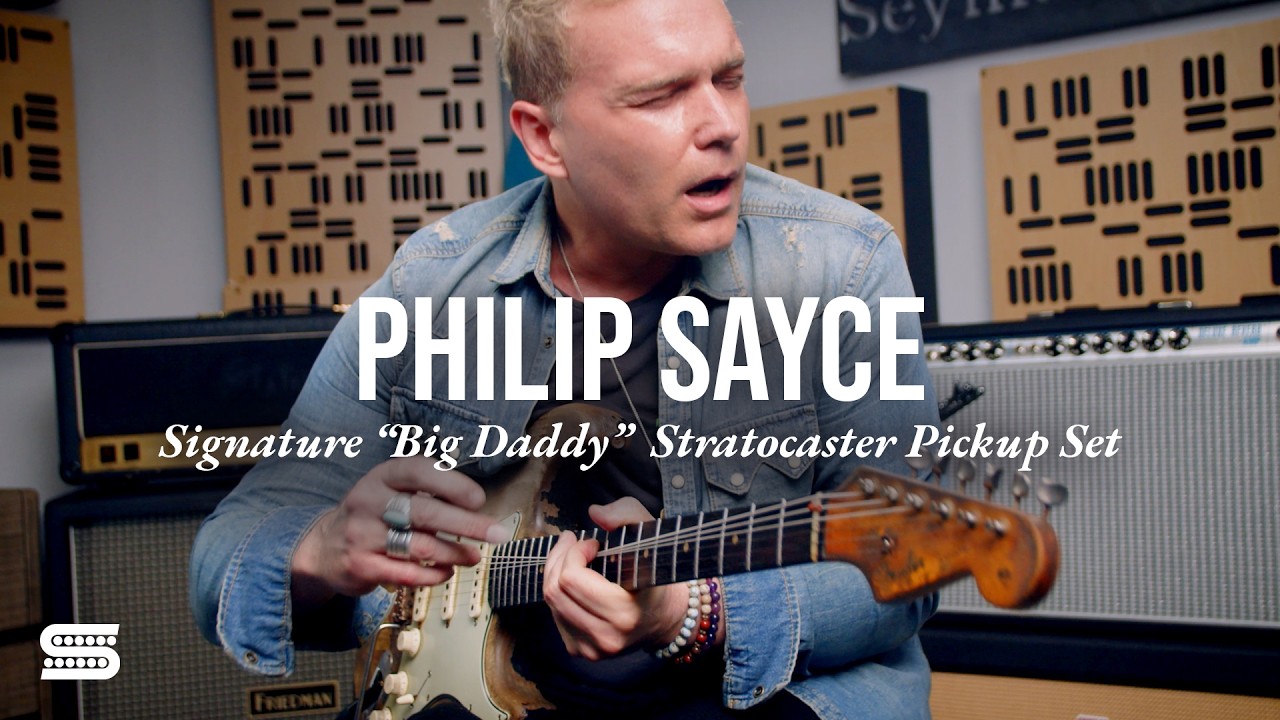
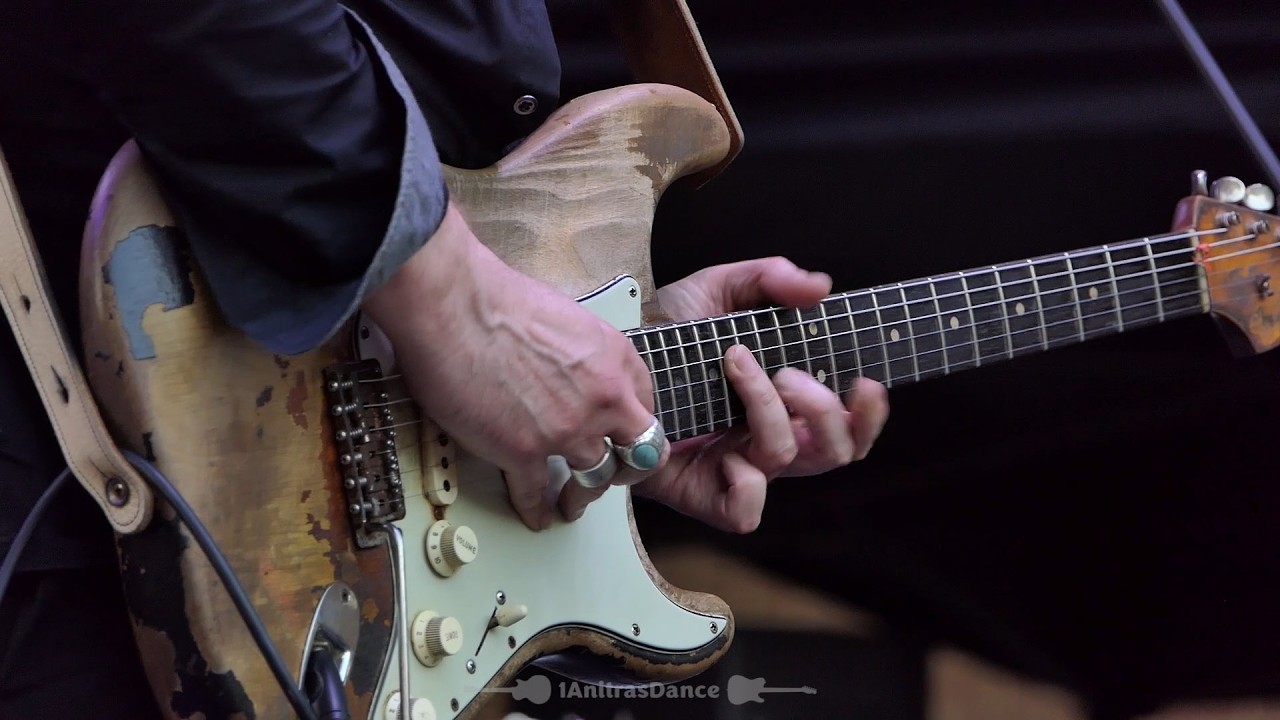
There’s one that I call ‘Big Daddy’ and it’s just the biggest, widest, meanest-sounding Strat I’ve ever heard. It just spanks. The other one, that I call ‘Mother’, has a slightly different thing going on. It’s got ’58 pickups in it now, so it’s a little more airy and sparkly but still has that ’63 chunk.
All the latest guitar news, interviews, lessons, reviews, deals and more, direct to your inbox!
Have you done much to them in terms of modifications or maintenance?
Yes, a little bit. I refretted them several times with pretty much the widest, tallest fretwire I could find. Because most of my vocabulary is around bending, it’s better for the feel and it holds up longer.
I tried to keep the original pots in there as long as possible, even to the detriment of the tone, but at some point they got so bad that I had to replace them. Some of the saddles also got to a point where they just wouldn’t move any more, so I had to replace a few of those, too.
How did you first get turned on to vintage Strats?
It was always a dream. All my heroes – Clapton, Stevie Ray Vaughan, Knopfler, Buddy Guy – they were playing those guitars. I had been hearing from players and collectors over and over again that the ’62s and ’63s were the sweet spot for vintage Strats. A friend of mine helped me find my first one.
The second one, the ‘Big Daddy’ Strat, was actually a guitar I missed out on years earlier. Then 10 or 15 years later, a buddy called me and said, ‘Hey, I just saw this guitar and it made me think of you.’ He sent a picture and it was the exact same guitar. So I sold a bunch of stuff and bought it. That one felt like it was meant to be.
![Philip Sayce - Spanish Castle Magic (Live) [Official Live Video] - YouTube](https://img.youtube.com/vi/-yYBQbwrfHk/maxresdefault.jpg "“I always felt like Fender hit the sweet spot with those guitars. All my heroes – Clapton, Stevie Ray Vaughan, Knopfler, Buddy Guy – were playing them”: Philip Sayce on the greatest Strats, his tone secrets – and why he always has a Silver Sky in the mix 22")
Why do you think modern guitars still haven’t quite captured the tone and feel of vintage guitars?
I don’t think modern builders are getting it wrong or missing anything. The wood on a vintage guitar that’s 60-plus years old is dry and settled. When those guitars were made, that wood might’ve already been 100 years old. You can get really close now, but there’s maybe that last five or 10 per cent where it comes down to the resonance and the age of the wood.
The pickups make a huge difference, too. Some people have this idea that overwinding a pickup is better, and that’s not always true. The pickups in ‘Mother’ are from ’58. They’re slightly underwound and sound great.
We also did a project with Seymour Duncan, recreating the pickups from ‘Mother’, and it was fascinating, just really getting into the details of what made them sound that way. The Seymour Duncan team did a fabulous job and the Duncan Mother pickups sound fantastic.

How does your PRS Silver Sky fit in with your vintage Strats?
It’s really its own thing. It’s not competing with the ’63s; it’s got its own lane. It’s incredibly comfortable, it stays in tune and it just goes where you want it to go. I always say that vintage guitars are like muscle cars. You hear that rumble, and you just know what it is.
The Silver Sky is like a modern performance car. It’s got all the bells and whistles and it handles the corners really well. It doesn’t fight you at all. It’s like the wind is at your back when you’re playing it.
![Philip Sayce - Peace Machine LIVE in L.A. at The Baked Potato [Official Video] - YouTube](https://img.youtube.com/vi/IZBzHhOXNC4/maxresdefault.jpg "“I always felt like Fender hit the sweet spot with those guitars. All my heroes – Clapton, Stevie Ray Vaughan, Knopfler, Buddy Guy – were playing them”: Philip Sayce on the greatest Strats, his tone secrets – and why he always has a Silver Sky in the mix 24")
Do you play differently depending on the guitar?
Not really in a big way. I mean, the feel is a little different, but it’s more about what the guitar gives you and how it responds. With the old guitars, once you get them dialled in with a good luthier, they just feel like an old pair of jeans or an old baseball glove. Nothing feels quite like that. The Silver Sky is really comfortable, too, and I actually like to warm up on it.
Which guitars do you take out on the road these days?
Most of the time I’ll bring ‘Big Daddy’ and the Silver Sky, so just two guitars. Sometimes I’ll bring another guitar, but those two cover a lot of ground. In a perfect world, I’d bring 10 guitars, but you gotta make it work with what you can carry.
When did you start seriously exploring tone beyond just guitars?
Playing beside Jeff Healey kind of forced it. His Marshalls sounded huge on stage, and I needed something that could keep up
Playing beside Jeff Healey kind of forced it. His Marshalls sounded huge on stage, and I needed something that could keep up. Not just in volume but in the way it responded. While I was out on the road with Jeff, I contacted Cesar Diaz [legendary amp tech], who had worked on Stevie Ray Vaughan’s amps.
I sent him a late-’60s 100-watt Fender Dual Showman head, and when I got it back it was insane. The best amp I’d ever heard with unbelievable punch, sustain and clarity.
Later he invited me to stay at his place for a few days, so I brought a Super Reverb and a Bassman for him to work on. I got to spend time in his ’shop while he built some pedals for me as well. It was very hands-on where I would play, give him feedback and he would mess with the amp. He dialled in my Super Reverb in about 20 minutes [laughs]. He was amazing.

We worked on getting my guitars and Fuzz Face to interact with the amp the right way. I was also looking for clarity with almost a hi-fi sound but not harsh or shrill. Cesar approached amps the way a tailor fits a suit. Watching him work was like seeing magic happen before my eyes [smiles].
Did that experience also influence your choice of speakers from there on out?
Absolutely. When I brought the Super Reverb to Cesar’s shop it had 40-watt Naylor 10-inch speakers in it. Cesar thought they sounded good but knew I would need something better. That’s when he turned me on to Electro-Voice speakers.
I eventually started using EVM12Ls in most of my touring cabinets with Jeff Healey and later with Melissa Etheridge because they were so strong and reliable. Once you feel a 4×12 with EVs, it’s hard to go back.
For the past 15 years or so I’ve also worked closely with amp designer Tommy Cougar [of Custom by Cougar] in Sweden. He’s incredible and, in my opinion, the best living amp guy in the world right now. Tommy studied Cesar’s work as well as Alexander Dumble’s.
![Philip Sayce - Hole In Your Soul [Official Audio] - YouTube](https://img.youtube.com/vi/YsCFfLJK34A/maxresdefault.jpg "“I always felt like Fender hit the sweet spot with those guitars. All my heroes – Clapton, Stevie Ray Vaughan, Knopfler, Buddy Guy – were playing them”: Philip Sayce on the greatest Strats, his tone secrets – and why he always has a Silver Sky in the mix 26")
He also turned me on to JBL speakers, which I use today in my Super Reverb. That approach really comes from the lineage of players like Stevie Ray Vaughan, Jimmie Vaughan, Albert Collins and Freddie King.
Those guys were all using big JBL speakers to get that sound. To get my sound, I typically go for high-headroom Fender or Marshall style amps. I keep them clean and push the front-end with a pedal, rather than relying on heavy preamp gain.
Did that experience shift how you think about tone?
Yeah, it taught me that tone is really about response. The amp has to react to your hands. If you play softly it opens up, and if you dig in it pushes back. When that relationship works, you stop fighting the instrument and start communicating through it.