
![Array]](https://backingtracksfullcollection.com/wp-content/uploads/2026/05/Array.svg.svg+xml "“You can spend, like, 50 bucks, buy a chorus and a DS-1, and get Kurt Cobain’s sound”: Pedal sales are booming despite the modeler movement, and this man can tell you why 18")
Pedals Week 2026: The stompbox does not belong in these times. A crude metal brick studded with switches and dials, its scuffed footswitch still bearing your bootprint from last night’s gig, its innards a tangle of wires and solder globs – the format is a far cry from the intangible, unknowable sleekness of modeling software.
But perhaps that’s why stompboxes have endured – even flourished – on the modern scene. “People still love turning knobs,” shrugs Reverb’s Senior Director of Analytics, Cyril Nigg, as he prepares to mine the data for GW’s week-long celebration of pedals. “There’s just something very satisfying about looking down and seeing your chain of effects and dialling it in. With stompboxes, it’s cause and effect, right? I love it. And I’m guessing you love it too.”
What’s the overall health of the pedal market in 2026?


“First of all, people still love pedals. Y’know, we’re selling thousands a day on Reverb. There’s been 100 new pedals released so far this year, so it’s still a thriving market. It’s hard to find a brand-new pedal that hasn’t got more expensive over the last five years. Cost of materials, tariffs, labor costs, all of those things have gone up.
“But then, if you look at the used market, prices have actually been pretty steady. And we know this because we built the Reverb price index, which shows millions of transactions since 2018, just to help us understand how the whole market is moving.”
What pedal categories are selling best in 2026?
“Prices on vintage and rare pedals – y’know, things primarily made in the ’70s through the ’90s, like a Moogerfooger or a Dallas Arbiter Fuzz – are up about 20% year over year, and 50% higher than pre-pandemic. And then, if you look at effects categories: overdrive, distortion, fuzz, that group is all up about 25% since 2019.
All the latest guitar news, interviews, lessons, reviews, deals and more, direct to your inbox!
“Delays have done well, they’re up about 15% in that period. Of the four main modulation categories, flange has always been the least popular and chorus is still number one by far. But tremolo used to be number two until, like, 2020, when the phaser overtook it.”

Which specific pedals do people want in 2026?
“One that’s definitely come up, especially recently, is the Analog Man King Of Tone. They’re still a boutique builder and they’ve kept that supply limited. To get a new one, you have to email Mike Piera, and I’ve been on the waiting list for a while now. So prices have gone [up sharply]. He sells them for, like, $350 direct, but they regularly sell for over $750 now, and they’ll go up even more if he stops producing them.
“That’s certainly one of the iconic pedals to have. Then there’s the Klons: the KTR and the Horsie/Centaur, those are always in high demand. The Nobels ODR-1, especially the ’90s version, which became the Nashville session pedal – those are selling for, like, $1,000.
“Other things like a Shin-ei Uni-Vibe: you’ll get about $2,500 to $3,000 for those. Of course, there’s the original Roland Space Echo, and the Dallas Arbiter Germanium Fuzz Face will go for around $3,000.”
How expensive can a pedal get on Reverb?
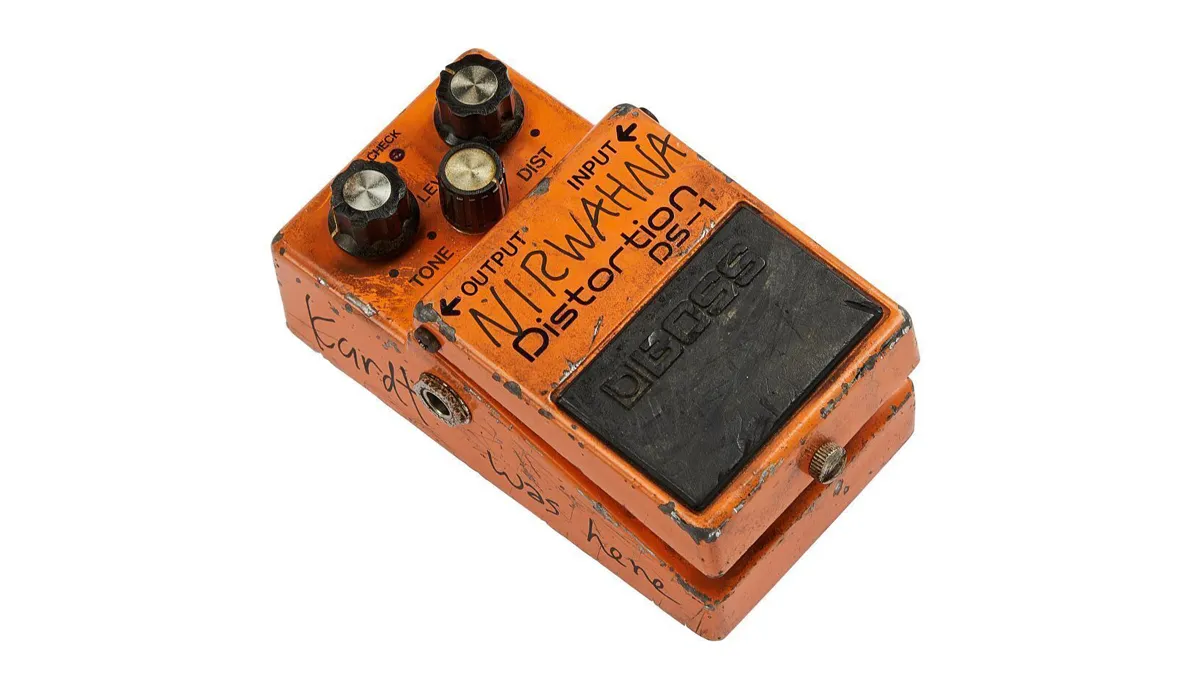
“We regularly sell pedals for thousands of dollars. We’ve certainly sold some original Klons for over 10 grand. And pedals with provenance or a story behind it, something that’s been owned by an artist, or really early serial numbers, those command an even higher price. Recently, Denmark Guitars in London sold Kurt Cobain’s original ’80s BOSS DS-1, used both live and in the studio during Nirvana’s Nevermind era [for $9,748].”
What are the hottest eras of production?
“I think there’s two primary periods. There’s the early days, from the late-’60s into the late-’70s. So y’know, the original Fuzz Face, Uni-Vibe, Space Echo, Mu-Tron, the early wahs, Tone Benders, all that stuff that the Stones, Hendrix, Pete Townshend and these guys used.
“Then it kinda leapfrogs into the ’90s, when you get brands like Nobels, Lovetone, some of the early Way Huge pedals. That ’90s era that has gotten very popular, almost in line with the classic ’60s and ’70s stuff.”
How about the big losers in the pedal market?
“One category that has certainly gone down is multi-effects, which are down about 15% since 2019 and 5% year over year. There’s probably two things driving that. One is the rise of amp modelers. If you’re looking at a Neural DSP, Axe-FX or Fractal, they operate not only as an amp in a box, but also a multi-effects.
“Also, with multi-effects pedals, the technology kinda goes out of out of favor. Like, the newest version of a multi-effects usually has better engines, the sounds are better, they’ve evolved the interface.

“But if you go back a few years, those multi-effects units just don’t sound as good. Whereas, with an individual stompbox, a lot of the good ones are analog, and even the digital ones, they’ve really honed in the sound, and it does its job really well.
“I haven’t really seen that amp modelers have impacted the popularity of individual pedals. Based on the data we see, a lot of people are buying both individual pedals and amp modeling units. Also, people will often have two or three rigs: maybe a traditional setup, and then, if they’re playing gigs, they might recreate that on an Axe-FX or Neural DSP Quad Cortex.”
Have any companies bucked the trend?
“Hologram Electronics are interesting, because they’ve really kept their catalog pretty limited, and one of their best-selling pedals is the Chroma Console, which is actually a multi-effects unit. It’s usually in our top 20 best-selling pedals, but it’s going against the grain. Whereas most other multi-effects are trying to hang on, that one has actually done really well.”

Have any iconic pedals cooled in popularity?
“I’ll put this one out there. The Klon Horsie: they’re still, like, $5,000, so it’s not like there’s not a lot of demand. But at the peak of the pandemic, they were closer to $6,000 or $7,000. So they’ve certainly come down from their peak. They’re still legendary, but people aren’t willing to pay quite as much as they once were. But there’s not many examples of legendary pedals falling off.”
What’s your advice for buying and selling pedals on Reverb?
“Pedals are one of the easiest things to sell. They retain their value well, they’re pretty indestructible, they’re easy to ship. Make sure you price it correctly, using Reverb’s price guide. That’s the most important thing. And then, taking good pictures, being honest about the condition, saving the box and accessories – those things always help.
“On the buyer side, if you have a specific pedal you’re looking for – say, a Lovetone Big Cheese – set up a save search to get notified when anyone lists one or it gets a price drop. You often have to act quickly. And don’t be afraid to make offers. On Reverb, most of the sellers are open to that.
“I’d also say that pedals are one of the best ways to get a different sound without spending a lot of money. Particularly if you buy used. You could spend, like, 50 to 100 bucks, buy a chorus pedal and a DS-1, and get Kurt Cobain’s sound. Or plug in a Phase 90 and sound like Waylon Jennings or Eddie Van Halen – with the right touch.”
Finally, if you could invest in any pedal, what would you choose?
“Right now, maybe an Analog Man King Of Tone. But of course, an original Fuzz Face. It’s so iconic. I grew up wanting to sound like Hendrix, and you see that big red pedal and it conjures up that sound in your mind…”