Some 40 years after the passing of charismatic frontman Phil Lynott, Thin Lizzy’s enduring popularity transcends the hard rock genre. Lynott’s timeless songwriting, and the contributions of a succession of stellar guitarists, resulted in a catalogue of classic material that’s inspired bands as diverse as Metallica and Primal Scream.
Lizzy’s most celebrated and influential recordings were made between 1974 and 1978, by the line-up of Lynott, drummer Brian Downey and guitarists Scott Gorham and Brian ‘Robbo’ Robertson.
While Robertson’s stint with Lizzy would be tempestuous, his input – both as a lead guitarist and in writing Lizzy’s signature twin-guitar harmonies – helped define the band’s sound, captured at a coruscating peak on 1978’s Live And Dangerous.
Latest Videos FromGuitar World
After leaving Lizzy in July of that year, Robertson recorded two albums with Wild Horses (remixed for the recent Standing Our Ground – Complete Recordings 1978-1981 boxset), followed by stints with Motörhead and fellow Glaswegian Frankie Miller.
He spent the ’90s and Noughties working predominantly as a session musician and producer, and in 2011 Robertson released his debut solo album, Diamonds & Dirt, reissued in May this year as Diamonds & Dirt: Expanded Edition, with a previously unreleased instrumental album.
Though happily retired since Diamonds’ original release, the reissue has prompted Robertson to grant Guitarist a rare interview to look back on Lizzy’s classic era.
You were a fan of Lizzy’s Vagabonds Of The Western World and could play the songs before you auditioned. What did you like about Eric Bell’s guitar playing?
There was a bit of Hendrix about it, but there was that Celtic lilt to it as well. That’s what turned me on to Vagabonds.
When Gary wasn’t widdling it just came – and that’s the magic, to me
Peter Green is your main influence. What did you like about his playing?
Fleetwood Mac’s Blues Jam At Chess is my favourite album. [I tried Les Pauls] because of that album and that specific guitar [Peter Green’s ‘Greeny’]. We did a lot of shows with Colosseum II in Europe. Gary [Moore] was using that Les Paul from the Lizzy days, so I got to play it. It was quite difficult, the action was horrendous. Gary had big, big hands.
When you joined Lizzy, you famously refused to replace the solo Gary had recorded on the demo of Nightlife’s Still in Love With You before he left. Was that played on Greeny?
Yeah, it was. I remember hearing [that] with Gary, because he was using the Echoplex a lot, on short delay. When Gary wasn’t widdling it just came – and that’s the magic, to me. That’s why I refused.
You and Scott Gorham effectively replaced Gary when you joined Lizzy, after temporary recruits John Du Cann and Andy Gee didn’t work out. Gary toured with Lizzy in 1977 after you’d sustained a hand injury while defending blues-rock singer Frankie Miller from an assailant with a broken bottle at London’s Speakeasy Club. And when you left in 1978 Gary rejoined permanently. Despite all of that, there didn’t seem to be any sense of rivalry between you.
The press take great delight in creating umbrage where there isn’t any. I always had the utmost respect for the man. There was one interview where he said something like, ‘Robbo’s never off that bloody wah-wah pedal,’ [laughs] and that sparked this so-called feud in the press. It wasn’t a feud – that was just Gary being funny.
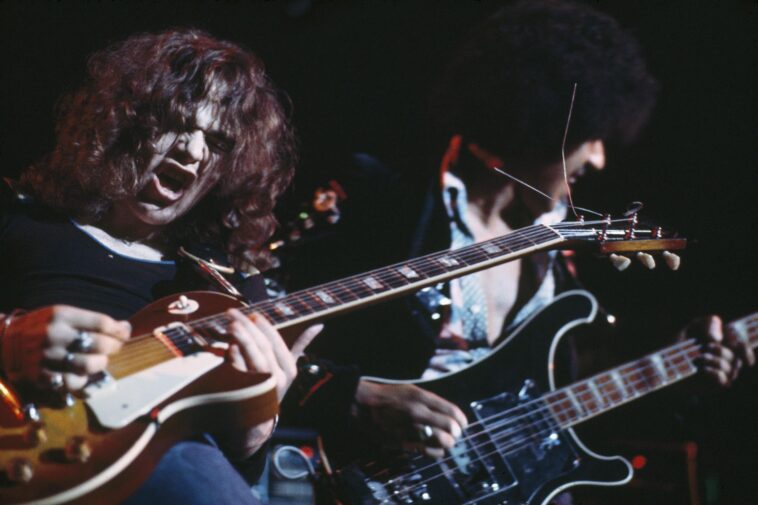
Many fans know the name of the Les Paul Deluxe you played with Lizzy, with the finish scratched away by the bracelets you wore.
Yeah, the ‘Auld Bitch’, which I’ve still got. It was my first Les Paul, given to me the minute I joined Lizzy. I think it was still on hire purchase [laughs].
It was stolen around 2010, when a cab driver in Stockholm drove off before you could retrieve it from the boot of his car. 10 years later it appeared on Facebook Marketplace. Fans recognised it and alerted your friend Per Olsson, who arranged for you to buy it back. It had ended up with a 16-year-old who’d never heard of Lizzy. Is it true that you spoke to him on Skype to prove the guitar was yours?
“Yeah, it’s quite recognisable. I was over the moon. That sort of thing never happens to me [laughs].”

You also have a rare hollow-bodied 1953 Les Paul, purchased when you joined Lizzy in 1974. It was customised by Les Paul himself for his wife, Mary Ford, who found standard models too heavy. How did you trace its provenance?
It was on consignment from Mick Ralphs [Mott The Hoople, Bad Company]. Mick’s roadies told me it came from Mary Ford and Les Paul. They’d tracked the history down. I used it on two gigs; it was dreadful because it fed back.
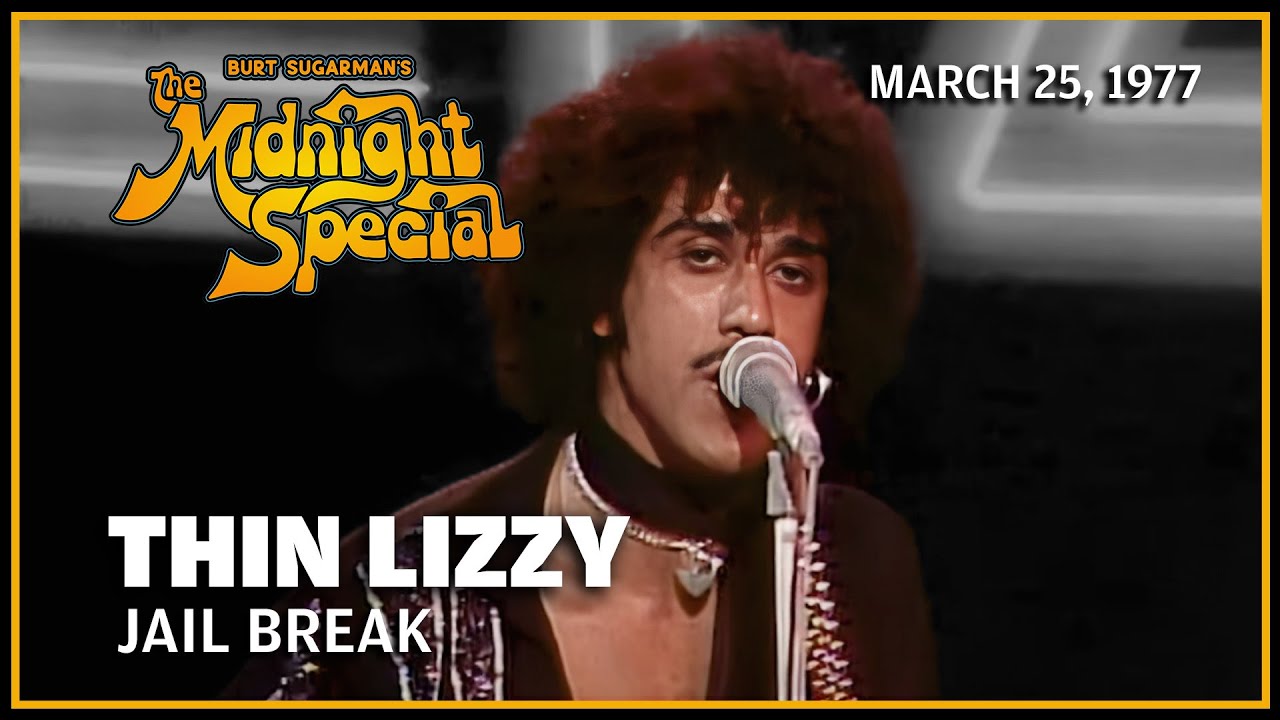
But it looked great, Burgundy red-ish. I had to have it, even though it had a Bigsby. My contention was that we needed a spare [laughs], which is bollocks because you couldn’t use it live. Plus, with the Bigsby, if you broke a string, it’d take you an hour and a half to change it. [I played it in the studio] on Jailbreak. Anything with slide, and anything clean-ish, is that one.
Jeff Beck had it for a little while. We were rehearsing together in Nomis Studios [London rehearsal/recording studio, founded by Wham! manager Simon Napier-Bell]. I was rehearsing with Motörhead.
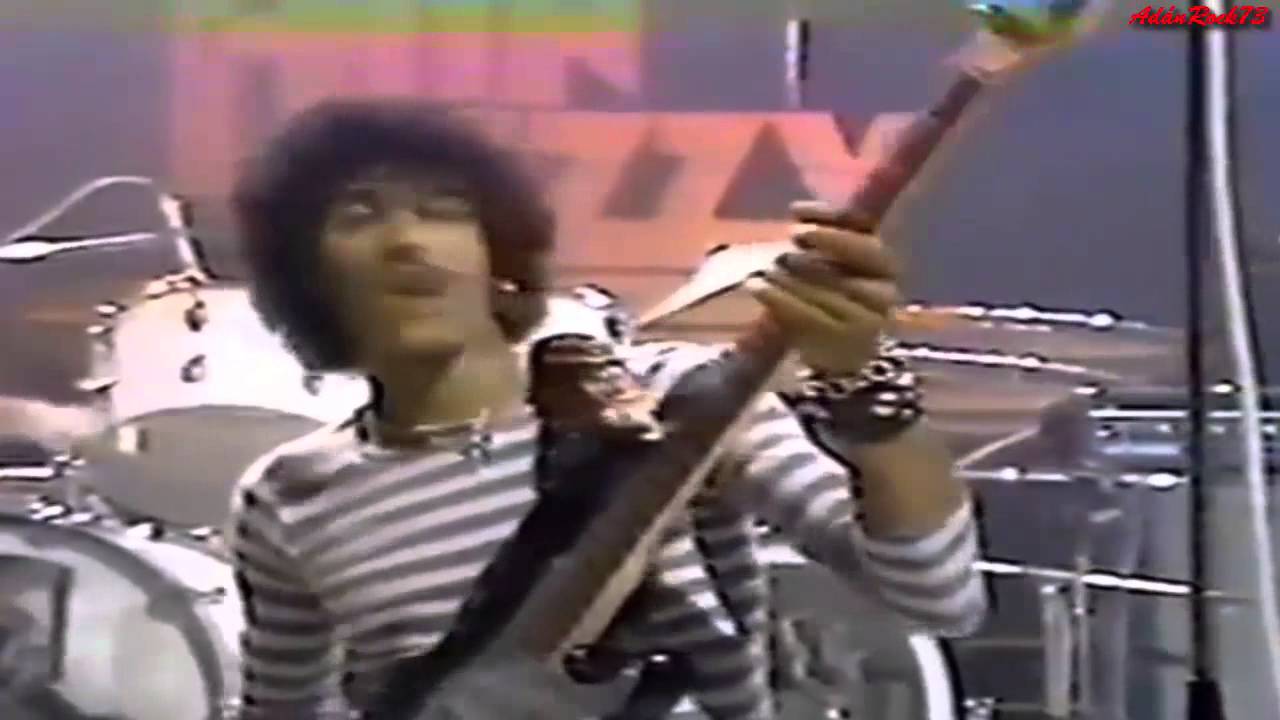
I wanted to know how he got that top note on Cause We’ve Ended As Lovers, and he said, “It’s a guitar synth.” I started joking, “You can have that if you give me your Roland guitar synth.” He let me use the guitar synth while he had the Les Paul. That’s how I got into using the guitar synths with Motörhead [see 1983’s classic Another Perfect Day].
You were introduced to Lizzy by your friend Charlie McLennan, their roadie, in Glasgow in February 1974. You had your guitar with you and impressed Brian Downey by playing some of their songs. Shortly thereafter, you moved to London and successfully auditioned at Club Iroko, after Charlie tipped you off that they were looking for new guitarists. What do you remember about your audition?
They were rehearsing every day and auditioning every day. Andy Gee [ex-Pete Bardens, Ellis] was still there, playing the Auld Bitch. That was his guitar. And [there was] another guy. I can’t remember his name. A very straight-looking geezer. I think he was a session guy. I remember watching the two of them play, thinking, “This is bollocks.”
When you, Phil and Brian started playing, was there an immediate chemistry?
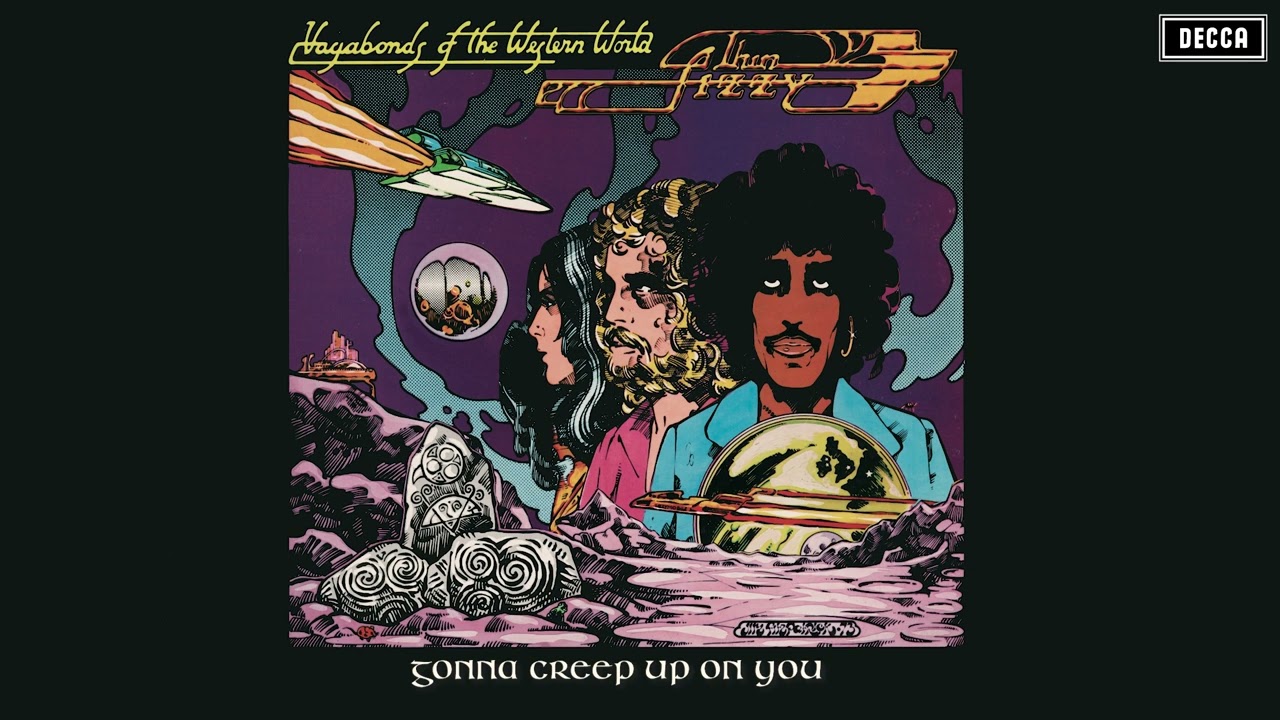
Certainly with Downey. It didn’t matter what song they said, I already knew [them] all. I threw Gonna Creep Up On You back at them because it had the wah-wah on it.
You got the gig slightly before Scott. What made him the right choice?
It was Phil’s decision because he liked his look, and he was American. Brian and I didn’t think he was up to it, to be honest. He was perfectly capable of playing the major and minor chords in the right place, but not the lead. You’re playing a minor blues and you’d say, “Take a solo,” but he played it [in] major. That’s what jarred with Brian and I.
Scott has said you were the more advanced lead guitarist at that stage.
He was more of a rhythm player in the beginning. The solos he did take were meticulously worked out. They weren’t solos, as I understand solos. Even from the early days, I would just say, ‘Run the track and I’ll just jam.’ We’d do it three or four times, and then edit them, so there’s some spontaneity.
I’d write a riff or a melody line [of the guitar harmonies]. I started off by just banging on the tape echo. I’d show Scott the easiest part, or the part that suited him best, then I’d put the other part on top. I was playing by ear.
Were you influenced by Fleetwood Mac’s harmonies on songs like Albatross?
No, I was listening to the lead playing more than the harmonies. I was into Wishbone Ash, that probably had some effect. Definitely the Allman Brothers’ At Fillmore East.
Lizzy released the classic Jailbreak and Johnny The Fox albums in 1976. Scott has said that your management and label said the band was in danger of losing its record deal if you didn’t get a hit.
I don’t think we knew we were on the chopping block. We were aware that the contract was coming up, so we knew that it had to be a good album. But when you’re that young, you think, ‘Nah, it’ll be cool.’ I’ve got a soft spot for [Johnny The Fox].
There was tension because it was so quick after Jailbreak. Rather than just doing what Phil had got on his acoustic, there was more involvement from the band. That led to stress [laughs].
You assumed you’d been fired after the hand injury at the Speakeasy and began forming Wild Horses with former Rainbow bassist Jimmy Bain. Scott has said that he wanted you back for the Bad Reputation album. Despite not being pictured on the cover, your input was far greater than anyone realised.
When they asked me to do it, I’d already started Wild Horses. I went out there as a session [player]. When I got there, it was skeletons. There were no harmonies on the riffs, just Scott’s guitar, so what you were hearing was very small.
I doubled everything. On Dancing In The Moonlight, you can hear the same augmented chords I put on The Boys Are Back In Town. I was pretty focused on that one and a bit pissed off about the way it was handled – the album cover and all that nonsense.
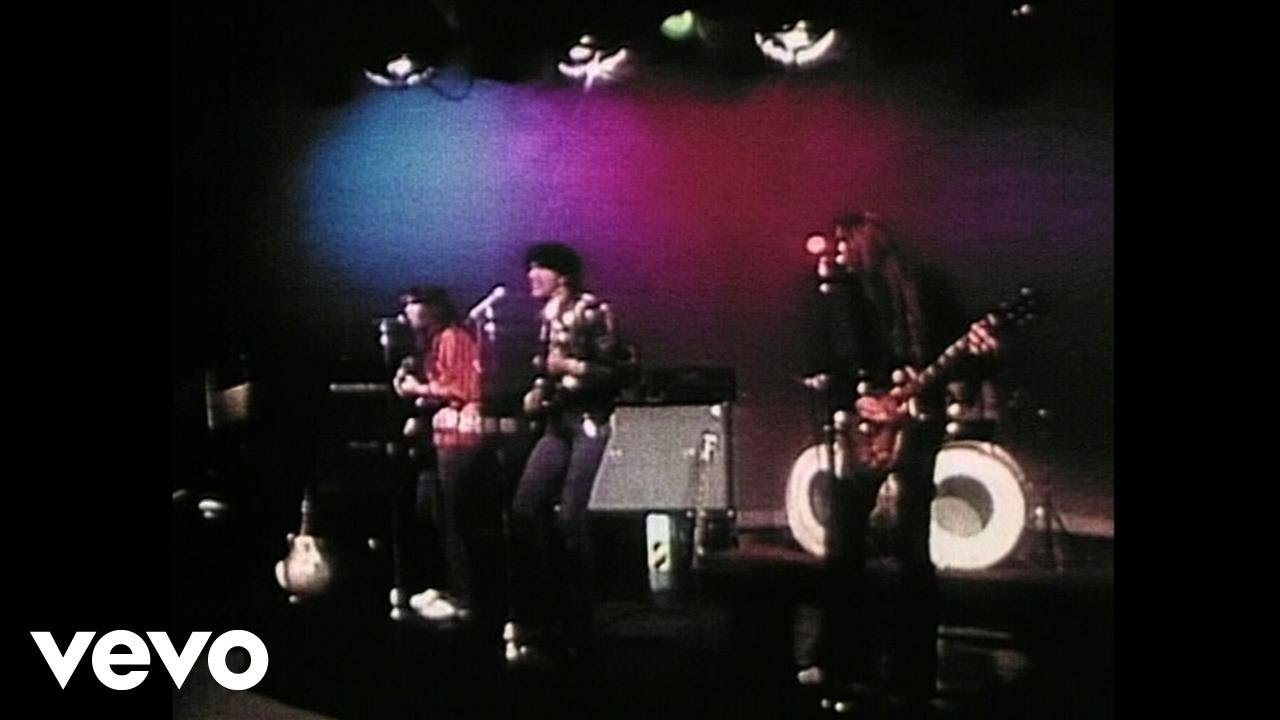
You stayed for the Bad Reputation tour and subsequent Live And Dangerous dates, then left in July 1978. To set the record straight, as far as you’re concerned, you were never back in the band as a permanent member?
Yeah. There was no big blow-up. It might have been a build up of little things [laughs]. It fizzled out. It was time to go back to Wild Horses.
You maintained a close friendship with Phil until the end of his life. Phil and Gary guested with Wild Horses, and Phil and Scott had writing credits on the band’s first album, so things must have remained amicable?
Yeah, exactly.
Gary Moore replaced you for the Black Rose album. However, you’d played Waiting For An Alibi and S & M live, and the title song during a soundcheck. What did you think of Black Rose?
I didn’t like the sound: very compressed, no definition on the guitars. The identity had gone a little bit. Gary’s sound was different to mine. My sound was a substantial, clean sound. When I left, the sound was smaller.
Gary later said that the lineup with you and Scott was his favourite. Most fans consider Live And Dangerous to be Lizzy’s definitive album because the band was at its best on stage. Do you agree?
Yeah, we built ourselves as a live act. If we were having a good night, I would pick up on accents that Downey was playing, Phil would latch on to it, and we’d work off each other, while Scott was playing a solo. We enjoyed playing live. We had to – we were doing two world tours a year [laughs].