![Array]](https://backingtracksfullcollection.com/wp-content/uploads/2026/05/1779850244_Array.svg.svg+xml "“Peter and I were in a car and he started humming this melody. ‘What’s that?’ ‘Oh, that’s a song I wrote.’ I mean, Peter never wrote a song in his life! But he sings, ‘Beck, I hear you calling…’” Gene Simmons and Paul Stanley on the Kiss classic Destroyer 18")
It was in 1975 that Kiss finally got their big breakthrough when Alive! – the band’s explosive double live album – climbed to No 9 in the US Billboard 200, and the extracted single Rock And Roll All Nite reached No 12.
After their first three studio records had bombed, this was the sweetest of victories. And it was followed by arguably the most powerful artistic statement of their career – their magnum opus, Destroyer.
In a 2021 interview for the launch of the 45th anniversary deluxe edition reissue of this landmark album, the band’s co-founders Gene Simmons and Paul Stanley spoke in depth about the making of Destroyer.

“It was a cinematic album,” Stanley said. “It was atmospheric, and visual when you heard that music.”
Simmons added with uncharacteristic understatement: “It’s one of our better records, for sure.”
Destroyer was originally released on 25 March 1976 and included songs that would become Kiss anthems – Detroit Rock City, God Of Thunder, Shout It Out Loud and Do You Love Me. It also included the hit ballad Beth.
Destroyer was recorded by the original and definitive Kiss line-up – with Stanley on guitar and vocals, Simmons on bass and vocals, Ace Frehley on lead guitar and backing vocals, and Peter Criss on drums and vocals.
Uncredited, guitarist Dick Wagner played on three tracks. The New York Philharmonic featured on Beth; the Brooklyn Boys Chorus on Great Expectations.
The producer, Bob Ezrin, had made his name working with Alice Cooper on the hit albums School’s Out (1972), Billion Dollar Babies (1973) and Welcome To My Nightmare (1975), as well as Lou Reed’s art rock cult classic Berlin (1973).
Destroyer was recorded in New York City, the band’s hometown, at two studios, Electric Lady and The Record Plant. The initial sessions were in September 1975, with final sessions in January and February 1976.
In 2021, when Stanley and Simmons discussed the creation of Destroyer, they began by explaining the commercial failure of the band’s first three studio albums – the debut Kiss (1974), Hotter Than Hell (also 1974) and Dressed To Kill (1975).
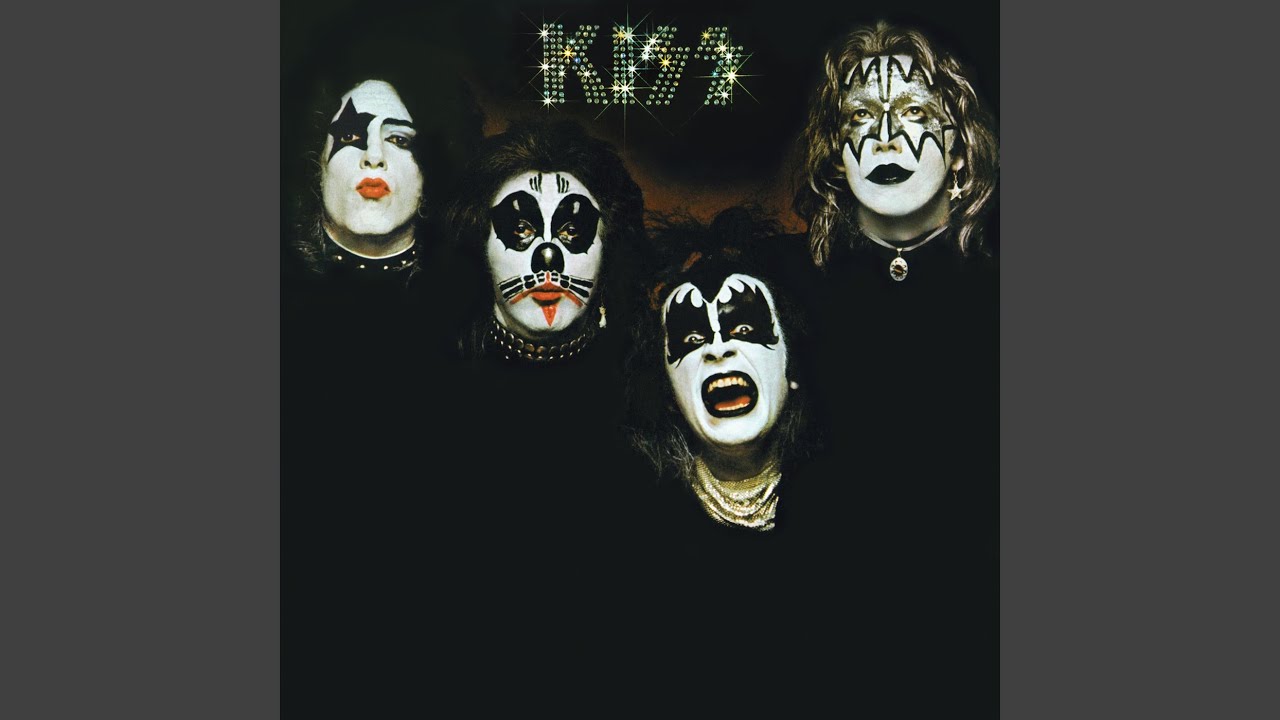
“I’ve heard that the first Led Zeppelin record was done in eighteen hours,” Simmons said, “but in hindsight, we never spent enough time in the studio. The great bands – The Beatles and so on – even though they could record fast, there was still a lot of rehearsal. We barely did that, because we were always touring, and it was tough to say no to another show. ‘They want us to play? Where? Let’s go!’
“And in those early days we were doing two records of new material a year – and touring the whole year. We just didn’t have time to stay in the studio more than two or three weeks.
“You’re touring, you write some songs, you get together, and just do a record. So with the first three records there was barely any production, hardly any overdubbing, it was just sort of bang it out. We didn’t spend enough time getting decent sounds.”
Stanley concurred: “I was quite frustrated with all of our early studio albums because frankly they didn’t come close to capturing what we were like live, and I wasn’t astute enough in the studio to know how to capture that. Live, we were bombastic, like a runaway freight train, and those studio albums were kind of like a garage band.”
Stanley paid tribute to Kiss manager Bill Aucoin for the success of Alive!
“Alive! was a turning point in that it really captured sonically the experience of being at a Kiss show and immersing the listener in the crowd,” he said. “Much to Bill Aucoin’s credit, that album became a mega success and a game changer for us as an international band.”
Stanley also said that it was Aucoin who set a high bar for Destroyer.
“Bill Aucoin was smart enough to say, ‘You’re going to have to follow Alive! with something amazing and credible, or you will go back to where you were before.’ That was pretty good foresight. And with that in mind we got in touch with the producer Bob Ezrin.
“Bob was a super talent. You only have to listen to the pre-Bob Ezrin Alice Cooper records versus the post-Bob Ezrin Alice records to hear what he did. And as we worked with him it became that much clearer how much he had to do with the parts and the orchestration in Alice’s songs.
“So we were on board to work with him, certainly. But we had no idea how – I don’t want to say regimented because it was a very creative process – but how structured and demanding Bob was.”
Simmons added: “We were lucky that Bob Ezrin was producing that record, because there was so much material and so many different ideas. With our previous records, either Paul or myself would come in with a finished song – Paul would show me one of songs and I might say, ‘How about this riff?’ In two or three hours it would be done and you’d record it.
“But Destroyer was the first one where we took a little more time. We started recording, then went out on tour, and then came back and finished the record. It was a new way of recording for us. And with Bob it was definitely a learning process. He actually taught us how to tune [guitars] a different way!”
Simmons said of the writing sessions: “We were at a small demos studio, a four track. Paul and I were there constantly. Ace and Peter didn’t participate. Sometimes they’d come down and help play a little bit, but other than that they never showed up. But Paul and I were constantly writing all kinds of stuff.”
As the primary songwriters in Kiss, Stanley and Simmons took the lead on Destroyer. Bob Ezrin had a share in the writing credits for seven of the album’s tracks. Ace Frehley co-wrote Flaming Youth with Stanley, Simmons and Ezrin. The ballad Beth was written by Peter Criss and Stan Penridge, the guitarist in Criss’s previous band Chelsea, with Bob Ezrin also credited as co-writer.
Criss sang the lead vocal on Beth, which became the album’s hit single by luck more than judgement. The lead single from Destroyer was Shout It Loud. The second single was Flaming Youth. The third was Detroit Rock City, with Beth as the B-side, but after DJs picked up on Beth it was released as an A-side in August 1976 and eventually peaked at No 7 on the Billboard Hot 100.
Simmons recalled: “There’s an interesting story about Beth. In the fall of ’75 we went to Cadillac, Michigan, where the whole town dressed like Kiss and it became ‘Kiss Day’ and all that stuff. And on our way over there, Peter and I were in a car and he started humming this melody. ‘What’s that?’ ‘Oh, that’s a song I wrote.’
“I mean, Peter never wrote a song in his life! But, he says, ’It’s a song called Beck.’ He sings, ‘Beck, I hear you calling…’
“I said, ‘Yeah, that’s pretty good, but why don’t you sing it to Bob Ezrin and see if we can come up with an arrangement?’ ‘Okay.’ And I said, ‘Before you play it for him, change it to Beth, because with Beck, first they’ll think it’s about Jeff Beck!’
“Also, Beck was supposed to stand for Becky, but that that ‘ck’ sound stopped the fluency. ‘Beth I hear you calling…’ – you can sing right through that. Beck didn’t move as easily. So that’s how Beth was born.”
As a result of Beth hitting the US top 10, Destroyer became the first Kiss album to be certified platinum.
“Beth was the key,” Simmons said. “Detroit Rock City was released as a single and the B-side was Beth, but then Beth became the big hit.”
Paul Stanley acknowledged Bob Ezrin as a key influence on Detroit Rock City.
“That was initially written as an homage and tribute celebrating Detroit,” he said, “but the direction that the verses took, although not specifically directed by Bob, was led by his idea to get away from the ‘fuck me, suck me’ lyrics and go for something deeper. So Detroit Rock City kind of became a contrast between the verses, which are about somebody trying to get to a concert and not making it, and equally celebrating Detroit as a rock ’n’ roll Mecca.”
However, Stanley admitted that he was distraught when Ezrin insisted that the song God Of Thunder – written by Stanley alone – should be sung instead by Simmons.
“Let me preface this,” Stanley stated. “We had understood and agreed that the role of the producer was to have final say and make decisions. And when I played God Of Thunder, Bob immediately said, ‘Oh, that’s great, that’s for Gene!’
“I knew Detroit Rock City was my song, but I also thought that God Of Thunder was going to be my song. I envisioned it almost like the son of Zeus and Apollo.”
Stanley said of Ezrin’s decision: “Let’s put it mildly – it was crushing and devastating! But I will say that Bob was absolutely right. It’s so much a Gene song.
“I also have the satisfaction or the joy of knowing that the song that personifies Gene is mine! And it would never have been as great a song if I had sung it. Never. It’s truly a highlight of who Gene is. Bob was right and Gene did a great job.”
Stanley claimed he never held a grudge with Ezrin over God Of Thunder.
“I was never fuming,” he said. “I was just so devastated. The idea of a song so quickly being passed off from me to someone else, it was difficult, and it remained a sore spot, although even when I heard it finished it was undoubtedly a song for Gene. It was just that initial deflating of this anticipation I had of singing this great song.
“I think part of it had to do with the feeling of powerlessness, of not having a vote or any room for discussion. Because that was the way we set things up, and again, it was the right thing to do, and it proved itself quickly. Ultimately, that song continued to be a staple in the show, and if I had sung it, I don’t think it would have had the gravitas or the longevity that it has.”
Simmons also sang lead on his own song, Great Expectations, a highly unorthodox track for a hard rock band such as Kiss.
“At the time, within the band, the verdict on that song was not unanimous,” Simmons admitted. “It was like, ‘Gee, it’s not really rock, is it?’ You’ve got a children’s choir singing, ‘You’ve got great expectations!’. There were keyboards and string quartet. It was certainly a leap – I don’t know if it was forwards or sideways or whatever.”
One notable cut from the album was the song Ain’t None Of Your Business, written by two country songwriters, Becky Hobbs and Lew Anderson. This was later recorded by the band Detective.
“We took a whack at recording that song with Peter Criss on vocals,” Simmons said. “But we just didn’t think it measured up.”
Stanley said he experienced a worrying moment shortly after Destroyer was completed.
“When the album was done and I played it for some people who were big fans, they weren’t initially crazy about it,” he said. “They didn’t find it heavy enough – and coming on the heels of Kiss Alive!, which really captured the rawness of the band, I understand. But we did what we needed to do.”
In the end, Destroyer was everything that Kiss set out to achieve. In the short term it was the hit the band needed to sustain the momentum from Alive! And in the long term, Destroyer has been widely acclaimed as the greatest and most ambitious album Kiss ever made.
Gene Simmons reflected: “It was a Kiss record but there were new elements in it. Because it had Beth, which appealed to a greater female audience, it was by some distance a more sophisticated record, instead of the straight meat and potatoes – or meat and two veg, as you say – stuff that we did before.”
Paul Stanley reckoned that Bob Ezrin brought out something deeper as well as bigger in Kiss music.
“Although Destroyer didn’t – sonically – have the power of Kiss Alive!, it expanded musically who we were,” he said. “It was musically and lyrically challenging.
“When we were making that record, it was thrilling because we were pushing the boundaries and Bob was really leading the charge into uncharted waters. It was very exciting to see what we were capable of doing. It was pivotal, in that it opened our eyes – certainly it opened my eyes – to what was possible.”