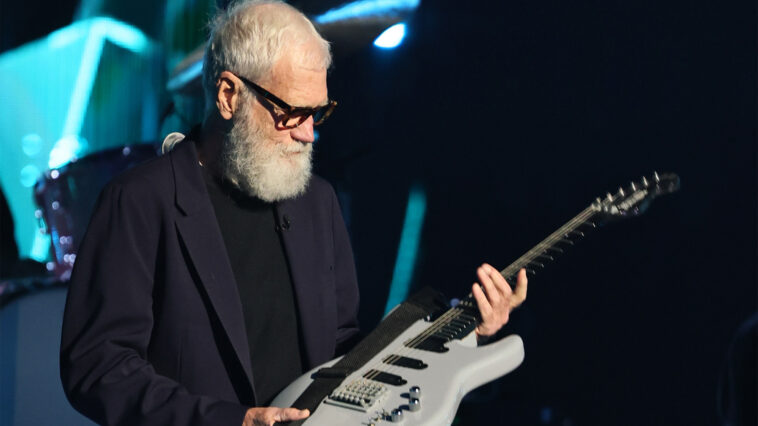
Twenty-three years ago today, Warren Zevon died of mesothelioma at the age of 56. More than two decades later, one of the most poignant reminders of his legacy came when David Letterman brought Zevon’s guitar to the Rock & Roll Hall of Fame.
On November 8, 2025, Letterman inducted his friend into the Hall at the Peacock Theater in Los Angeles. Beside him was an all-grey Modulus Blackknife electric guitar — the instrument Zevon had played every time he appeared on The Late Show With David Letterman, and which he had given to Letterman shortly before his death.
“It was the last time I saw Warren — that was 22 years ago,” Letterman told the audience.
Latest Videos FromGuitarPlayer
Zevon’s final appearance on The Late Show took place September 30, 2002, less than a year before his death. But what happened backstage that night, away from the cameras and audience, was far more personal.
“He’s got the guitar there that he’s used every time he’s appeared on our show,” Letterman recalled. “And as we’re chatting… he picks up the guitar and he puts it in the guitar case, closes the guitar case, he hands it to me and he says, ‘Take care of this for me.’”
Letterman says the gesture brought him to tears.
“Warren and I hugged,” he recalled, “and I said, ‘Warren, I just love your music.’”
Letterman did as Zevon, saving its return to the stage for a momentous occasion.
“This is the guitar,” Letterman said at Zevon’s induction, gesturing toward the instrument beside him, “and tonight, by God, it’s going back to work.”
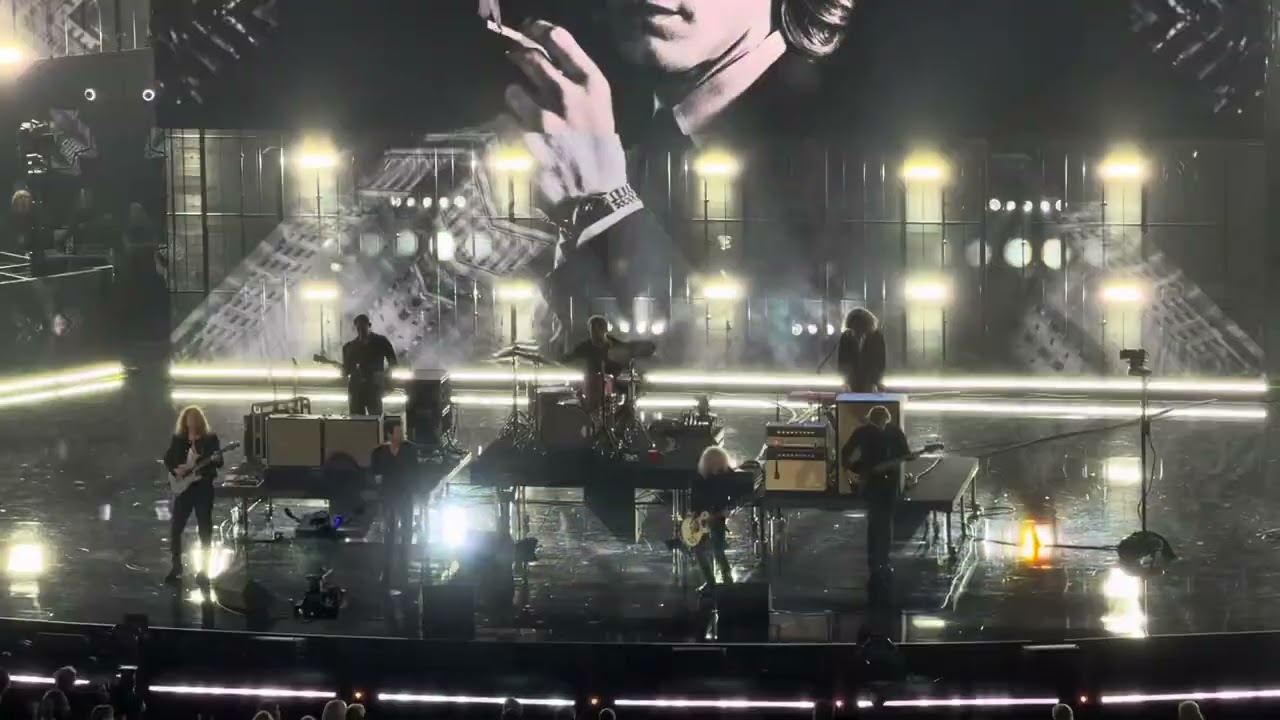
He handed the guitar to the Killers’ Dave Keuning, and the band launched into Zevon’s “Lawyers, Guns and Money.” They were joined by guitarist Waddy Wachtel, who had worked with Zevon on seven consecutive studio albums. It was a fitting tribute to an artist whose career was defined by his singular combination of literate songwriting, dark humor and hard-edged rock and roll.
Zevon had graduated from session musician and jingle composer to celebrated solo artist. His early session work included appearances with the Turtles and the Everly Brothers, as well as guitarist David Lindley. Wachtel, meanwhile, was a crucial collaborator throughout Zevon’s career, and also drafted him to play keyboards on the Everly Brothers’ 1972 album Stories We Could Tell and its subsequent tour dates.
Zevon’s greatest commercial success came with 1978’s Excitable Boy, which Wachtel co-produced with Jackson Browne. The album produced his signature song, “Werewolves of London,” featuring Fleetwood Mac bass guitarist John McVie.
According to Zevon biographer James Campion, even that song nearly slipped through the cracks.
“Werewolves of London” was fleshed out during a booze-filled jam session, Campion recalled, but Zevon had consumed enough that he forgot the whole thing the following day.
“The next day, he forgot the whole thing,” Campion said. “He comes in the studio and Jackson’s in there at the board, and Waddy says, ‘Play that song — that thing you played last night.’ ‘What song?’ ‘Y’know, the ‘Werewolf’ song.’ Warren’s like, ‘What are you talking about?’”
“He forgot!”
Zevon’s final Late Show appearance, meanwhile, produced another moment that has become inseparable from his legacy. Letterman asked him if he had learned anything about life and death over the course of his lifetime. Zevon’s answer was characteristically concise: “How much you’re supposed to enjoy every sandwich.”