
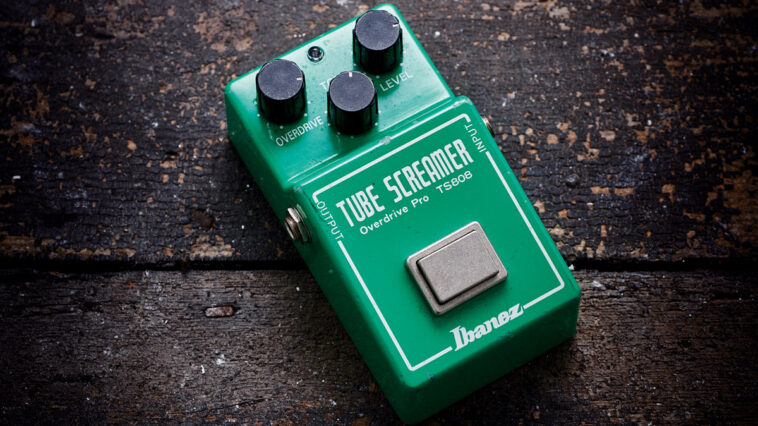
Pedals Week 2026: The guitar pedal is an ever-evolving format, but also an ever-present one. The first guitar pedals were introduced only in the early 1960s, but in the intervening years they’ve been a source of change in sounds, tastes and techniques in guitar music.
As technology has advanced, so has the debate between the two core types of guitar pedal: analog and digital. Each one elicits different opinions, preconceived notions, and even prejudices: analog and digital. Analog warmth; digital artifacts. Analog mojo; digital harshness. Alternately, noisy analog; pristine digital. Vintage analog; sleek digital.
In this article, we break down the real difference between analog and digital – and what that means for the pedals of today.
What’s in a signal?
To understand the difference between analog and digital pedals, you first need to understand what those pedals are working with. The audio from your electric guitar is a small, variable AC voltage generated by the movement of its strings across its electromagnetic pickups and is directly equivalent to the sound of the strings.
It’s this voltage that amplifiers, well, amplify – and it’s this voltage that pedals make changes to. The method by which those changes are made is what we’re looking at today.
Anatomy of analog
Analog pedals make changes to your guitar’s signal by passing it through discrete electronic components, each of which has different properties. The signal that leaves an analog pedal, though altered, is the exact same signal that came in.
Distortion pedals were among the first analog pedals made, using the limitations of transistors – the small-scale, solid-state replacement for the vacuum tube – to artificially clip the peaks and troughs of incoming signals.
Successive transistor stages continue to amplify the signal, eventually reaching saturation; soft clipping from saturation creates a warmer, more musical sound, while hard clipping creates the buzz-saw (or Velcro-esque) sound of harsher fuzz. Diodes can also hard-clip signals and are often deployed after gain stages for a little extra bite.
Resistors and capacitors, when placed in the right configurations, can make frequency-sensitive alterations to sound. They constitute filter circuits, which can be used to shape your guitar’s tone or the character of an effect. These, in tandem with cascading transistor-based distortion circuits, are the make-up of practically every dirt pedal you’ve ever touched.

Time-based pedal effects came next, as manufacturers sought to replicate the magic of tape delays and spring reverbs in circuit form. Success came through Moore’s Law – the exponential increase in transistor counts in ICs (integrated circuits).
Early analog delay and reverb effects were created with “bucket brigade” ICs, or BBDs, that used arrays of capacitors and transistors to sample, slow, or smear the shifting voltages of the guitar’s signal against itself. Such circuits are also responsible for chorus and phase effects, which come from minuscule time divisions between dry and affected signals.
Iconic analog pedals

There are a great many iconic analog pedals, being that so many were responsible for so many idiosyncratic – and wildly popular – sounds. For instance, pretty much every well-regarded distortion pedal is an analog classic.
The Dunlop Fuzz Face was an early fuzz pedal, championed by the likes of Jimi Hendrix. Electro-Harmonix’s Big Muff spawned a thousand variants, clones and successors, as well as the fulsome tones of David Gilmour’s guitar on Pink Floyd’s Animals, and Billy Corgan’s riffs on Smashing Pumpkins’ Siamese Dream. Time-based analog effects are no different, of course.
Electro-Harmonix’s Memory Man was among the first analog delay pedals to market and was responsible for, amongst other sounds, The Edge’s early tone in U2.
Dissecting digital
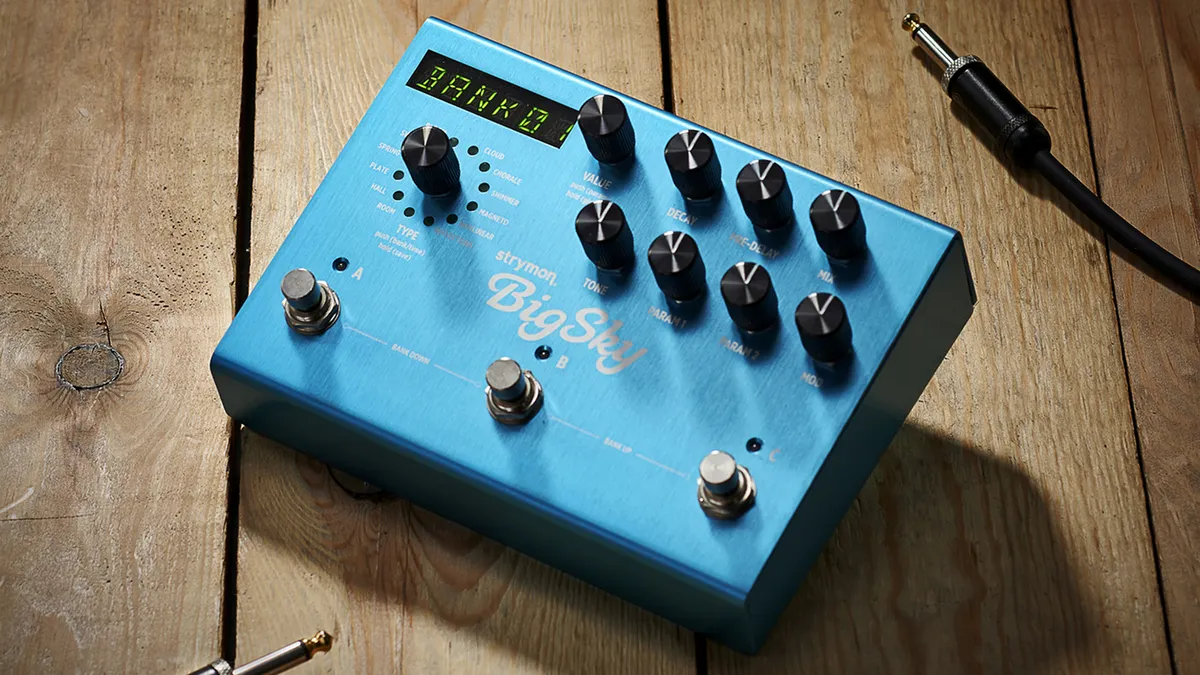
Digital pedals, meanwhile, use the power of computation to alter sounds. The signal from your guitar is converted from voltages into ones and zeros, typically using something called an ADC (Analog-Digital Converter) that feeds into a microcontroller or small computer chip. From there, the character of the sound can be changed algorithmically, using code.
The first digital pedals were, effectively, miniaturisations of larger rack effects units, made possible again by the ever-shrinking, ever-duplicating transistor. As smaller and more complex pedal-friendly microchips were made possible, so too did it become possible to generate effects otherwise impossible with discrete components: reverb emulations, crystal-clear digital delays and complex pitch-shifting.
Dazzling digital devices (and how they got better)
In 1983, the Boss DD-2 was the first digital delay to enter the stompbox format, marking the effective birth of a new approach to guitar effects. The better chips got, the more digital time-based pedals were capable of; by 1999, the Line6 DL4 was on the market, with its extensive looping and time-stretching capabilities (and with some compelling analog delay emulations too). Why, then, did digital get a bad rap?
In the ’90s, a host of digital multi-effects pedals would launch with the beginner guitarist in mind – the most (in)famous being DigiTech’s RP-1 and Zoom’s 505. Nestled between some semi-capable delay and chorus patches were some of the least inspiring digital-emulation distortions and amp tones a guitarist could ask for.
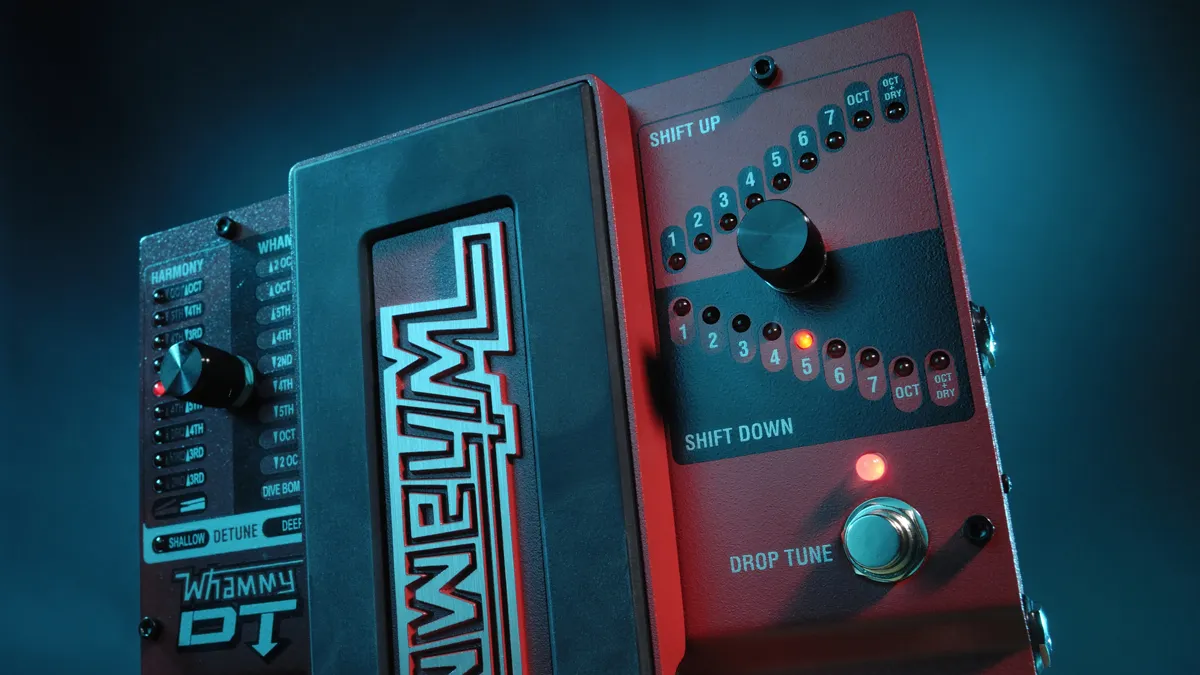
In certain guitar circles, the preconceived notions that ‘digital=bad’ endure today, despite digital audio technology having come on leaps and bounds – and despite digital delays, reverbs and the DigiTech Whammy (a classic pitch-shifter, used handily by Tom Morello, Jack White and Dimebag Darrell to name but three) having been excellent the whole time.
Today’s digital effects are a world away from those of the ’80s and ’90s, as contemporary digital devices contain entire microcomputers capable of ever more complex algorithms and ever higher audio fidelity – hence the explosion of amp modelers in the past decade.
Hybrid theory
As such, today, it’s not so much a matter of analog vs digital in the pedal world. Digital audio technology is reliably emulating analog tones and technologies to the point of indistinguishability. For another, analog and digital have already been sharing chassis for some time now.
One of the pioneers in this new, harmonious world of analog-digital hybridity is Chase Bliss, the boutique pedal outfit responsible for the Warped Vinyl, Condor HiFi, the recent Automatone series and countless others. Chase Bliss’ slogan is ‘digital brain, analog heart’, speaking to the design smarts behind most of its pedal: all-analog signal paths, with digital control for finer, more accurate and more extensive tweakability.
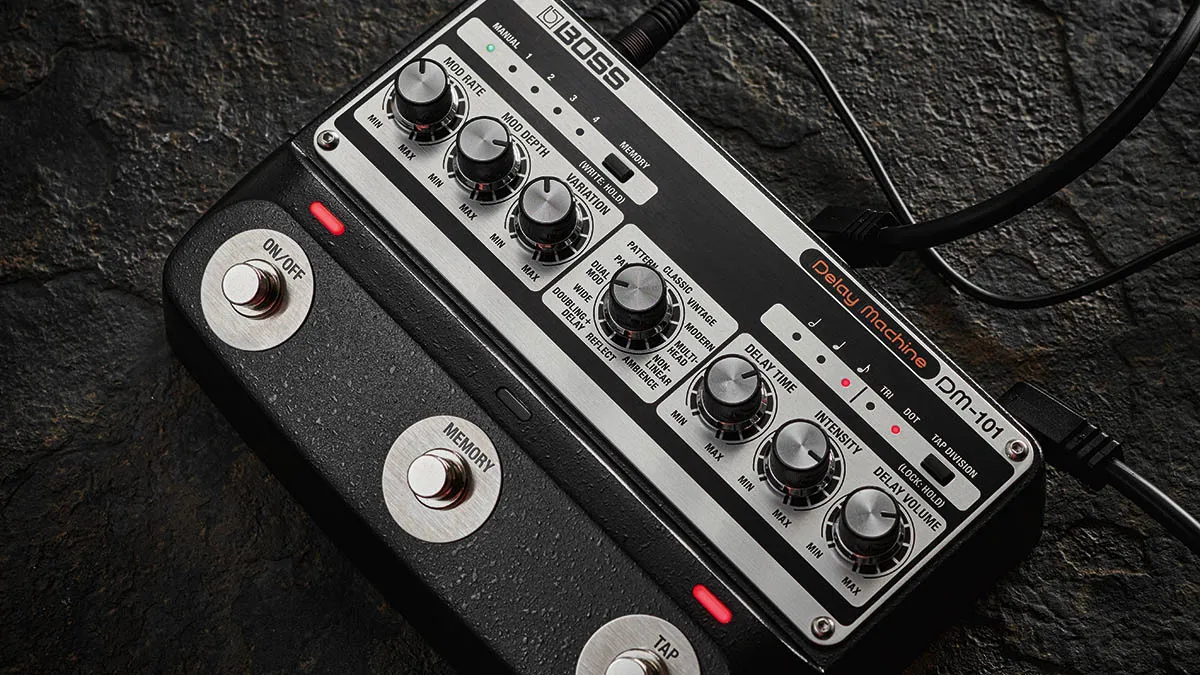
This is a lesson well-learned by other pedal brands, who are embracing the melding of analog and digital circuits – and embracing the fact that digital effects no longer amount to pale imitations. Boss’ DM-101 is proof positive of this concept hitting the mainstream, being an extensively-featured analog delay with precise digital control. More pedal makers are embracing the possibilities of MIDI and CV too – a topic for another time.
With this whistlestop tour of pedals, their innards and their variably-earned reputations, maybe your pedalboard’s gained a little more luster – and maybe that digital delay you’ve got at the back of your pedal shelf deserves a little more love. Even the Zoom 505 is welcome. Just about.
![Array]](https://backingtracksfullcollection.com/wp-content/uploads/2026/05/1779850244_Array.svg.svg+xml "Marshall unveils Billie Joe Armstrong signature head 30")
![Array]](https://backingtracksfullcollection.com/wp-content/uploads/2026/05/Array.svg.svg+xml "10 great guitar looping songs to hone your playing 31")